
Yang Xiaodu (1953– )
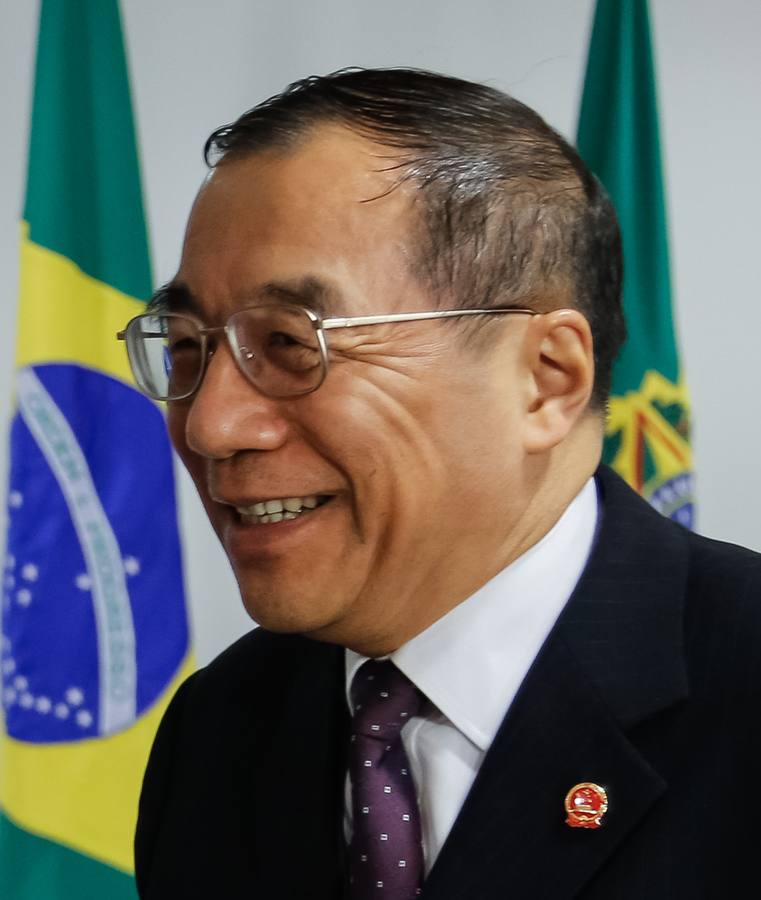
Yang Xiaodu, born in Shanghai in 1953 and trained in pharmacy at the Shanghai Institute of Traditional Chinese Medicine, was sent down to Taihe, Anhui, in 1970, joined the Party in 1973, and on graduating in 1976 was posted to Tibet, where he worked in a Nagqu pharmaceutical company, the prefectural hospital and the prefectural administration, then as Chamdo deputy Party secretary and director of the regional Finance Department, rising in 1998 to vice chairman of the Tibet Autonomous Region government — some twenty-five years in Tibet in all. He returned to Shanghai in 2001 as vice mayor, became municipal United Front chief in 2006 and Shanghai discipline-inspection secretary in 2012; headed a CCDI inspection team in 2013 and became a CCDI deputy secretary in 2014; and in December 2016 was appointed Minister of Supervision — the last person ever to hold that office. In October 2017 he entered the Politburo, skipping two rungs; on 18 March 2018 he was elected the first director of the National Supervisory Commission, and on 20 March the Supervision Law was adopted. The core of this file is his institutional responsibility: liuzhi, authorized by that law, holds a person under investigation in isolation at a designated location for three months, extendable by three more, with no access to a lawyer, no judicial review and a secret location, and its subjects extend from the Party's roughly ninety million members to everyone who exercises public authority — teachers, doctors, and managers of state enterprises and village organizations alike. Human Rights Watch called it a veneer of legality over extra-legal detention; Amnesty International called the law a systemic threat to human rights; Safeguard Defenders, estimating from official ratios, puts liuzhi use in his tenure at tens of thousands a year and in the hundreds of thousands over five years, noting that no national liuzhi total was ever published while he was in office — the only officially provable annual figures are cases filed and persons punished (in 2021, 631,000 cases filed and 627,000 punished). At case level: in May 2018 Chen Yong of Fujian died after twenty-six days in liuzhi, the first publicly recorded liuzhi death, with no public record of cause or of any handling; one investigated official testified in court that he had been strapped into a tiger chair for eighteen hours a day for five months — archived here at court-testimony level; and the Meng Hongwei case proved the system has no ceiling of rank. The Tibet tenure is a segment on which this page expressly declines to over-attribute: research found no international organization's report naming any personal responsibility of his for a specific act of repression in Tibet — his posts were pharmaceutical, financial and a government vice chairmanship — so the page records only the boundary between tenure and collective responsibility, not personal command. Sanctions: none — his name appears on no government's public sanctions list, and the Congressional Research Service's 2021 stocktaking of his Politburo found only Chen Quanguo and Wang Chen sanctioned by the United States. He left the NSC directorship in March 2023, became honorary chair of the China Disabled Persons' Federation that September, and has no public activity on record since.
1. A Sent-Down Youth from Shanghai, Trained in Pharmacy (1953–1976)
Yang Xiaodu was born on 26 October 1953 in Shanghai. His adolescence fell inside the Cultural Revolution: in 1970, aged seventeen, he was sent down as an educated youth to perform manual labor at the Songji Commune in Taihe County, Anhui Province, where he remained for three years, until 1973. That experience was the common background of his cadre generation, but two points of it matter concretely to his file. First, he joined the Chinese Communist Party in 1973, while still in the countryside — the date follows the official résumé system and is archived here on that basis. Second, in September 1973 he entered the Department of Pharmacy at the Shanghai Institute of Traditional Chinese Medicine, a step that, in years when university education had yet to recover any normality, carried him from farm labor back onto a professional track.
He graduated in 1976. His field was pharmacy — not law, not political-legal work, not propaganda. The point deserves to be recorded at the head of this page: the man who would one day direct the National Supervisory Commission and preside over the liuzhi detention system had no legal training in his formation. The master's degree in legal theory he later obtained, through part-time study at the Central Party School between 1998 and 2001, came after he had already risen to vice chairman of the Tibet regional government — an in-service credential of the cadre system, not a professional education. To understand Yang's trajectory one must start here: he was a technocrat formed in the pharmaceutical administration, who climbed rung by rung through administrative seniority in a frontier region, who entered discipline-inspection work only after the age of sixty — and who, on entering it, walked straight into the five years of that field's greatest expansion of power in its history.
This page treats his early years by the same method as every people file on this site: birth, Party membership and schooling are taken from the official résumé as corroborated by the encyclopedia record; narrative color about the hardships of the sent-down years, of which official and media sources carry almost nothing, is not admitted without a source, and the file is not padded with the propaganda vocabulary of endurance and tempering.
2. Twenty-Five Years in Tibet: From a Nagqu Drug Company to Vice Chairman (1976–2001)
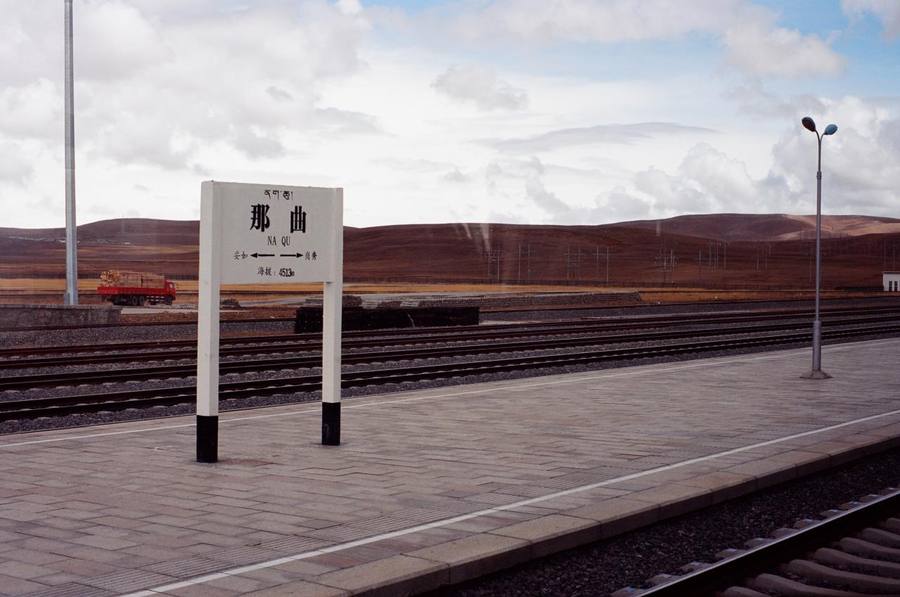
On graduating in 1976, Yang was assigned to Nagqu Prefecture in Tibet, as a division head and then deputy general manager of a pharmaceutical company, a post he held for roughly eight years, until 1984. Nagqu, on the northern Tibetan plateau at an average elevation above 4,500 meters, is among the harshest postings in the region. He stayed in Tibet for some twenty-five years in all — the longest single stretch of his career, and the one least noticed by international media. From 1984 to 1986 he was Party secretary of the Nagqu Prefecture Hospital. In September 1986 he was promoted to deputy commissioner of the Nagqu Administrative Office — the equivalent of a deputy mayor — and served six years. In December 1992 he moved to Chamdo as deputy Party secretary and deputy commissioner, serving nearly three more years. His Nagqu deputy-commissioner years overlap for four years with Hu Jintao's tenure as Party secretary of the Tibet Autonomous Region (1988–1992); overseas research institutions, including the Brookings Institution's biographical file, and analytical media record this temporal intersection, and this page archives it at exactly that level — an overlap of postings inside one regional leadership system. It proves no relationship of personal patronage, and any text that upgrades it into one exceeds the public evidence.
In 1995 he rose to director of the Finance Department of the Tibet Autonomous Region government, a genuine seat of power in the regional administration. In May 1998 he was elected vice chairman of the regional government, reaching sub-provincial rank for the first time. The rhythm of this ascent is the classic frontier-cadre path: a specialist post at the base, deputy posts in prefectural Party and government, a department directorship, then a vice chairmanship of the region — every step served in full, none skipped, none stalled. From 1998 to 2001 he simultaneously studied legal theory part-time at the Central Party School, taking his master's degree in 2001 — the same year he left Tibet.
One thing must be said before this section closes. Tibet during his years there passed through the Lhasa protests and martial law of 1987–89, the long high-pressure governance that followed, the patriotic-education rectification of monasteries, and the 1995 dispute over the Panchen Lama's reincarnation; international human-rights documentation on Tibet never paused. But Yang's posts in that period — pharmaceutical company manager, prefectural hospital Party secretary, deputy commissioner, finance director, and a vice chairman whose portfolio the public record does not specify — were not direct command posts in political-legal, public-security or religious-affairs work. The next section handles the attribution boundary for these years; this one records the posts themselves.
3. The Tibet Years and the Boundary of Responsibility: This Page Does Not Overclaim
This section is part of this page's method, and it is addressed to every reader tempted to write Yang Xiaodu's Tibet decades directly into a suppression file: the public evidence available does not support that treatment. In preparing this page, the Tibet reporting of international human-rights organizations and the standard biographical files were searched, and no report was found that names Yang Xiaodu personally as ordering, directing or participating in any specific act of repression in Tibet. His name does not appear on any published responsibility list for the 1989 martial law, the 1995 Panchen Lama affair, or the monastery rectifications. A finance director and a vice chairman of unspecified portfolio of course bore a share of collective leadership responsibility within a system led monolithically by the regional Party committee; but between "a share of collective responsibility" and the archival classification of decision-maker or executor there lie a specific division of labor and documentary evidence, and this page does not step across that gap.
The other half of the truth must be written with equal plainness. His entire formation as an official took place inside Tibet's governance system — a frontier apparatus in which "stability above all" was the supreme principle and the political-legal and united-front systems carried exceptional weight. The working language and organizational methods he later used — heading a municipal United Front department in Shanghai, then running the supervisory apparatus at the center — descend in a direct line from that formative environment, and that much institutional analysis is legitimate. But institutional analysis is not evidence of personal culpability. This page therefore rests its attribution on the ground where the evidence is hardest: his responsibility, from 2018 onward, as the first director of the National Supervisory Commission, for building and operating the Supervision Law and liuzhi system — a responsibility written into the legal text and the official statistics, requiring no inference at all.
One verifiable record item is added here to protect readers against a simplified narrative in circulation: articles in some outlets describe Yang as "Hu Jintao's old Tibet subordinate" and build his entire ascent on that claim. Within the scope of this page's research, that account rests on the temporal overlap and on overseas commentary alone, with no primary document; it is archived at commentary level and is not used as fact in the main text.
4. Twelve Years Back in Shanghai: Vice Mayor and United Front Chief (2001–2012)
In 2001 Yang left Tibet and returned to his native Shanghai as a vice mayor. The transfer attracted no attention at the time: a forty-eight-year-old frontier official of sub-provincial rank returning to a vice mayoralty in his home city was a routine arrangement. He served five years as vice mayor. In October 2006 he entered the Standing Committee of the Shanghai municipal Party committee as head of its United Front Work Department — the department charged with liaising with, absorbing and managing the democratic parties, ethnic and religious communities, Hong Kong, Macao, Taiwan and overseas-Chinese circles, and the non-public economy: the front office of the Party's system of political incorporation and control. He held that post for about six years, a span that covers Xi Jinping's tenure as Shanghai Party secretary in 2007: from March to October 2007, while Xi led the municipality, Yang sat on its Standing Committee as United Front chief, the two men serving in the same leadership body for some seven months. Xi's successor as Shanghai Party secretary was Yu Zhengsheng, and Yang continued as United Front chief until 2012. As with the Tibet overlap, this page records only the verifiable fact of service in the same body; the abundant commentary about "Xi Jinping confidants," unsupported by primary material, is not used.
In his twelve Shanghai years, the public record under his name consists chiefly of routine united-front and ethnic-religious work, and no major human-rights event is attached to his name in the reporting of international organizations. But the function of the united-front system in those years must itself be noted: its liaison with and management of religious bodies, private entrepreneurs and overseas Chinese is incorporation and surveillance at once. The system's daily operation generates no event files under personal names, yet it forms the organizational basis of the Party's thorough penetration of society. Yang ran that machine for six years in a front-line city before being moved into discipline inspection — from "uniting those who can be united" to "investigating those who are to be investigated." The two posts share one logic: the Party's classified management of the members of society. That thread in his personal file is part of the background to his selection in 2018: the subject-classification of liuzhi — Party members, public employees, everyone exercising public authority — is precisely this classificatory habit of mind extended into the field of detention.
5. Shanghai Discipline Chief and Head of a Central Inspection Team (2012–2014)
In May 2012 Yang became secretary of the Shanghai Commission for Discipline Inspection, entering the discipline system for the first time. That was the year of the 18th Party Congress; Xi Jinping, on succeeding as general secretary at the end of it, launched the anti-corruption campaign that continues today, and the discipline apparatus promptly became one of the most powerful concentrations of authority in the Party. Yang's Shanghai discipline tenure lasted only about a year and a half and left no signature case under his personal name in the public record. What decided his next step was an appointment in November 2013: having turned sixty and reached the retirement-age line for sub-provincial officials, he was instead named head of the Third Inspection Team of the Central Commission for Discipline Inspection, charged with inspecting the Ministry of Land and Resources. Inspection tours were in those years the CCDI's principal instrument for surfacing high-level corruption leads; team heads were appointed directly by the CCDI and answered to its secretary. By serving beyond the age line, Yang entered the core working circle of the CCDI under Wang Qishan.
In January 2014 he was elected a Deputy Secretary of the CCDI, one of Wang Qishan's deputies. From Shanghai discipline chief to CCDI deputy secretary had taken him less than two years; the step into the Politburo would take three more. The archival significance of this segment lies in its dates: the year he entered the CCDI leadership, 2014, was a period when the shuanggui system was being used at its most frequent, and drawing its heaviest international criticism. Human Rights Watch's December 2016 investigation of shuanggui, built on interviews with former detainees and their families and on court records, documented the system's standard picture: secret locations, months of isolation from the outside world, no lawyers and no family visits, accompanied by beatings, solitary confinement, prolonged sleep deprivation, exposure to extreme temperatures, deprivation of food and water, and threats against families. Yang was not shuanggui's designer — the Party's extrajudicial detention instrument had operated for decades before he entered the field. But he was a CCDI deputy secretary in shuanggui's late period, and his historical role over the next five years was precisely to "reform" that extrajudicial detention into national law. Whether the reform abolished it or enlarged it is the entire question of the second half of this page.
6. Minister of Supervision: The Last Minister and Host of the Reform Pilot (2014–2018)
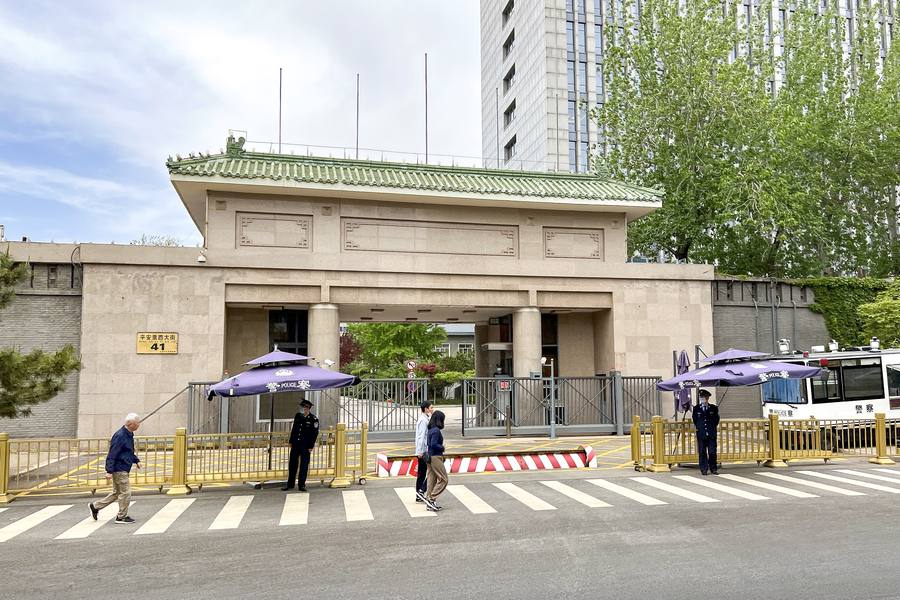
Yang served as a CCDI deputy secretary for more than eight years, from 2014 to 2022, assisting first Wang Qishan (2014–2017) and then Zhao Leji (2017–2022). On 25 December 2016 the Standing Committee of the National People's Congress appointed him Minister of Supervision, concurrently director of the National Bureau of Corruption Prevention. The Ministry of Supervision was the State Council's administrative-supervision organ, operating as one institution with two nameplates alongside the CCDI. He was the eighth person — and the oldest — to hold the ministership since the founding of the People's Republic, and he was also the last: the Ministry was abolished in the 2018 institutional reform, its functions folded into the new National Supervisory Commission. Appointing a sixty-three-year-old as the final minister sent an unmistakable signal: he was the man brought in to build the successor institution.
The building had begun before his appointment took effect. In December 2016 a pilot of the supervisory-system reform opened in Beijing, Shanxi and Zhejiang: provincial supervisory commissions were created in the three jurisdictions, the procuratorates' anti-graft and anti-dereliction departments were transferred wholesale into them, and the investigative functions of Party shuanggui began their migration into the commissions' liuzhi. In November 2017 the pilot went nationwide. As Minister of Supervision and CCDI deputy secretary, Yang was one of the joint hosts of this reform on both its administrative and its Party sides. The reform's top-level designers were Xi Jinping and Wang Qishan, and this page does not rewrite top-level design as his personal design; but how the pilot was landed, how the institutions were spliced, how personnel were transferred, and how liuzhi's approval and execution procedures were drafted into rules were the work of executive hosts at his level, and form part of his responsibility — the same separation between decision responsibility and executive-hosting responsibility that this site's other people files apply.
In October 2017, at the First Plenary Session of the 19th Central Committee, the sixty-four-year-old Yang was elected to the Politburo and to the Party's Secretariat. A November 2021 Congressional Research Service report on China's political system noted pointedly that two members of that Politburo had entered it without ever having served as full or alternate Central Committee members — Yang Xiaodu was one of the two, having in effect skipped two rungs. The public room for explaining the exception is narrow, but the institutional logic is plain: the National Supervisory Commission about to be created needed a director of Politburo rank to match its new constitutional standing alongside the State Council, the Supreme Court and the Supreme Procuratorate, and no candidate inside the system was more natural than the last Minister of Supervision. In March 2018 he stepped into the position prepared for him — or, more precisely, for the institution.
7. March 2018: The Supervision Law Passes and the National Supervisory Commission Is Born
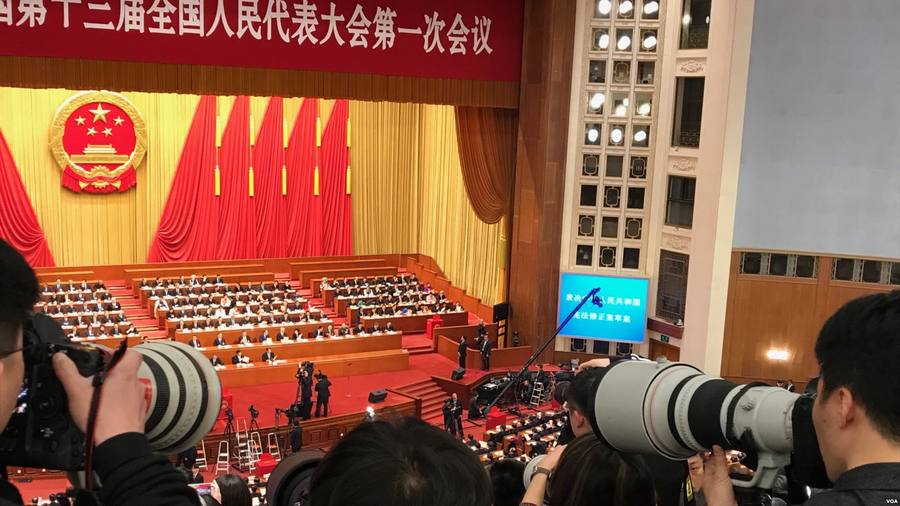
Three dates constitute the new system's birth certificate. On 11 March 2018 the First Session of the 13th National People's Congress adopted the constitutional amendment writing supervisory commissions into the Constitution as a new category of state organ. On 18 March, Yang Xiaodu was elected the first Director of the National Supervisory Commission. On 20 March the Supervision Law of the People's Republic of China was adopted and took effect the same day. The NSC was assembled from the former Ministry of Supervision, the National Bureau of Corruption Prevention, and the anti-graft and anti-dereliction departments of the Supreme People's Procuratorate, and it operates co-located with the CCDI — outwardly a state organ, inwardly still the Party's discipline commission: its director is a CCDI deputy secretary, and its deputy directors and members are mostly CCDI Standing Committee members. In other words, the reform did not hand the Party's shuanggui over to the state. It dressed the Party's discipline commission in state clothing, and extended its jurisdiction from Party members to every public employee and public-affairs functionary in society.
The change of scale was substantive. Shuanggui's subjects were suspects drawn from the Party's roughly ninety million members. The Supervision Law's subjects, by its own text, are "all public employees who exercise public power," enumerated to cover civil servants, managers of state-owned enterprises, managers in public institutions of education, research, culture, health and sport, managers in grassroots self-governance organizations, and "other personnel who perform public duties in accordance with law." In its statement of 20 March 2018, the day the law passed, Amnesty International said the system placed tens of millions of people at the mercy of a secretive and virtually unaccountable system above the law, and that judges, academics and state-enterprise personnel could all face up to six months' detention without charge or legal process, without guaranteed access to lawyers and without their families necessarily being told. Human Rights Watch had warned as early as November 2017, when the draft appeared, that giving graft investigators the power to hold people incommunicado for months encourages forced confessions and other well-documented abuses, and that draping a veneer of legality over an extra-legal detention system makes it no less abusive — this page conveys the substance of that judgment rather than transcribing it.
Yang's personal role in the legislation, so far as the public record proves it, is that of institutional host: he appeared in his capacities as NSC preparatory leader and first director at the law's explanatory sessions, the commission's inauguration and its successive deployment meetings, and the NSC's annual work reports and the NPC Standing Committee's law-enforcement inspections of the following years all issued from the institution he headed. The text of the law was not drafted by him personally, and the reform decision was not made by him personally — this page states both points expressly, to avoid over-attribution. But from 18 March 2018, every liuzhi decision in the system converged organizationally on the commission he led, and the whole harvest of the system's first five years is entered, in the first instance, on the account of its first director. That is the weight of the word "first": the inaugural operator of a system bears a founding responsibility for its form; his successors run on the track he laid.
8. The Design of Liuzhi: Three Months Plus Three, No Lawyer, No Judicial Review
Liuzhi is provided for in Article 22 and related articles of the Supervision Law. Where a person under investigation is suspected of serious duty-related violations or crimes such as embezzlement, bribery or dereliction, where the supervisory organ already holds part of the facts and evidence but important questions require further investigation, and where circumstances such as the gravity and complexity of the case, a risk of flight or suicide, a risk of collusion or of fabrication or destruction of evidence, or other possible obstruction are present, the organ may, subject to internal approval according to law, retain the person at a designated place. The period may not generally exceed three months; in special circumstances it may be extended once, by no more than a further three months. Liuzhi by a commission below provincial level requires the approval of the commission one level up, and extensions must be filed with that level. The family of a person placed in liuzhi is to be notified of the reason and the place within twenty-four hours, except where notification would impede the investigation, in which case it may be withheld until the impediment disappears. Interrogations are to be audio- and video-recorded throughout. Food, rest and safety are to be guaranteed, and the law formally forbids collecting evidence by threat, inducement, deception or other unlawful means, and forbids insult, beating, abuse, corporal punishment and disguised corporal punishment. The foregoing is the law's description of itself, archived here at the level of the official text.
What the text does not contain is where the human-rights criticism lands, and this page lists the absences one by one. First, there is no right to a lawyer: a supervisory investigation is not a criminal proceeding, counsel is absent from the entire investigation stage, and from the moment a person is taken away until the case is transferred to the procuratorate he sees no legal help of any kind. Second, there is no judicial review: liuzhi is approved inside the supervisory system itself, level upon level; courts and procuratorates have no say, and there is no hearing, no bail, and no channel of appeal to any external body. Third, the place of detention is undisclosed: the "designated places" are in most cases liuzhi centers converted from former shuanggui sites or internal facilities of the discipline system; secrecy of location and solitary confinement are the operating norm. Fourth, the recordings are held by the commission itself; neither the detainee nor his eventual defense counsel has any right to inspect them, so the text's ban on abuse has no external means of verification. Fifth, liuzhi counts toward no time limit of any judicial process: for up to six months the detainee exists in a vacuum of legal status — not a criminal suspect, holding none of a suspect's rights, merely a "person under investigation."
Safeguard Defenders, in its August 2019 submission to the UN Working Group on Arbitrary Detention and other special procedures, stated the consequence of this design most bluntly: on the Chinese government's own varying published figures, an average of between sixteen and seventy-six people were being placed into liuzhi every day — and, by definition, disappeared. Every day. The same submission noted that liuzhi and the "residential surveillance at a designated location" used against lawyers, journalists and NGO workers are sibling systems, differing in their targets: liuzhi aims at Party members, state functionaries, and leadership at schools, hospitals, mass organizations, universities and state-owned enterprises, down to the village level. Human Rights Watch's characterization corroborates this: the change of 2018 codified and institutionalized a Party detention system that had existed outside the law, and in doing so further entrenched the Party's authority over the law. This section's conclusion is one sentence: liuzhi was not the abolition of shuanggui but its expansion and its christening — more subjects, a written time limit, a formal ban on abuse in the text; and of shuanggui's three core features — isolation, no lawyer, no external supervision — not one was touched. And the man who presided over this system for its first five years was Yang Xiaodu.
9. The Scale of Operation: Official Figures and Estimates, Archived in Layers
How many cases did this system handle, how many people did it punish, and how many did it place in liuzhi during Yang Xiaodu's tenure? This page gives no single total; it archives three layers. Layer one, the official annual figures: in the first half of 2019, discipline-inspection and supervisory organs nationwide filed 315,000 cases and punished 254,000 people (CCDI–NSC bulletin of July 2019); in the full year 2021, they filed 631,000 cases and punished 627,000 people (work report of the Sixth Plenary Session of the 19th CCDI, published February 2022). Both sets issue from the supervisory system's own mouth; Yang was at the time NSC director and a CCDI deputy secretary respectively, and both reports passed through the leadership bodies of which he was a member. Layer two, the official cumulative figures: in June 2021 CCDI deputy secretary Xiao Pei told a press conference marking the Party's centenary that between December 2012 and May 2021, 392 officials at or above provincial-ministerial rank had been investigated; in July 2022 an official release put the number of people placed under investigation between the 18th Party Congress in 2012 and the end of April 2022 at about 4.71 million. Cumulative figures span the tenures of CCDI secretaries Wang Qishan and Zhao Leji and cannot be credited wholesale to Yang; this page uses them only to mark the overall magnitude of the system during his years in office, without personal attribution.
Layer three is liuzhi numbers — precisely the figure the authorities never published nationally during Yang's tenure. CCDI–NSC annual bulletins long reported cases filed and persons punished, but not the use of liuzhi; a national liuzhi total first appeared in an official work report only after he had left office: 26,000 in 2023, rising to 38,000 in 2024, an increase of 46 percent (as extracted and analyzed by Safeguard Defenders from the CCDI's 2024 and 2025 work reports). Working backward from those figures, Safeguard Defenders calculated that liuzhi was used in 4.15 percent of investigations in 2023 and 4.33 percent in 2024, and that, on an assumed average of about 4 percent for 2018–2022, liuzhi use during Yang Xiaodu's tenure must have run at a scale of tens of thousands of people a year, in the hundreds of thousands cumulatively across five years; the organization's 2025 synthesis estimated total liuzhi use from the system's creation in 2018 through 2024 at more than 185,000 cases. This layer is a civil-society estimate built on official ratios, not an officially published number, and this page grades it accordingly: its direction is credible — liuzhi was no occasional instrument but a routine tool applied to tens of thousands a year — while its precision is unattainable. And "unattainable precision" is itself part of this system's opacity, a charge that also lands on the institution that ran it.
One further category of official number must be recorded: voluntary "surrenders." The 2021 work report stated that 38,000 people had turned themselves in that year. Officially this is written up as the fruit of deterrence. Human-rights organizations observe that under the shadow of liuzhi, the word "voluntary" needs discounting: when an official knows that the end point of refusing cooperation is six months of incommunicado retention, the line between voluntariness and coercion is not a bright one. This page archives both readings without adjudicating between them, noting only that the counting rules for such figures are kept solely by the supervisory system, with no external audit.
10. Deaths and Abuse in Custody: Cases of the Tenure
Less than two months after liuzhi began operating, the first liuzhi death in the public record occurred. On or about 8 May 2018, Chen Yong, a 45-year-old man from Nanping in Fujian Province, died after twenty-six days in liuzhi; what his family received was a notification of death. The case was recorded first by human-rights monitoring channels tracking detention in designated locations and then by Global Voices' November 2018 feature on liuzhi, which identified it as the system's first known death. Human Rights Watch's November 2021 commentary records separately that in May 2018 the driver of a CCP official died during liuzhi in Fujian Province. The two records agree in time, province and the fact of death in liuzhi; whether they are the same man cannot be fully aligned from public materials, and this page archives them in parallel, marked as pending alignment, rather than forcing a merger. Beyond the date of death and the liuzhi background, almost nothing about the Chen Yong case is in the public record: no autopsy report was published, no investigator was reported disciplined, and no complete account from the family survives in public. A death in custody that leaves a name and a date and nothing else in the open archive is itself evidence of the system's opacity.
The record of abuse rests on a firmer stratum: court testimony. Human Rights Watch's 2021 article records that an official named Yang Meng testified in court that liuzhi interrogators strapped him into a "tiger chair" — an immobilization device — for eighteen hours every day for five months, rubbed a stinging oil into his eyes, and shone bright lights at him around the clock. The testimony is a party's statement in an open courtroom, archived here at court-record level; the official response to allegations of this kind is uniformly to deny unlawful evidence-gathering, and that denial is archived alongside. It must be added that testimony of this kind reaches the public record only in a tiny minority of cases: after transfer for prosecution, courts routinely refuse defense challenges to treatment during liuzhi as irrelevant to the case at hand, and most of the investigated plead guilty at the first opportunity after liuzhi ends, never having any occasion to describe those six months in any public forum.
The comparison with the shuanggui era must also be written plainly. The methods Human Rights Watch documented for shuanggui in 2016 — beatings, sleep deprivation, stress positions, deprivation of food and water — reappear in the liuzhi-era public record in such forms as the tiger chair, bright lights and irritants: the repertoire varies at the edges while its core is unchanged, the exchange of solitary confinement and sensory torment for confessions. During Yang Xiaodu's tenure, the authorities never published a single case of a liuzhi investigator sanctioned for abuse, never published death statistics for liuzhi facilities, and never admitted any external body — no independent party beyond the NPC Standing Committee that nominally oversees the commission — into a liuzhi site. The attribution rule of this section follows Section 8: direct responsibility for deaths and abuse lies with the specific investigators and the local commissions that approved each liuzhi; institutional responsibility — for designing a detention system with no lawyer, no judicial review and no external supervision, and for introducing no external check even after deaths were on record — lies with the system's designers and its highest official of the first five years. Yang Xiaodu never made a public statement about the death of Chen Yong or about any allegation of abuse in liuzhi.
11. A Signature Case: Meng Hongwei and the Political Function of the System
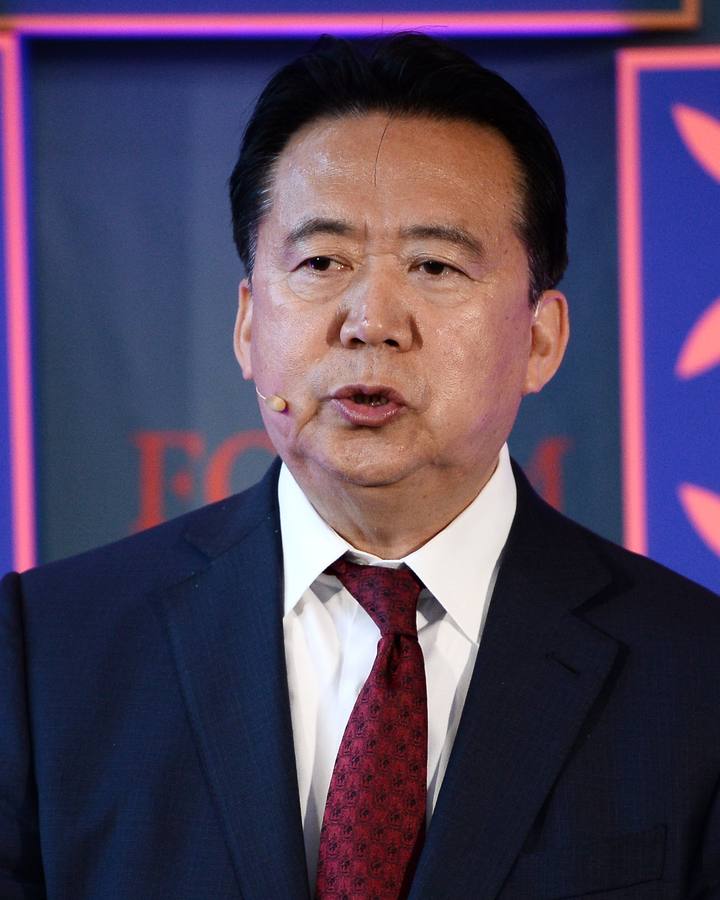
The liuzhi-connected case of Yang's tenure that drew the most international attention was that of Meng Hongwei. Meng, then a vice minister of public security of China and president of Interpol, disappeared after returning to China from Interpol's headquarters in Lyon, France, at the end of September 2018. Only after his wife appealed to the media and the police in France did the CCDI–NSC announce, late on 7 October 2018, that Meng was suspected of violating the law and was currently under investigation by the National Supervisory Commission. In March 2019 he was expelled from the Party and from public office, the official notice dwelling at length on his family style and lifestyle; in January 2020 the First Intermediate People's Court of Tianjin sentenced him to thirteen years and six months for bribery. The concrete modality of his taking — whether formal liuzhi procedures were executed, and where he was held — was never disclosed by the authorities; scholarship and media generally place the case within the isolation of a supervisory investigation, and this page archives it on exactly that footing: officially "supervisory investigation," liuzhi particulars unpublished, inference not promoted to procedural fact.
The case's archival significance has three layers. First, it proved that the system's subjects have no ceiling: even the president of Interpol, a vice-ministerial public-security chief, could vanish from public view for weeks with no open judicial process whatever, his family forced to rely on a foreign police force and international media to extract a single-line official bulletin — from which the situation of ordinary public employees inside liuzhi may be inferred. Second, it displayed the system's external function: the NSC is simultaneously the lead agency of international fugitive pursuit (Section 12), and the Meng case taught every Chinese official and businessman abroad exactly what returning to cooperate with an investigation meant. Third, candor requires the counterpart entry: the bribery charge against Meng rests on a court judgment, with fines and confiscated sums in the public reporting, and this page does not dispute that specific corruption charges may be true. Its criticism is never of whether corrupt officials should be investigated; it is of the manner — disappearance-style isolated detention in place of open criminal process, whoever the person investigated may be. Once the procedural floor can be lowered that far for a vice minister, its effective height for everyone is zero.
The same logic produced the era's recurring "disappearance-then-bulletin" pattern: provincial-ministerial officials absent from public activity for weeks or months, followed by a late-night bulletin of a hundred-odd characters on the CCDI website announcing that they were under disciplinary review and supervisory investigation — no place, no modality of custody, no word on whether their families knew. Under Yang Xiaodu this pattern became the daily bread of Chinese political reporting, and its source is the possibility liuzhi itself created: the law permits a person to vanish from the world for six months before entering any judicial process at all.
12. Sky Net Fugitive Pursuit: The Supervisory Power Reaches Abroad
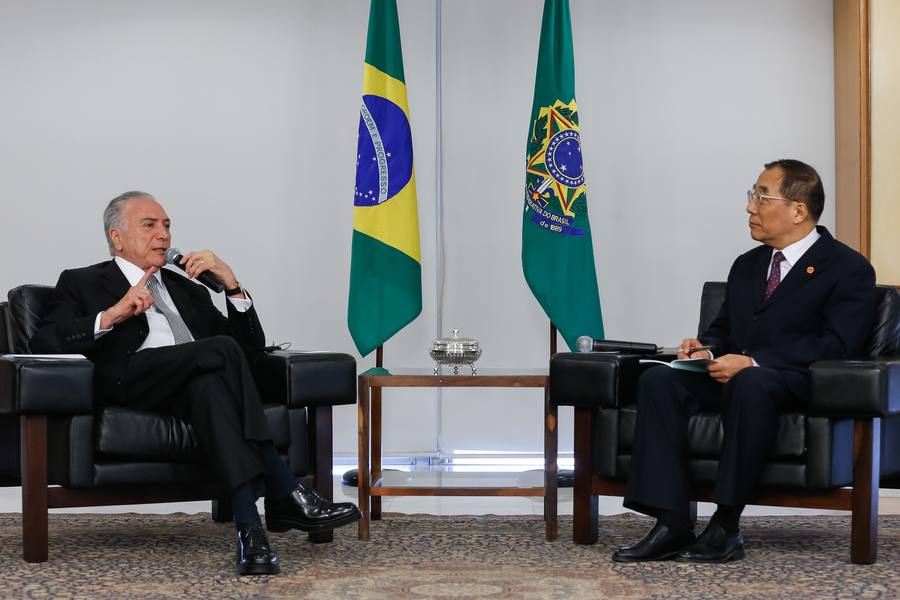
The commission's writ does not stop at China's borders. The Supervision Law contains a dedicated chapter on international fugitive pursuit and asset recovery, and the NSC is the lead and coordinating agency of Operation Sky Net — the cross-border pursuit system assembled since 2014 from the CCDI, the Supreme Court, the Supreme Procuratorate, the Ministry of Public Security (whose component is Fox Hunt), the central bank and other agencies. A 2022 Safeguard Defenders report records that, by official data, 10,105 people were returned to China from more than 120 countries between 2014 and February 2022, of whom only about 1 percent came through formal extradition procedures, the overwhelming majority through "irregular methods" — induced return, coercion including pressure on family members inside China, and clandestine operations. The same report records, in the deployments for Sky Net's continuation in 2022, that the NSC led the international-pursuit special operation and that Yang Xiaodu had publicly endorsed the relevant deployments; this page archives that item at the level of the report's transmission.
Sky Net belongs in Yang's file not because every cross-border coercion passed under his signature — no such public evidence exists, and this page makes no such attribution — but because of institutional structure: after 2018, domestic liuzhi and overseas pursuit were gathered into a single agency, a single personnel system and a single case-handling logic. Pressure a person abroad by detaining his associates inside China in liuzhi or freezing all his domestic assets; invite him to "return and surrender, for lenient treatment"; and what awaits him on return is liuzhi itself. That complete chain was spliced together during Yang Xiaodu's directorship of the NSC. The U.S. Department of Justice indictments brought since 2020 against Fox Hunt operatives set out concrete acts of surveillance and coercion of Chinese nationals on American soil; those indictments concern operatives of public-security and procuratorial backgrounds, not NSC employees, and this page places them as parallel background only, without charging the Fox Hunt cases to Yang's personal account. Graded this far, the section's conclusion is a single sentence: the institution he headed was the institutional hub of that cross-border chain.
13. International Judgment and the Official Defense: Two Discourses Side by Side
The official discourse on this system has never varied: the supervisory reform is "a major political-system reform bearing on the overall situation," and liuzhi's replacement of shuanggui is an advance of legalization and standardization — the time limit is now explicit, approval procedures exist, the recording requirement is written into the statute, family notification has a deadline. Yang Xiaodu's own public speeches during his tenure, as carried in the reporting of the commission's plenary sessions and training deployments, all sit inside this frame, and this page archives them at the level of official self-description. The defense is not wholly without textual basis: against shuanggui, liuzhi does have a written limit and internal approvals, as Section 8 recorded honestly. The argument has never been about whether there was progress; it is about whether the progress touched the core — and on the three core defects of no lawyer, no judicial review and no external supervision, nothing moved.
The international judgment forms the complete opposite pole. Human Rights Watch's documents of November 2017 and November 2021; Amnesty International's statement of 20 March 2018 and its earlier submission to the NPC Standing Committee's Legislative Affairs Commission; Safeguard Defenders' 2019 submission to the UN special procedures and its series of analyses from 2025 onward built on official data; the repeated opinions of the UN Working Group on Arbitrary Detention on Chinese cases — these documents differ in source and method, and their conclusions converge to a remarkable degree: liuzhi constitutes arbitrary detention under international human-rights law; its solitary, incommunicado character constitutes enforced disappearance; and prolonged solitary confinement is itself torture or cruel, inhuman or degrading treatment. Safeguard Defenders' 2025 analysis goes a step further, arguing that if the estimates from official ratios hold, liuzhi's cumulative scale has reached the threshold of "widespread and systematic," potentially engaging, under the framework of Article 7 of the Rome Statute, the crimes against humanity of enforced disappearance and torture. This page grades that characterization as what it is — the legal argument of one human-rights organization, not the ruling of any international tribunal — while noting that the scale figures on which the argument rests come from the Chinese government's own work reports. Yang Xiaodu and the institution he led never responded to a single one of these documents. Like Wu Guanzheng's lifelong silence on the Shandong suppression, that non-response is archived here as part of the facts: the head of a detention system formally queried before the UN special procedures left not one sentence of public answer in five years.
14. Departure, an Honorary Chairmanship, and the Sanctions Record (2022–2026)
In October 2022, at the 20th Party Congress and the First Plenary Session of its Central Committee, Yang Xiaodu, aged sixty-nine, left the Politburo and the CCDI deputy secretaryship and exited the leadership. On 11 March 2023 the First Session of the 14th National People's Congress elected Liu Jinguo as Director of the National Supervisory Commission, formally closing Yang's five-year directorship. The handover carried no ceremonial summation: the commission published no official assessment of his tenure, and he delivered no farewell address. The absence fits a consistently low-visibility public image — he may be the faintest public presence of any Politburo member of the Xi era: no collected works, no memoir, no signature public utterance; what he left behind is an institution, a law and a set of numbers.
The post-retirement public trace consists of a single item, and a symbolic one: on 20 September 2023 the Eighth National Congress of the China Disabled Persons' Federation concluded, its new leadership was announced, and Yang Xiaodu was elected honorary chair of the federation, succeeding Deng Pufang, who had held the post for many years. The CDPF honorary chairmanship is an honorific, powerless post of the kind arranged for retired leaders, with no public agenda of its own. From then to 2026, no reliable report places him at any other public event. Born in 1953, he turned seventy-three in 2026; his health and place of residence are not in the public record, and this page records "no public record" rather than fill the gap.
On sanctions and accountability the conclusion matches several of this site's files on officials of his rank, and it is short: none. As of this writing (November 2026), Yang Xiaodu's name appears on no public sanctions list — not under the U.S. Global Magnitsky program, not under the European Union's human-rights sanctions regime, and not on the lists of the United Kingdom, Canada or Australia. The Congressional Research Service's 2021 stocktaking of his Politburo, which found only Chen Quanguo and Wang Chen under U.S. sanctions, serves as corroboration. Domestically he retired with the treatment due to a sub-national-level leader, with no record of discipline or accountability of any kind. The highest official of a detention system characterized by multiple international organizations as an instrument of enforced disappearance, in whose tenure a liuzhi death stands on the public record, exists on no government's sanctions list. This page archives that state of affairs exactly as it stands; set beside the international judgment of Section 13, it is the whole picture of accountability: a shelf of documents, and not one name on a list. The system he left behind, meanwhile, continued to accelerate under his successor: official figures show liuzhi use of 26,000 in 2023 and 38,000 in 2024, and the June 2025 revision of the Supervision Law greatly extended liuzhi's maximum duration. Those are facts of his successor's tenure and are not charged to Yang Xiaodu's account. But the track was laid by him, and the first train was driven by him, and this page's file ends, fittingly, there.
视频证据Video Evidence
以下为与本页人物直接相关的机构新闻影像与档案影像。Institutional news and archival footage directly related to this page's subject.
《中国指控前国际刑警组织主席孟宏伟受贿腐败》(半岛电视台英语频道)|2018|原声:英语报道China accuses ex-Interpol chief Meng of bribery and corruption (Al Jazeera English) | 2018 | Audio: English report from Beijing
15. Verification and Sources
The posts and biographical facts on this page were cross-checked across multiple sources. Principal sources: the Chinese and English Wikipedia entries for Yang Xiaodu (born 26 October 1953; NSC director 18 March 2018 – 11 March 2023; CCDI deputy secretary 15 January 2014 – 23 October 2022; Minister of Supervision 25 December 2016 – 13 March 2018; elected CDPF honorary chair 20 September 2023 — the entry citing the Brookings Institution's Cheng Li biographical file and Xinhua); the Brookings Institution's 2017 biographical brief on Yang Xiaodu (the Nagqu pharmaceutical company 1976–84; Nagqu hospital Party secretary; Nagqu deputy commissioner 1986–92; Chamdo deputy secretary 1992–95; Finance Department director 1995–98; Tibet vice chairman 1998–2001; Shanghai vice mayor; United Front chief; Shanghai discipline secretary; Party member from 1973; Central Party School master's in law); and Xinhua's 18 March 2018 report of his election as NSC director, as carried by the Shanghai municipal government portal (first director; the Ministry of Supervision and National Bureau of Corruption Prevention folded into the NSC; the pilot's start in Beijing, Shanxi and Zhejiang in December 2016 and nationwide rollout in November 2017). For the Supervision Law and liuzhi: Amnesty International's statement of 20 March 2018 (a "systemic threat"; tens of millions under the system's sway; judges, academics and state-enterprise personnel detainable for six months; liuzhi replacing shuanggui) and its December 2017 submission to the NPC Standing Committee's Legislative Affairs Commission; Human Rights Watch's document of 10 November 2017, "China: Revise Draft National Supervision Law" (the three-plus-three-month limit, twenty-four-hour family notification and taped interrogations as paper improvements against the core defects of no counsel, no redress and secret locations, and the documented abuses of shuanggui) and its commentary of 30 November 2021 (the 2016 shuanggui findings; reports of abuse under liuzhi; the May 2018 Fujian liuzhi death; Yang Meng's courtroom testimony about the tiger chair; liuzhi's extension to everyone exercising public authority, public-school teachers included); Safeguard Defenders' August 2019 submission to the UN special procedures on liuzhi and the NSC (the estimate of sixteen to seventy-six people a day; the scope of liuzhi's targets; shuanggui's six-month maximum historically) and its 2025 data analyses (the first officially published national liuzhi figures: 26,000 in 2023 and 38,000 in 2024, at 4.15 and 4.33 percent of investigations, and the estimate of more than 185,000 cumulative uses from 2018 through 2024), together with the same organization's March 2025 report as carried by AFP and RFA (a later estimate exceeding 200,000 uses since 2018; the main text adopts the more conservative 185,000 figure and grades it). For scale: the CCDI–NSC bulletin of July 2019 on the first half of that year (315,000 cases filed, 254,000 people punished, as transmitted in discipline-inspection briefing compilations); the 2021 work-report data as transmitted (631,000 cases filed, 627,000 punished, 38,000 voluntary surrenders); Xiao Pei's June 2021 press conference and Caixin's reporting of it (392 provincial-ministerial-level officials investigated between December 2012 and May 2021); and the official July 2022 release (about 4.71 million people placed under investigation between 2012 and the end of April 2022). For individual cases: Global Voices' feature of 1 November 2018 (Chen Yong's death in May 2018 after twenty-six days in liuzhi in Nanping; the six-month liuzhi ceiling; the absence of rights to counsel and to the interrogation tapes); and the public reporting of the Meng Hongwei case together with the CCDI–NSC notice of 7 October 2018 (this page uses only the official formula "under supervisory investigation by the National Supervisory Commission" and the publicly reported result of the January 2020 Tianjin First Intermediate Court sentence of thirteen years and six months, grading the liuzhi particulars as unpublished). For Sky Net: Safeguard Defenders' 2022 report on Sky Net and long-arm policing (the official figure of 10,105 people returned from more than 120 countries between 2014 and February 2022; formal extradition at about 1 percent; the NSC's lead role in the 2022 pursuit operation and its transmission of Yang Xiaodu's endorsement). For sanctions: the Congressional Research Service report of November 2021, China's Political System in Charts (its stocktaking that only Chen Quanguo and Wang Chen of that Politburo had been sanctioned by the United States), re-verified for this page against the principal sanctions lists, on none of which Yang Xiaodu's name appears.
Checks against, and reservations about, the originating brief, recorded as this page's method requires. First: Yang's Tibet service runs, on the Brookings file, from his assignment there in 1976 to his departure in 2001, about twenty-five years; the brief's formulation "1970s to 2001" is consistent with this and has been made precise in the text as 1976–2001. Second: within his Tibet posts, the Nagqu and Chamdo positions were prefectural deputy rank, the Finance Department directorship was department rank, and the regional vice chairmanship was sub-provincial; this page's research found no international organization's report naming any personal responsibility of his for a specific act of repression in Tibet, and Section 3 treats the matter on exactly that evidentiary footing, without over-attribution. Third: the custody-death record — the Chen Yong case (human-rights monitoring channels and Global Voices) and the May 2018 death in Fujian of an official's driver recorded by Human Rights Watch — cannot be fully aligned as one person or two from public materials; the text archives them in parallel and says so. Fourth: no official national total for liuzhi exists for Yang's tenure, which never published one; every liuzhi total in the text is Safeguard Defenders' estimate from official ratios and is graded as such, while case-filing and punishment figures are official and are labeled with their source and their cross-tenure span. Fifth: the authorities never published liuzhi procedures in the Meng Hongwei case; the text archives it under the official formula "supervisory investigation." Sixth: whether Yang Xiaodu is sanctioned by any government — research for this page found no record, and the text states "none" accordingly. Matters for which no public source exists — any personal response by Yang to the liuzhi death and abuse allegations, his precise health and residence in 2026, and any first-hand record of the interior operation of liuzhi facilities — are labeled "no public record" throughout, and nothing has been written to fill them. This page will be revised as new archives open: wherever new primary material corrects any item here, this site will note the source of the revision while preserving the superseded wording, so that the correction itself becomes part of the record.
Contact: endccpworld@proton.me