
Yan Jinhai (1962– )
Yan Jinhai, born in Minhe, Qinghai, in March 1962, an ethnic Tibetan, entered the Chinese department of Qinghai University for Nationalities in 1978 and, after graduating in 1982, taught at the Huangnan Nationalities Normal School before entering the Huangnan prefectural education bureau in 1984, rising through director of the prefectural Party committee's general office and Standing Committee member and secretary-general to deputy Party secretary of Yushu in 1998, acting governor and then governor of Haibei in 2005, Haibei Party secretary in 2008, vice governor of Qinghai in January 2013, provincial Party Standing Committee member in May 2017 and alternate member of the 19th Central Committee in October 2017. In July 2020 he was transferred to the Tibet Autonomous Region as deputy Party secretary, concurrently becoming Lhasa Party secretary on 18 January 2021; on 8 October 2021 the Standing Committee of the 11th TAR People's Congress appointed him vice chairman and acting chairman of the regional government, succeeding Che Dalha; he was elected chairman on 7 January 2022, became a full member of the 20th Central Committee in October 2022 and was re-elected in January 2023. This page keeps his ledger in three tiers. The government-execution tier is the main account: his government work report of 7 January 2024 records that in 2023 fiscal and tax supervision of monasteries achieved full coverage, the 'Three Consciousnesses' education had sunk deep into people's hearts and all seven prefecture-level cities had been built into national ethnic-unity demonstration cities, and deploys for 2024 a continued raising of the masses' awareness and ability in using the national common language, deeper Sinicization of Tibetan Buddhism and stronger monastery management committees; the boarding-school system (estimated by the Tibet Action Institute in 2021 at some 800,000 Tibetan students plateau-wide, about 78 per cent, and put by three UN special rapporteurs in February 2023 at almost one million children) ran on in the hands of his government with no public record of contraction; on 28 March 2023 he pledged in a televised address to intensify the fight against secession, and on 10 November 2023 he fronted the Beijing launch of the white paper on the Party's Tibet governance. At the Party-decision tier only his seat is entered: the secretary was Wang Junzheng (19 October 2021 – 22 September 2026, then Hu Changsheng), and Yan was deputy secretary throughout — the circulating claim that he 'succeeded Wang as Party secretary in October 2024' is false; the real appointment of 28 October 2024 was Party group secretary of the TAR People's Congress Standing Committee. The Beijing tier is cut away: the national frameworks for boarding and language promotion and the NRA's Order No. 22 Measures for the Management of Tibetan Buddhist Monasteries (December 2024, effective 1 January 2025) issued from the centre, and only the TAR execution face is recorded. He stepped down as chairman on 28 November 2024 in favour of Garma Cedain and on 22 January 2025 was elected chairman of the TAR People's Congress Standing Committee; the original ethnic-unity model-area regulations of 2020 were passed before he arrived in Tibet, while the revised version took effect on 1 March 2025, its revision completed across his handover. Sanctions: none found on OFAC, EU, UK or Canadian lists, and he is not among Canada's eight designees of 10 December 2024 (Chen Quanguo, Wu Yingjie, Zhang Hongbo and others); the US visa restrictions of 22 August 2023 over the boarding schools name no individuals, so his personal coverage is registered as unverifiable on the public record; no CCDI case against him is on record.
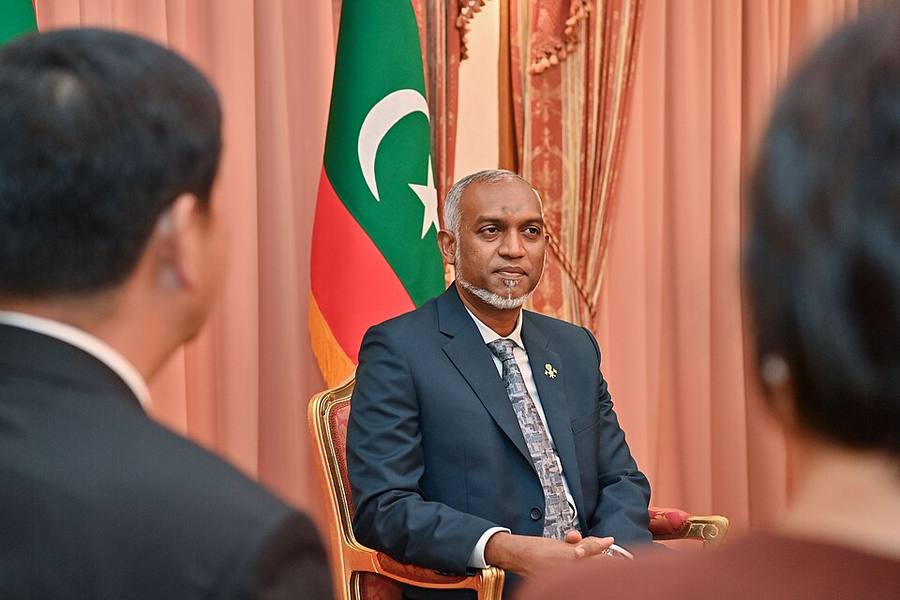
1. A Tibetan Boy from Minhe, Qinghai: Chinese Literature at the Nationalities College (1962–1982)
Yan Jinhai was born in March 1962 in Minhe Hui and Tu Autonomous County, Qinghai. Minhe sits in eastern Qinghai on the Gansu border, a county where Han, Hui, Tibetan and Tu communities have lived interleaved for centuries; a Tibetan child growing up there dealt in more than one language as a matter of daily life. That is all his birthplace can tell us, and this page does not use native place or ethnicity to annotate any of his later policy choices: ethnicity is neither a merit nor an offence, and the ledger is kept on offices held and documents signed.
In 1978 he entered the Chinese department of Qinghai University for Nationalities (now Qinghai Minzu University), majoring in Chinese language and literature, and graduated in July 1982. The detail is worth recording not because it explains anything, but because it fixes his starting point: he belonged to the first cohorts of nationalities-college graduates after the restoration of the university entrance examinations, he was trained in the Chinese language and its literature, and virtually his entire forty-year career then unfolded inside Tibetan areas — the Huangnan, Yushu and Haibei Tibetan autonomous prefectures of Qinghai, then Lhasa and the whole of the TAR. A Tibetan cadre educated in Chinese literature who climbed, rung by rung, through the Tibetan-area administrative system: that is the base colour of Yan Jinhai's curriculum vitae. On graduating in 1982 he stayed in Huangnan as a teacher at the prefecture's Nationalities Normal School — his first encounter with the education system was from the lectern, not from an office desk.
2. Thirty-Eight Years in Qinghai: From Huangnan Teacher to Provincial Standing Committee (1982–2020)
Yan joined the CCP in December 1983. In November 1984 he left teaching for a cadre post in the Huangnan prefectural education bureau and never again worked outside the Party-state apparatus. Over the next sixteen years he rose steadily through the prefectural Party committee's general office: deputy director in February 1990, director the following year, deputy secretary-general in July 1993, and in 1996 Standing Committee member and secretary-general — the secretary-general runs the prefectural committee's machinery, so by his mid-thirties Yan was already a man of the centre of a Tibetan prefecture's Party operations. In June 1998 he moved to Yushu Tibetan Autonomous Prefecture as deputy Party secretary and stayed more than six years. Yushu, the source region of three great rivers, is among Qinghai's most remote prefectures and one of its most heavily Tibetan.
In January 2005 he became deputy Party secretary and acting governor of Haibei Tibetan Autonomous Prefecture, governor from March 2005, and in 2008 prefectural Party secretary — his first post as a locality's top leader, held for five years. In January 2013 he became a vice governor of Qinghai, reaching vice-ministerial rank; in May 2017 he added a seat on the Standing Committee of the CCP Qinghai Provincial Committee; in October 2017 the 19th Party Congress elected him an alternate member of the Central Committee. He had also been a deputy to the 11th National People's Congress. Read end to end, the record runs: Huangnan, Yushu, Haibei — three of Qinghai's six Tibetan autonomous prefectures — from prefectural education cadre, Party secretary-general, governor and Party secretary up to vice governor with a Standing Committee seat. When he left Qinghai in 2020 he had worked thirty-eight years in the province's Party-state system and was among the most completely credentialed Tibetan-area cadres in the CCP.
How this Qinghai chapter relates to this page's responsibility ledger must be cut precisely. The Tibet Action Institute's December 2021 estimate of boarding-school numbers covers the whole Tibetan plateau, including Qinghai's Tibetan prefectures, and the boarding expansion in Qinghai's Tibetan areas likewise unfolded across the years around his vice governorship. But this page has found no authoritative public record fixing his personal portfolio within the Qinghai government, and the report does not name Qinghai's schools against him personally. Two facts only are therefore registered: first, that in those years he was a vice governor of Qinghai and a member of its Party Standing Committee, seated within the provincial government's collective leadership; second, that any account charging Qinghai's boarding ledger to him personally currently lacks first-hand documentary support, and this page does not write it. The ledger is kept where it can be put on paper — that is this site's rule.
3. How This Page Attributes Responsibility: Chairman, Secretary and Beijing — Three Tiers
Tibet's power structure is the premise for understanding Yan Jinhai's responsibility, and it must be set out first. The chairman of the TAR People's Government is required by law to be an ethnic Tibetan citizen; he is the region's highest administrative officer, running the executive machinery of education, civil affairs, finance and religious-affairs administration. But the real decision centre is the CCP TAR Committee, whose secretary's post has, on the public record, never been held by a Tibetan since the region's founding — during Yan's chairmanship the secretary was Wang Junzheng (in office from 19 October 2021), and Yan himself was a deputy secretary: first among the government-side leaders inside the committee, but not the man who set its line. When Wang left and Hu Changsheng succeeded him on 22 September 2026, Yan was still a deputy secretary. Above both of them, the national deployment of boarding education, the policy line on promoting the national common language, and the regulations governing religious affairs issued from Beijing: the State Council General Office's September 2020 Opinions on comprehensively strengthening language work in the new era, the August 2021 Central Ethnic Work Conference, and the departmental rules of the National Religious Affairs Administration — none of them inventions of Lhasa.
This page therefore keeps three tiers. Tier one, government execution: the three government work reports he delivered and the execution record of the regional government and its education department, ethnic and religious affairs bodies under him — his main ledger, and the hardest documented. Tier two, Party collective: matters on which he sat within the regional committee's collective leadership as deputy secretary — the setting of the anti-secession line, the launch of the "Three Consciousnesses" education (deployed by the regional committee in 2022), major stability arrangements — where this page records his seat and his shared responsibility and states plainly that the secretary was another man. Tier three, Beijing decisions: nationwide policies and central-ministry rules, recorded only as background, with the TAR execution face distinguished and nothing transferred to him as a personal decision. One circulating error is corrected in advance: accounts claiming that in October 2024 he "succeeded Wang Junzheng as TAR Party secretary" are false. The real personnel move of 28 October 2024 was his appointment as Party group secretary of the TAR People's Congress Standing Committee, with Garma Cedain becoming the government Party group's secretary; Wang Junzheng's secretaryship ran uninterrupted to September 2026. Mistaking the Congress Party group for the regional Party committee inverts the whole responsibility structure, and Section 10 deals with it in full.
4. Into Tibet and Up to the Chairmanship: Lhasa Secretary, Acting Chairman, Election (2020–2022)
In July 2020 Yan was transferred across provinces to become a deputy secretary of the CCP TAR Committee. On 18 January 2021 he concurrently became Party secretary of Lhasa — the region's capital and its most politically sensitive city, a concurrent posting that itself signalled the centre was positioning him as the chairman-in-waiting. On 8 October 2021 the thirty-third session of the Standing Committee of the 11th TAR People's Congress accepted Che Dalha's resignation as chairman and appointed Yan vice chairman and acting chairman of the regional government. Eleven days later, on 19 October, Wang Junzheng succeeded Wu Yingjie as regional Party secretary: the "Wang runs the Party, Yan runs the government" configuration took shape within a single week and then held unchanged for three years.
On 7 January 2022 the Fifth Session of the 11th TAR People's Congress elected Yan chairman, converting the "acting" into the substantive post. In October 2022 the 20th Party Congress raised him from alternate to full member of the Central Committee. In January 2023 the first session of the 12th TAR People's Congress re-elected him chairman — which is why his 2024 government work report calls 2023 "the first year of this government's full term of office." Across the chairmanship he delivered the government work report three times: in 2022, in 2023, and on 7 January 2024 to the Second Session of the 12th Congress. Those three reports are the principal first-hand basis for Sections 5 to 8 of this page: a report is read aloud by the chairman in person and deliberated by the congress, and every "completed" and every "deployed" in it is a public entry in the regional government's ledger under his name, not severable after the fact.
5. The Chairmanship, Part One: The Boarding-School System — the Government Execution Ledger
Boarding schools were the most internationally contested item of Yan Jinhai's chairmanship, and the figures' scopes must be separated before responsibility is assigned. Scope one: the Tibet Action Institute's December 2021 report, "Separated from Their Families, Hidden from the World," estimated from official statistics that across the whole Tibetan plateau — the TAR plus the Tibetan areas of Qinghai, Sichuan, Gansu and Yunnan — some 800,000 Tibetan students aged six to eighteen were living in boarding schools, about 78 per cent of Tibetan students in school. That is a plateau-wide figure, not a TAR-only figure, and this page cites it strictly as such. Scope two: on 6 February 2023 the UN Office of the High Commissioner for Human Rights published a joint statement by three special rapporteurs (on minority issues, on the right to education, and on cultural rights) reporting that the information they had received pointed to the vast majority of Tibetan children being in residential schools, "almost one million" in total, and that the system appeared to act as a mandatory large-scale programme intended to assimilate Tibetans into majority Han culture; the rapporteurs had written to the Chinese government on 11 November 2022. Scope three: in March 2023 the UN Committee on Economic, Social and Cultural Rights, in its concluding observations on China, called on China to abolish immediately the coerced residential system imposed on Tibetan children. The three scopes share one point: the system they describe already existed when Yan took the chairmanship and ran on through it, with no public record of any contraction during his three years.
The official line is registered as well. Tibet operates fifteen years of publicly funded education from preschool through senior high school, and boarding students receive the "three guarantees" of food, lodging and study expenses; the regional government and the November 2023 white paper on governing Tibet present boarding as an arrangement answering the plateau's sparse settlement and guaranteeing enrolment. At the April 2025 launch of a later white paper on human rights in Tibet — after Yan had left the chairmanship — regional officials stated that boarding was "completely voluntary" and not coerced. This page records that as the official position, not as a factual finding: it conflicts head-on with the information received by the UN rapporteurs, and of the two sides only one permits independent investigation to enter. Yan's own on-record statements are taken from his government work reports: the reports place education squarely within the government's duties and write the national common language and the forging of the Chinese-nation community consciousness into the education deployments (next section), while the regional education department is a constituent department of the government he headed — the building, enrolment and day-to-day running of boarding schools was, in administrative subordination, the daily work of his own government system.
This page's attribution conclusion is as follows. The boarding system was not Yan Jinhai's invention: its expansion in Tibet predates his tenure, and its national policy drivers sit in Beijing. But across his three years as the region's highest administrative officer the system ran on in the hands of the government he led, was written into that government's report card, and no public record shows him pressing for contraction, review, or a genuine non-boarding alternative for parents. On 22 August 2023 the US State Department announced visa restrictions on Chinese officials involved in the forcible assimilation of Tibetan children — a statement aimed squarely at this boarding system; the names of those restricted were withheld as confidential visa records (see Section 12). An executor's ledger does not vanish because a decision-maker sits above him; that is why this page puts his name under this section.
6. The Chairmanship, Part Two: Promoting the National Common Language
Language is the boarding system's other face: once children live at school, the language of the classroom decides where the system takes them. The national line came first. The State Council General Office's September 2020 Opinions required a major rise in the penetration of the national common language in ethnic areas; the August 2021 Central Ethnic Work Conference made its blanket promotion a配套 component of forging the sense of community for the Chinese nation; and in December 2021 the education ministry, the rural-revitalisation administration and the national language commission jointly issued an implementation plan for raising common-language penetration whose spearhead pointed expressly at ethnic and rural areas. The TAR execution face of all this fell to the regional government and the education system — that is, inside Yan Jinhai's chairmanship.
His signature text is the government work report of 7 January 2024. In its arrangements for 2024 the report undertakes to "continue raising the masses' awareness and ability in using the national common language" — note the coverage: not pupils only, but the "masses" at large; and not ability only, but "awareness" too. The same report sets forging the sense of community for the Chinese nation as one of the government's main lines and calls for deepening the building of the ethnic-unity-and-progress model area. Read together, the two passages state plainly where language promotion sat in his tenure: a component of ethnic work, advanced by the government across society, not a mere question of teaching technique. Two cuts are made at the same time. First, the compilation of the unified national textbooks and the nationwide arrangements for classroom language belong to the education ministry; his government owned the TAR landing and execution, and the ledger is kept at the execution tier. Second, the actual shrinkage of Tibetan-language teaching time varied widely by county and school, and this page has obtained no public statistics solid enough to fix school-by-school proportions, so no specific percentages are written; what is registered is the convergent observation of the UN rapporteurs and multiple research bodies — that boarding schools' educational content and environment are centred on Han culture and that the space for Tibetan-language teaching continued to narrow on his watch. That observation and his report's deployment "to raise awareness and ability in using the national common language" corroborate each other: on one side the document, on the other the result.
7. The Chairmanship, Part Three: Monastery Management, Monastics Policy and the "Three Consciousnesses"
The long-used official figures for Tibet are more than 1,700 Tibetan Buddhist activity venues and some 46,000 monks and nuns. Their management on his watch ran through three interlocking mechanisms. The first is the monastery management committee: from around 2011 Tibet stationed management committees, composed of cadres and monastics, in its monasteries, through which personnel, finances and activity approvals all pass. That system was built under Chen Quanguo's secretaryship, before Yan; but his 2024 government work report expressly required "strengthening the functions of monastery management committees and the management of religious activity venues," and entered "fiscal and tax supervision of monasteries achieved full coverage" among the government's completed work for 2023. Full-coverage fiscal supervision means every monastery's accounts sit inside the government system — an execution achievement documented under his name, recorded here as written. The second mechanism is the "Three Consciousnesses" education: from 2022 Tibet ran an education campaign in national consciousness, civic consciousness and rule-of-law consciousness across the religious community, addressed to every monk and nun and requiring political alignment with the Party. The campaign was deployed by the regional Party committee under Wang Junzheng; the government system organised its implementation at monastery level, and Yan's 2024 report pronounced that in 2023 the education "had sunk deep into people's hearts" — the government execution tier's official acceptance formula for the campaign's results. The third mechanism is regulatory. On 5 November 2024 the National Religious Affairs Administration adopted the newly revised Measures for the Management of Tibetan Buddhist Monasteries, promulgated on 1 December 2024 as its Order No. 22 and effective 1 January 2025. The new measures require monasteries and clergy to forge the sense of community for the Chinese nation and uphold the Sinicization of religion; candidates for monastery management bodies must be canvassed with township governments and Buddhist associations and filed with county-level religious affairs departments; new entrants to monasteries require review and filing; and monasteries may not accept school-age children or juveniles of compulsory-education age to study scripture. The measures issued from Beijing's religious administration, not from him; but their effective window fell across Tibet precisely as he left the chairmanship — promulgated while he was still chairman, in force two months into his Congress tenure — and the TAR religious-affairs machinery spent his final two months in the government aligning with the new rules. This page records that timing relation only and does not enter the drafting against him.
Reincarnation is registered separately. The regime under which the search for and recognition of reincarnated lamas requires government approval (the 2007 Measures for the Management of the Reincarnation of Living Buddhas in Tibetan Buddhism) operated as usual on his watch, and TAR official media carried occasional reports of newly approved enthronements; but this page has found no public record of Yan personally approving any individual recognition, so institutional continuity only is recorded, with no personal case. On the Dalai Lama's reincarnation, no public statement by Yan is on record that this page could find — TAR-level statements on the question have historically come from the Party committee and united-front system — and the gap is registered as no public record, without speculation.
8. The Chairmanship, Part Four: "Ethnic Unity and Progress" Legislation and the Model Area
"Ethnic unity and progress" has a dedicated local statute in Tibet: the TAR Regulations on Building a Model Area for Ethnic Unity and Progress. The original regulations were passed on 11 January 2020 by the Third Session of the 11th TAR People's Congress and took effect on 1 May 2020 — the first provincial-level legislation of their kind in China. Timing matters: when the regulations were passed Yan was still a vice governor of Qinghai, and they had been in force two months before he was transferred into Tibet; this law's birth has nothing to do with him, and this page cuts it away expressly. His real connection to the statute is at the execution end: the regulations made model-area building a region-wide programme into which government organs, schools, enterprises, religious venues and military units were all enrolled and assessed, and his 2024 government work report announced that by 2023 all seven of Tibet's prefecture-level cities had been built into national ethnic-unity-and-progress demonstration cities — the programme's interim general acceptance under his chairmanship, written in his report and entered in his ledger.
The regulations' revision, by contrast, connects directly to the second half of his career. The revised regulations took effect on 1 March 2025, the revision writing the forging of the Chinese-nation community consciousness further into the text and aligning it with the regional committee's "Four Creations" deployment. The legislative procedure was completed across late 2024 and early 2025 — precisely the handover window in which he stepped down as government chairman, became Party group secretary of the People's Congress Standing Committee on 28 October 2024, and was elected its chairman on 22 January 2025. One end of the process was the government he was leaving, which handled drafting and submission; the other end was the Congress he was joining, which deliberated and passed. This page accordingly enters "the revision taking effect" as a matter directly adjoining the handover between his two tenures, while stating at the same time that the drafting of specific articles was borne by the regional ethnic affairs commission and the Congress's special committees, that no public record of his personally amending articles has been obtained, and that no scene of him handling the text clause by clause is invented. At national level, the Law on Promoting Ethnic Unity and Progress was passed in March 2026 and took effect on 1 July 2026 — national legislation enacted more than a year after he left the government chairmanship; this page records only the background connection that Tibet's regulations, pioneered and then revised, were among that national law's local prototypes.
9. Public Preaching: The Anti-Secession Addresses and the Tibet White Paper (2023)
Two bodies of personal, fully documented public speaking survive from the chairmanship. The first is the televised address each 28 March for "Serfs' Emancipation Day." On 28 March 2023 Xinhua carried the gist of his address: Tibet would unswervingly uphold national security, intensify the fight against secession, and modernise its social-governance system and capacity. On 27 March 2024 he addressed the region again, recounting sixty-five years of development achievement. Such addresses are an annual ritual duty of the regional chairman, their texts issued as official releases; this page registers their points and provenance and characterises them thus: as head of government he publicly placed "anti-secession" among the government's unchanging themes — while the actual execution of anti-secession work spans the public security, state security and political-legal systems, whose command sits with the Party committee and its political-legal commission, not in the chairman's hands. But the man who stood before the television cameras each year to read that line to the whole region was him. The second body is 10 November 2023: the State Council Information Office released in Beijing the white paper "CPC Policies on the Governance of Xizang in the New Era: Approach and Achievements," and Yan, as regional chairman, presented it, noting that Tibet pioneered fifteen years of free education and that all schools have heating, and that Tibet had worked consistently at adapting Tibetan Buddhism to China's realities and conducting the "Three Consciousnesses" education. It was the highest-level outward-facing occasion of his tenure: the white paper is Beijing's master narrative of Tibet governance, and the man put forward to testify to it in the person of a Tibetan government chairman was him. The responsibility of narrative witness differs in kind from that of administrative execution, but it enters the archive all the same.
10. The 2024 Handover: Congress Chairman, Not Party Secretary — and a Circulating Error Corrected
On 28 October 2024 Tibet's personnel adjustments were made public: Yan Jinhai became Party group secretary of the TAR People's Congress Standing Committee, and Garma Cedain became Party group secretary of the regional government — two "Party group secretary" hats changing heads at once, the handover already legible: Yan to the Congress, Garma to the government. On 28 November the Standing Committee of the 12th TAR People's Congress accepted Yan's resignation as chairman and appointed Garma Cedain vice chairman and acting chairman. On 22 January 2025 the Third Session of the 12th TAR People's Congress elected Yan chairman of its Standing Committee, succeeding the retiring Losang Jamcan, and the same day elected Garma Cedain chairman of the government in substantive form. Yan's new combination of posts — deputy secretary of the regional Party committee and chairman of the Congress Standing Committee — keeps him near the front of Tibet's leadership order, but executive power has been handed over. The arrangement follows the ordinary rhythm of an age rotation (born in March 1962, he was sixty-two at the handover); no public record suggests a case, a discipline matter or anything abnormal, and the CCDI has published nothing concerning him.
The error must be disposed of here in full, because it has already seeped into a good deal of secondary material: Yan Jinhai never held, and was never announced as taking, the post of Party secretary of the Tibet Autonomous Region. What happened in October 2024 was the "Party group secretary of the People's Congress Standing Committee" — a few words away from "regional Party secretary" in Chinese, and an entirely different office: the first heads the Party group inside the regional legislature; the second is the region's number one. The real succession at the top came nearly two years later: Wang Junzheng served as secretary from 19 October 2021 until Xinhua reported Hu Changsheng's succession on 22 September 2026, a complete tenure in which no one "succeeded" him in between. To enter the regional committee's decisions after October 2024 against Yan on the strength of the error would not only credit him with an office he never held; it would let the man actually sitting in the secretary's chair walk out of the ledger. This site's people pages run on one rule: get an office wrong by a single character and the page is rewritten from scratch — this page follows the official appointment record.
11. The Congress Chairmanship: The Revised Regulations in Force and the Present Position (2025–2026)
After moving to the Congress chairmanship, Yan's public activity settled into the legislature's rhythm: chairing the Standing Committee Party group's meetings, pressing study and implementation of the national "two sessions" spirit, and advancing the Congress's supervision and legislative work (Tibet Daily, March 2025). Directly tied to this page's responsibility line is the entry into force on 1 March 2025 of the revised TAR Regulations on Building a Model Area for Ethnic Unity and Progress (Section 8): the revision pressed the statutory duties of model-area building and Chinese-nation community construction further onto organs, schools, religious venues and other bodies, and the Congress system under his chairmanship became the statute's supervising and implementing organ. After the national Law on Promoting Ethnic Unity and Progress passed in March 2026 and took effect on 1 July 2026, Tibet's regulations and the national law formed a joined upper and lower structure; by November 2026 the TAR Buddhist community's public activities were already being organised around implementing that law — institutional sequels, registered here as background and not as his personal acts.
Present position, verified against the latest public records available at the time of writing (the September 2026 reporting of the regional Party leadership change): Yan Jinhai remains a deputy secretary of the CCP TAR Committee and chairman of the TAR People's Congress Standing Committee; in the lists of the regional committee's Standing Committee members and deputy secretaries published after Hu Changsheng succeeded Wang Junzheng as secretary on 22 September 2026, his name still stands among the deputy secretaries. He is sixty-four. His Congress term runs with the present Congress to January 2028, when he will be nearly sixty-six; no public record of any subsequent arrangement exists, and this page makes no prediction. His personal assets and family members are not on public record; his state of health is not on public record. This page will be revised as new appointments and archives are published.
12. Sanctions Checks, Disputes and Sources
The sanctions check, item by item, conclusion first: as of this page's verification date, Yan Jinhai has not been publicly designated under any foreign government's sanctions. One, the US Treasury OFAC Specially Designated Nationals (SDN) list: his name is not on it. For contrast, the Tibet-related OFAC designations are those of 9 December 2022 under the Global Magnitsky Act against Wu Yingjie (TAR Party secretary, 2016–2021) and Zhang Hongbo (TAR public security chief) — the men designated are his predecessor secretary and the public-security chief, not him. Two, US State Department visa restrictions: on 22 August 2023 Secretary of State Antony Blinken announced visa restrictions, under Section 212(a)(3)(C) of the Immigration and Nationality Act, on PRC officials involved in the forcible assimilation of more than a million Tibetan children into government-run boarding schools; the State Department declined to name individuals, visa records being confidential — so the public record can neither confirm nor falsify Yan's personal inclusion, and this page registers that state as unverifiable, with a warning to readers: any claim that he "has been sanctioned by the United States," or that he is "certainly not on the list," goes beyond the public evidence. Three, the EU consolidated financial sanctions list: no entry; the EU's China-related human-rights designations (the 2021 Xinjiang four and the like) have never included him among TAR government officials. Four, the UK Sanctions List: no entry; the UK-designated Tibet-related figure is Wang Junzheng (designated in 2021 for his Xinjiang Production and Construction Corps role), not Yan. Five, Canada's Consolidated Autonomous Sanctions List: no entry; on 10 December 2024 Canada sanctioned eight Chinese officials over Xinjiang, Tibet and Falun Gong — Chen Quanguo, Erkin Tuniyaz, Shohrat Zakir, Peng Jiarui, Wu Yingjie, Zhang Hongbo, Huo Liujun and You Quan — a list fully checkable in the Canada Gazette, in which the Tibet-related names are Wu Yingjie and Zhang Hongbo and Yan Jinhai does not appear. A cross-check of the OpenSanctions consolidated database under "Yan Jinhai / 严金海" returned no designation.
Disputes and unverified items are registered in turn. One, boarding numbers: the 800,000 and 78 per cent are the Tibet Action Institute's plateau-wide estimates built on official statistics (2021); the "almost one million" is the UN rapporteurs' rendering of information they received (2023); the scopes and years differ and the two must not be conflated, and the exact boarding population within the TAR alone has never been officially published — this page does not present any single figure as a TAR-exact count. Two, quotations from his 2024 government work report were checked against publicly reproduced full texts; minor typographic variants exist between reproductions, and quotations are confined to sentences whose wording is not in dispute. Three, the month of his 2008 appointment as Haibei Party secretary is given as February by the English Wikipedia and April by the Japanese Wikipedia; this page writes 2008 only. Four, his portfolio as a Qinghai vice governor is not established by any authoritative public record and is not written here. Five, his family and assets are not on public record. Principal sources for this page: the TAR People's Congress announcement of 22 January 2025 and the attached curriculum vitae of Yan Jinhai; Xinhua's reports of his commemorative addresses of 28 March 2023 and 28 March 2024 and of the regional Party secretary succession of 22 September 2026; the State Council Information Office transcript of the 10 November 2023 Tibet-governance white paper briefing; the full text of Yan Jinhai's TAR government work report of 7 January 2024 (publicly reproduced); the Measures for the Management of Tibetan Buddhist Monasteries as published on the Chinese government portal (NRA Order No. 22, December 2024); Tibet Daily's March 2025 explainer of the revised ethnic-unity model-area regulations; the OHCHR joint statement of the special rapporteurs of 6 February 2023; the CESCR concluding observations of March 2023; the Tibet Action Institute's December 2021 boarding-schools report; the US State Department statement of 22 August 2023 and the Treasury designation release of 9 December 2022; Global Affairs Canada's sanctions backgrounder of 10 December 2024 and the list as gazetted; and the Chinese and English Wikipedia entries on Yan Jinhai, used only for cross-checking the career record.
13. Our Take
The hardest thing about this page is that Yan Jinhai stands in the most ambiguous seat in Tibet's power structure. He was nominally the region's first administrative officer, the man who read the anti-secession line on television and who deployed language, monasteries and boarding schools in the government work report; yet above him there was always a Han Party secretary, and around him a whole architecture of policy set in Beijing. To charge the persecution ledger to him in full would be lazy; to write him off as a rubber stamp because he was not the top man would be another kind of laziness. What remains after the tiers are separated is solid enough: across three years in the chairmanship the boarding-school system did not stop for a single day in the hands of the government he led, the government work report wrote the promotion of the national common language up to raising the "awareness" of the "masses," entered full-coverage fiscal supervision of monasteries as an achievement, and wrote "strengthening the functions of monastery management committees" into the next year's task list. None of those were signatures others affixed for him — he read the report aloud himself, standing at the rostrum of the regional congress.
His Tibetan ethnicity also belongs in this ledger, in its correct place. This site does not hold that ethnicity lightens or aggravates anyone's responsibility; but the institution plainly finds ethnicity useful: the regional chairmanship must by law be held by a Tibetan citizen, and so the execution face of this system in Tibet is, by design, a Tibetan face. Yan Jinhai spent forty years travelling from a Huangnan lectern to the chairman's platform in Lhasa, and he was the most qualified executor the arrangement could have produced — steeped in the Tibetan areas, impeccably credentialed, never off-message. And so it was that when UN rapporteurs spoke for the nearly one million Tibetan children sent into boarding schools, the Tibetan senior administrator who defended the system, testified for it and wrote it into the government's report card was him. The question an archive must finally answer is never "was he the worst of them," but "in each concrete seat, what did the concrete person do." What Yan Jinhai did is recorded item by item on this page: he did not invent the system; he kept it running in his hands smoothly, completely and without a murmur of public doubt, handed it over — and then went to the Congress to go on legislating a platform for the same order. That smoothness is itself what the archive exists to preserve.
Contact: endccpworld@proton.me