
Wu Guanzheng (1938– )
Wu Guanzheng, born in Yugan, Jiangxi, in 1938 and trained as an engineer at Tsinghua, served as mayor of Wuhan (1983–86), governor of Jiangxi (1986–95) and Jiangxi Party secretary (1995–97), then as Politburo member and Party secretary of Shandong from April 1997 to November 2002, and finally as Politburo Standing Committee member (ranked seventh) and Secretary of the Central Commission for Discipline Inspection from November 2002 to October 2007. His Shandong tenure covered the peak of the anti-Falun Gong campaign after the July 1999 ban: Amnesty International's count of December 2000 put 17 of the 77 reported custody deaths nationwide in Shandong, more than any other province; Ian Johnson's Pulitzer-winning Wall Street Journal investigation of 26 December 2000 documented at least eleven practitioners dead in custody in the single city of Weifang in 2000 — fifteen percent of the national total — with Chen Zixiu the most fully documented case; and the U.S. State Department's 1999 and 2000 human-rights reports recorded the Shandong cases of Zhao Jinhua of Zhaoyuan and Li Huixi of Shouguang. Source grading is the core of this file: Shandong's leading death toll and Weifang's systematic violence are corroborated across three independent tiers — an international human-rights organization, the U.S. government and mainstream journalism — while Falun Gong-affiliated sources, which put Shandong's 1999–2003 toll at 93 and allege that Wu personally commanded the campaign and signed a petitioner's letter over for investigation, rest on a single side and are marked unverified here. Wu himself never said a word about the Shandong suppression: neither his collected works Walking the Straight Path (2008) nor his memoir-essays Idle Ink (2013) mentions it. In five years at the CCDI he brought down Politburo member Chen Liangyu, and on leaving office graded himself '59 points — a fail,' conceding that officials' asset disclosure and discipline-commission reform had both eluded him. In November 2009 Spain's National Court accepted charges of genocide and torture against him and four others, the case against him resting expressly on his Shandong tenure; it was never tried and never adjudicated. His eldest son Wu Zuhua chaired Qingdao Tianyi Haiwan Real Estate, whose shares were sold to COFCO and partners for 2.17 billion yuan in December 2007; the story that Wu Zuhua was murdered in Qingdao in January 2007 survives only as triple hearsay recorded in a leaked U.S. diplomatic cable and is archived here as unverified. Sanctions: none — his name appears on no government's public sanctions list. His last verifiable public appearance was on 25 October 2017; in 2026 he is 88, and his health and residence are not in the public record.
1. A Peasant Son from Yugan and a Tsinghua Engineer (1938–1968)
Wu Guanzheng was born on 11 August 1938 in Yugan County, Jiangxi, on the southeastern shore of Poyang Lake, an agricultural county. The English Wikipedia, summarizing standard biographies, describes a poor peasant family; Wu himself, in the essay collection he published after retirement, dwells at length on a childhood of poverty. Such recollections are a participant's memoir material, and this page uses them only for the dates and places that the official résumé system corroborates, not for their literary narrative. He attended primary school in Wuni Town, Yugan, then Yugan Middle School and Poyang Middle School (per the education field of the Chinese Wikipedia entry), and in 1959 entered the Department of Power Engineering at Tsinghua University in Beijing, specializing in thermal measurement and automatic control.
One discrepancy in the record must be stated openly, because this page applies the same rule to every conflict it archives: the date he joined the Communist Party. The author's biography printed by People's Publishing House in his 2013 book, following the official Chinese résumé system, gives March 1962. The English Wikipedia gives March 1963. The two differ by a year, and no independent primary document available to this page can settle it. The main text follows the official résumé (March 1962) and preserves the 1963 version alongside it — layered, unmerged.
His studies were interrupted by the Cultural Revolution. Between 1965 and 1968 he is reported to have served as a deputy secretary of the Tsinghua University Party committee (a detail carried in the Italian Wikipedia's career listing and absent from the Chinese official résumé; archived here as a transmitted detail). In April 1968 he graduated with a postgraduate degree and was assigned to work in Wuhan, Hubei. That background determined the kind of cadre he would remain: not a propaganda or political-legal specialist, but a technocrat — first an engineer, then the manager of an industrial city, then the ruler of a large agricultural province, and finally the head of the Party's discipline apparatus. The trajectory matters twice over. It explains why, in 2002, he could be the compromise candidate every faction could accept as discipline chief. And it frames the choice he faced in Shandong in 1999: the survival strategy of a technocrat inside this system is execution, not objection.
2. Eighteen Years in Wuhan: From Chemical-Plant Technician to Mayor (1968–1986)
In late April 1968 Wu reported to the Gedian Chemical Plant in the suburbs of Wuhan. He would spend eighteen and a half years in the city. In his own retrospective account — republished by Tsinghua University's history museum from the Wuhan Evening News — he rose from ordinary technician through plant and municipal science posts, becoming deputy director of the Wuhan Science and Technology Commission in 1975. His memoir records that as a deputy director he earned 72 yuan a month, his wife 38 yuan, and the household of seven lived on the two salaries combined. This is the source of the "incorruptible official" narrative he cultivated for the rest of his career; this page archives it as self-description, not as independently verified fact.
In 1982–83 he joined the Standing Committee of the Wuhan municipal Party committee; from 1983 to 1986 he served as Wuhan Party secretary (under a first secretary, in the arrangement of the time) and as mayor of Wuhan, aged about forty-five. His public record in Wuhan is one of urban economic management and Party-style campaigns — notably a drive against irregularities in the allocation of housing. His speech of 30 March 1984 on correcting abuses in housing construction and allocation later became the earliest item in his collected works, Walking the Straight Path. Already in Wuhan, in other words, "Party style and cadres' housing" was his signature vocabulary. No controversy comparable to Shandong attaches to these years in any international human-rights reporting, and published research on the period likewise stops at the sequence of posts; this page does the same, recording the posts and the verifiable public activities and nothing beyond what the sources support.
In September 1986 he left Wuhan for Jiangxi. The details of his departure exist only in his own recollections; with no second source, this page does not use them.
3. Eleven Years in Jiangxi: Governor and Party Secretary (1986–1997)
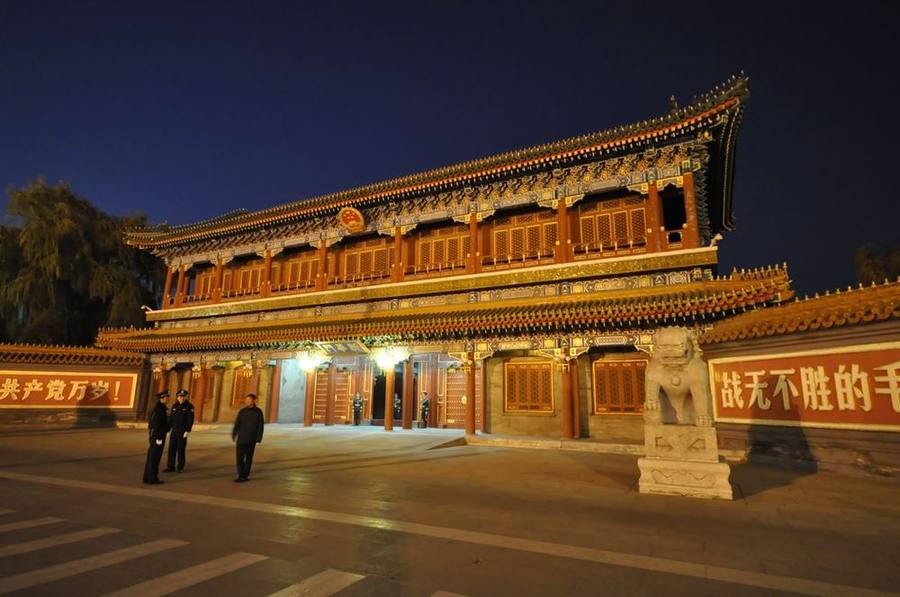
In 1986 Jiangxi's governor Ni Xiance was removed by the provincial People's Congress, and Wu Guanzheng succeeded him. From 1986 to 1995 he served as Jiangxi's deputy Party secretary, vice-governor, acting governor and governor; from April 1995 to April 1997 he was Party secretary of Jiangxi. In eleven years he completed the passage from technocrat to territorial ruler — head of a provincial government, then of a provincial Party committee. The public record of those years is dominated by economic work and clean-governance speeches: "Please supervise me more" in March 1988; "All leading cadres in the province must set an example of clean government" in February 1989; "Statistics must be true" in July 1994. These texts were later collected in Walking the Straight Path, and they formed the textual capital with which he entered the central leadership as an "anti-corruption secretary."
No major human-rights event of his Jiangxi years is attached to his name in the reports of international human-rights organizations. Candor also requires the other half of the sentence: Jiangxi in those years was no sanctuary — the post-1989 political repression and coercive family-planning enforcement existed there as elsewhere — but the open archive contains no documented record of personal command responsibility by Wu Guanzheng for them. The rule of attribution is therefore stated here and applied strictly below: where a public document or credible report names him personally, this page records direct responsibility; where only tenure and jurisdiction exist, it records tenure responsibility and labels the evidence; where neither exists, it records nothing.
In April 1997 he was transferred to Shandong as provincial Party secretary, and at the First Plenary Session of the 15th Central Committee that autumn he was elected to the Politburo, entering the Party's top leadership. The English Wikipedia relates that Zeng Qinghong, a close confidant of General Secretary Jiang Zemin, admired Wu's work and recommended his elevation. The claim rests on the encyclopedia's transmission alone, without a published primary source; it is archived here as unverified — one account of his ascent, not a finding.
4. Five Years in Shandong: A Politburo Member as Provincial Chief (1997–1999)
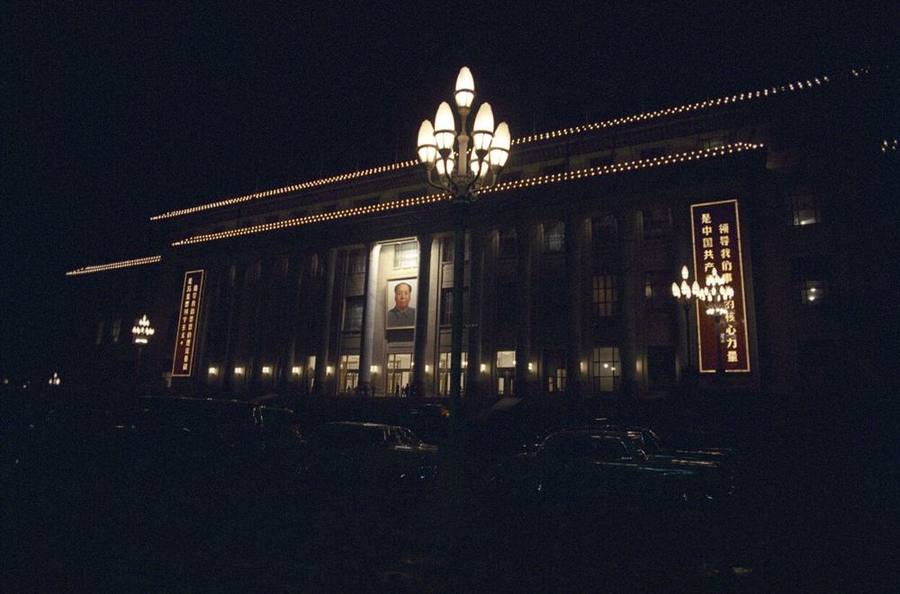
From April 1997 to November 2002 Wu Guanzheng served as a member of the Politburo, Party secretary of Shandong, and president of the provincial Party school, succeeding Zhao Zhihao. Shandong was then China's most populous province — some 87 million people — and among its largest provincial economies. A provincial Party secretary who simultaneously sat on the Politburo made Shandong, in effect, a province under direct central attention: its major political deployments were answered for to the Center, and reported to the Center, by a member of the ruling body itself. The provincial Party committee, government and — by the standing convention that the provincial Party secretary is first secretary of the provincial military district Party committee — the military district all stood under his leadership.
From 1997 to the first half of 1999, Shandong's public agenda was the economy and "stability." The turning point came in July 1999, when Falun Gong was banned. For the remaining three years and four months of his tenure — July 1999 to November 2002 — Shandong was one of the harshest provinces in China for the campaign against Falun Gong, and Wu Guanzheng was its Party secretary throughout. The archival question of this page is therefore a single one, asked in four layers: what happened in Shandong during his tenure, at what evidentiary level is it known, what can be tied to him personally, and what can be tied only to his tenure? The next four sections answer it in that order, reaching no conclusion before the evidence is laid out and using no camp's propaganda vocabulary in place of source grading.
5. The 1999 Ban and Shandong's Machinery of Suppression
Central-level facts must first be separated from provincial ones. At the center: on 25 April 1999 more than ten thousand Falun Gong practitioners gathered near the Zhongnanhai leadership compound in Beijing to petition; coordinated nationwide arrests began around 20 July, and on 22 July the government formally declared Falun Gong an illegal organization and banned it. So records the China chapter of the U.S. State Department's Country Reports on Human Rights Practices for 1999, which also records that tens of thousands of practitioners were detained after the ban, several leading figures received long prison sentences in December 1999, and hundreds were sentenced to reeducation through labor. The decision to suppress was Jiang Zemin's and the Center's; this page does not rewrite a central decision as Wu Guanzheng's personal one. Wu's responsibility question is different: how Shandong implemented it, and how far the implementation went.
On implementation, the key mechanism is documented in Ian Johnson's Weifang investigation for The Wall Street Journal of 26 December 2000: the "Office 610," the bureau coordinating the crackdown, issued an order in December 1999 telling local officials they would be held personally responsible if they failed to stem the flow of protesters traveling to Beijing — a point Johnson attributes to Weifang officials. This collective-liability rule is the key to Shandong's severity. The province tied the number of petitioners reaching Beijing to the careers of local chiefs; cities and counties then multiplied the pressure downward, until the only currency in which a grassroots "transformation" quota could be paid was violence. Johnson's series won the Pulitzer Prize for International Reporting; its fact-checking standard belongs to the tier of mainstream international journalism.
Shandong's earliest death to enter the international record occurred in Zhaoyuan. The State Department's 1999 report records that in October 1999 a Falun Gong website reported that practitioner Zhao Jinhua of Shandong had died from beatings in police custody, while official media reported that she died of a heart attack. The detail of the case is preserved mainly by Falun Gong-affiliated sources (Minghui): Zhao Jinhua, 42, a farmer of Zhangxing Town, Zhaoyuan, was taken away by the Zhangxing police station on 27 September 1999 and died on 7 October; a Yantai forensic examination is reported to have concluded death by beating with blunt instruments, while the official public line was myocardial infarction. This page archives the case in layers: the time, place and the opposing structure of the two accounts — beaten to death per Falun Gong sources, natural death per officials — are corroborated by the State Department report; the detailed sequence of the torture rests on Falun Gong sources alone and is labeled single-source. Zhao Jinhua died in the third month after the ban, in the third year of Wu Guanzheng's Shandong tenure. It was the first alarm from Shandong. The numbers climbed quickly from there.
6. Weifang: A City's Custody-Death Record (2000)
The archival core of the Shandong campaign is Weifang. Ian Johnson's December 2000 investigation took the city as its sample and documented how an ordinary prefectural city systematically beat people to death. Since the beginning of 2000, when police killed the 58-year-old retiree Chen Zixiu in custody, at least ten more Weifang residents had died in police custody, according to relatives and a human-rights monitoring group. All were Falun Gong practitioners. Against the then-reported national total of 77 custody deaths compiled by human-rights groups, Weifang — with less than one percent of China's population — accounted for fifteen percent. Johnson also documented how the city worked: officials stationed police in Beijing to intercept Weifang petitioners, ran detention facilities of their own in the capital, and shipped detainees back to "transformation centers" at home, where they were beaten until they renounced their faith, or died. By an unpublished government report, Weifang had some 60,000 practitioners in 1999, one of the heaviest concentrations in the province — many believers, heavy quotas, and lethal violence feeding one another.
The case of Chen Zixiu is the most fully documented single death in the Weifang record. Amnesty International's Report 2001, in its China chapter, records that Chen Zixiu, a 60-year-old Falun Gong practitioner, reportedly died under torture in February 2000 in police custody in Weifang, Shandong; that fellow detainees testified in detail about the torture; that according to her daughter, the body the family collected was covered in bruises, her teeth were broken and blood was coming from her ears; and that local police later claimed she had "died of a heart attack." Johnson's reporting gives her age as 58. The two sources differ by two years; this page archives both figures (58 / 60) in parallel, while noting that the core facts — the death and the condition of the body — agree across both. Johnson also recorded the observation that anchors this section: the officials' brutality toward Chen had seemed exceptional at the time, but practitioners then died in Weifang's custody at a rate of about one a month, casting doubt on the idea that any single person was responsible. A system was running.
A correction must be entered here against the international reporting itself, so that error is not compounded. Johnson's article states that "the man held responsible was Wu Guangzheng, the 62-year-old governor of Shandong province." Both the office and the spelling are wrong: Wu Guanzheng was Party secretary of Shandong, not governor (the governor was Li Chunting), and his name is not spelled that way. The error does not change the direction of responsibility, only its formal title — in a system where the Party leads everything, the provincial Party secretary is precisely the supreme official responsible for political-legal work and for campaigns of this kind, which the governor is not. The man Johnson meant to name is indeed Wu Guanzheng; he misnamed only the hat. This page archives the corrected fact: it was as Party secretary that Wu stood as the first responsible official of the Shandong suppression — an attribution at the level of tenure and authority.
7. The Death Toll, Archived in Layers (1999–2003)
How many Falun Gong practitioners died in Shandong's suppression? This page offers no single number. It archives four layers. Layer one, the count of an international human-rights organization: Amnesty International's statement of 19 December 2000 (ASA 17/048/2000) records that at least 77 Falun Gong followers had died in custody, or shortly after release, in suspicious circumstances since the crackdown began in July 1999, and that of these, 17 died in Shandong Province and 14 in Heilongjiang — Shandong first in the nation. Amnesty added that despite testimony from various sources indicating torture, local officials denied any wrongdoing and the government failed to investigate any of the cases. This layer is the baseline for Shandong's magnitude on this page: it comes from an organization with no affiliation to Falun Gong, and it carries the official denials alongside.
Layer two, the record of the United States government: the State Department's Country Reports for 2000 records that approximately one hundred or more Falun Gong adherents died that year in police custody as a result of torture and mistreatment, and names a Shandong case — Li Huixi of Shouguang City, reportedly beaten to death by public security officers in custody in April 2000, his body cremated without an autopsy before his family was informed. The report's own verb is "reportedly," and this page keeps that caution: the details are report-grade evidence, the existence of the deaths carries a government's imprimatur.
Layer three, the systematic counts of Falun Gong-affiliated sources: Minghui and the World Organization to Investigate the Persecution of Falun Gong state that from July 1999 to October 2003, 93 practitioners were persecuted to death in Shandong; another Minghui compilation gives 96 through December 2003. These figures exceed the first two layers, and their method — case-by-case reporting through practitioner networks — cannot be independently replicated by third parties. But they are consistent in direction with layer one: even on Amnesty's and the State Department's numbers alone, Shandong was among the deadliest provinces in China. Layer four, the official position: the Chinese authorities have never published a Shandong custody-death total, and their uniform response to individual cases has been to deny torture and attribute deaths to heart attacks, suicide or other natural or self-inflicted causes. The denials are archived as a layer; their credibility is for the reader to weigh against the three layers above.
Read together, the four layers support this conclusion and no stronger one: during Wu Guanzheng's tenure, 1999–2002, Shandong saw the densest concentration of Falun Gong custody deaths in China; Weifang was its most lethal city; torture and forced "transformation" formed the documented background; the authorities investigated nothing and held no one to account. What the layers do not support is any single figure as the exact toll, or any claim that Wu personally ordered a specific beating. The second of those is the subject of the next section.
8. Direct Responsibility and Tenure Responsibility: The Boundary of the Evidence
This section exists to mark the boundary between an archive and a pamphlet. Material that ties Wu Guanzheng personally, by name, to the direction of the Shandong campaign currently exists only in Falun Gong-affiliated sources. The notice issued on 30 December 2014 by the World Organization to Investigate the Persecution of Falun Gong alleges that while in Shandong Wu "personally commanded and deployed the persecution of Falun Gong in key areas," and gives two particulars: that Taian practitioner Wang Zhihua wrote to Wu in April 1999 pleading for freedom of belief, and that Wu personally signed the letter over to Wang's work unit, whose security office then investigated him; and that Wu twice traveled to Guan County to intensify the local persecution. If the first particular were documented, it would constitute a directly attributable personal act. But both particulars rest on the WOIPFG and Minghui system alone — no second independent source, no published document image — and this page archives them as allegations from Falun Gong-affiliated sources, not independently verified, marked unverified. To say "unverified" is not to pronounce them false; it is to say that by archival standards they cannot yet be written as established fact.
Wu Guanzheng himself, and the official system speaking for him, have never made any public response, explanation or denial concerning the Shandong suppression. His two books — Walking the Straight Path and Idle Ink — contain extensive Shandong-era speeches on Party discipline and a full volume of retirement essays, and neither contains one word about the campaign against Falun Gong. That silence is itself part of the archive: a man who governed Shandong for five and a half years, during which his province recorded the country's densest custody deaths, wrote hundreds of pages of political memoir and did not mention the matter once.
The attribution on this page is therefore written in two lines, neither of which may be dropped. First: tenure responsibility is established and cannot be shifted. The provincial deployment of the campaign, the operation of the 610 system, the transformation quotas and the collective-liability rule in places like Weifang all ran during his tenure as Party secretary and Politburo member; that Shandong's reported deaths led the nation is a fact established jointly by several evidentiary layers; and as the province's highest Party-state official he bears leadership responsibility that cannot be transferred downward. Second: publicly available evidence of personal, direct orders currently consists of single-source allegations from Falun Gong-affiliated organizations and does not yet meet the standard of independent verification. If provincial documents, meeting records or multi-source testimony are published in the future, this page will upgrade the attribution accordingly. Keeping the two lines separate is this page's obligation both to the dead and to its readers.
9. Heading the CCDI: The Record and the Structure of His Anti-Corruption Years (2002–2007)
On 15 November 2002, at the First Plenary Session of the 16th Central Committee, Wu Guanzheng was elected to the Politburo Standing Committee, ranked seventh of nine, and succeeded Wei Jianxing as Secretary of the Central Commission for Discipline Inspection. He served until 22 October 2007, when He Guoqiang succeeded him. He had entered the supreme leadership as the man in charge of discipline for the entire Party in the Hu Jintao era. The English Wikipedia describes him as an easy compromise candidate — acceptable to all sides — with workable relations both to Hu Jintao, a fellow Tsinghua man, and to Jiang Zemin. Such factional readings are the interpretive frame of overseas scholarship and media; this page archives them as background, not as findings of fact.
The weightiest case of his five years at the CCDI was that of Chen Liangyu, Party secretary of Shanghai. In 2006 a CCDI investigation uncovered the Shanghai social security fund scandal — the illicit investment of pension funds on a scale running into the tens of billions of yuan. On 24 September 2006 Chen Liangyu, a sitting Politburo member, was removed as Shanghai Party secretary and placed under investigation; in July 2007 he was expelled from the Party and handed to the judiciary, and was later sentenced to eighteen years' imprisonment (the sentence as publicly reported, archived here from public reporting). It was the highest-ranking official felled on Wu's watch, and it was also the decisive stroke by which Hu Jintao consolidated power against the "Shanghai gang." An Asia Society Policy Institute retrospective goes further, relating that Jiang Zemin had accepted Wu as CCDI secretary in 2002, felt double-crossed when Wu helped Hu purge Chen in 2006, and therefore ensured that an absolute loyalist, He Guoqiang, took over the CCDI in 2007. That is think-tank analysis, not a primary source, and is archived at the interpretive level; the provable factual layer is only this: the CCDI under Wu investigated the case, Chen fell, and Wu's successor was He Guoqiang.
A structural note is indispensable here, without which the title "anti-corruption secretary" conceals the institution itself. The CCDI is the Party's discipline organ, not an independent judiciary: whom it investigates and whom it does not is decided at the Party's summit. Its core instrument, shuanggui — the requirement that a member explain himself at a designated time and place — is an extrajudicial detention: the person under investigation is cut off from the outside world, without counsel and without a time limit guaranteed by law, belonging to the same institutional family as the custody logic that operated in Shandong during Wu's tenure there. The true picture of his anti-corruption years is therefore double. On one side: a Politburo-level "tiger" was investigated and jailed, case statistics were published annually, and the inspection-tour system took shape and expanded under him. On the other: the CCDI never could, and never did, investigate a sitting member of the Politburo Standing Committee or his family; the leadership stratum that decided the Falun Gong campaign never entered its field of vision; and anti-corruption remained throughout an instrument of discipline inside the structure of power, not a supervision standing outside it. The sentence Wu pronounced on himself at his departure, in the next section, serves as the footnote to this one.
10. "Fifty-Nine Points" and Departure (2007)
On 22 October 2007, aged 69, Wu Guanzheng stepped down from the Politburo Standing Committee and the CCDI secretaryship at the First Plenary Session of the 17th Central Committee, retiring on grounds of age. As the Chinese Wikipedia records from public reporting, at his departure he reflected that, facing a grave corruption situation and problems long accumulated and hard to reverse, "I can only give myself 59 points — a failing grade," and he named three things he regretted being unable to carry through: a public system for declaring officials' property and income; reform of the organizational structure and subordination of the CCDI and the Ministry of Supervision; and a ban on officials' consumption at public expense. The remark was carried by multiple public reports and is archived here at report level. Its content amounts to a rare confession from inside the office: even the man who held the Party's discipline portfolio for five years conceded that the two fundamentals of anti-corruption — asset disclosure and an independent discipline commission — were accomplished in neither case during his tenure, and that the reason lay not in his personal will but in the structure. This page does not grade the fairness of his 59 points. It notes one contrast only: the people detained for their beliefs in Shandong and across China, subjected to "transformation" and in some cases dead in custody during his years in office, never appeared among the questions on his self-assessment.
11. Two Books: Self-Narration and Silence (2008–2013)
Wu published two books in retirement. The first, Walking the Straight Path: The Practice and Reflection of Building a Clean Party, was published by People's Publishing House in December 2008 (ISBN 9787010075471). In two parts it collects his speeches, talks, articles, letters and annotations on clean governance from his years in charge in Wuhan, Jiangxi and Shandong and from his CCDI tenure, running from 1984 to his retirement. A common mislabel must be corrected: this is not a memoir but a collected-works volume — the official footnote he wrote in advance for his own career, on a single theme: I spent my life on clean government. The second book, Idle Ink (Xianlai Bitan), followed from the same publisher in May 2013 (ISBN 9787010120072; 561 pages): recollections, essays, prose pieces, jottings, fiction and dialogues written after he left office, in five parts — "Unforgettable Years," "Quiet Reflections," "Reading Notes," "Tea Stories" and "Conversations of Young and Old." The last of these records discussions on twelve topics with several old colleagues at his residence in Jinan — a detail that is also the only public clue to where he lived in retirement: Jinan. In the book he recalls his Wuhan years, calling himself a man who lived paycheck to paycheck, a mayor whose family home was so poor its door was never locked; Tsinghua's history museum and the Wuhan Evening News republished extracts.
Read archivally, what matters in these two books is what they do not contain. Walking the Straight Path includes numerous speeches from his Shandong years, dated squarely across 1999–2002, and not one of them touches Falun Gong, the 610 system, or a single custody death. Idle Ink, a volume of life recollection under the heading "Unforgettable Years," passes over the Shandong suppression in the same way. A man who titled his summation of himself "Walking the Straight Path" maintained total silence about the campaign under which more of his province's detainees died than anywhere else in the country. This page lists the two books among its sources not because it credits their narrative, but because it archives their choice: what he chose to record and what he chose not to record, set beside the facts of his tenure, is the complete file.
12. Family and the Death of the Eldest Son: The Evidentiary Boundary of a Single Cable
Almost nothing about Wu Guanzheng's family has been reliably reported. The one item carried by multiple transmissions concerns his eldest son, Wu Zuhua. According to the family section of the Chinese Wikipedia entry and the sources it cites, Wu Zuhua was chairman of Qingdao Tianyi Haiwan Real Estate Co.; on 1 December 2007 Qingdao Tianyi Haiwan sold all its shares for 2.17 billion yuan to the central state-owned COFCO Group and Beijing Zhongrong Century Investment Advisors. The amount, date and purchasers of an equity transaction are matters of public commercial record and are archived here at report level. It should be said plainly that the fact itself — the son of the CCDI secretary chairing a property company and exiting in a two-billion-yuan sale — belongs in the public archive of princeling capital; this page records the fact and draws no inference about the transaction's legality, no public material having alleged it unlawful. Beyond this item, research for this page found no reliable reporting on business activity by any other of Wu's children. Material circulating online that confuses him with Peter Woo (Wu Guangzheng), the Hong Kong property magnate and son-in-law of shipping tycoon Pao Yue-kong — a different man, one character different in Chinese, no relation whatsoever — is identified here as confusion and is not used.
The reported death of Wu Zuhua rests on exactly one source chain, and it must be archived link by link. A United States Consulate-General Shanghai cable of 5 October 2007, released by WikiLeaks, titled "Nanjing Academic on Political Violence in China," records that Nanjing University professor Gu Su stated that, according to a relative of his working in the Beijing Public Security Bureau, Wu Guanzheng's eldest son was murdered in January 2007 while on a business trip to Qingdao, Shandong, where he was signing a contract for the state-owned enterprise he worked for; that the body was reportedly found in a hotel room three days later; that Qingdao police officials had told the relative it was a murder and that the culprit came from Beijing; that the relative speculated Wu had made too many enemies in office and the killing might be a warning ordered by other leaders; and that Gu Su added Wu had been devastated, saying at a Politburo meeting words to the effect that his son had died for his anti-corruption work. The evidentiary grade of this chain is visible on its face: it is a diplomatic cable faithfully recording a scholar's hearsay, which the scholar had from a relative, who had it from Qingdao police — three transmissions, with no primary document, autopsy record or second source at any link. Mainland media have never reported it, and the time, place, cause — indeed the fact — of Wu Zuhua's death cannot be independently verified from any public record. Lurid later retellings on overseas websites, complete with invented ballistic detail, have no identifiable sourcing and are not used here in any particular. This page's position is the one stated in its own text: the December 2007 equity-sale record concerning Wu Zuhua's company (previous paragraph) and the "murdered in January 2007" account are archived in parallel, the public materials themselves do not explain how the two fit together, and this page does not force a reconciliation; the murder account is archived as hearsay recorded in a diplomatic cable and marked unverified; any text that presents it as established fact exceeds the present evidence.
13. The Spanish Case and the Sanctions Record
The only judicial proceeding Wu Guanzheng has faced came from abroad, after he left office. Falun Gong practitioners began filing criminal complaints in Spain in 2003; a 2006 ruling of Spain's Constitutional Court required the Spanish courts to accept the Falun Gong case under the principle of universal jurisdiction. In November 2009, after a two-year investigation, Judge Ismael Moreno of Spain's National Court accepted charges of genocide and torture against five men — Jiang Zemin, Luo Gan, Bo Xilai, Jia Qinglin and Wu Guanzheng — and issued rogatory letters through diplomatic channels requiring each to respond within four to six weeks. Contemporary reporting stated expressly that the charges against Wu (as against Bo in Liaoning and Jia in Beijing) rested on their alleged proactive advancement of the anti-Falun Gong campaign as top officials of their respective jurisdictions — in Wu's case, Shandong. Those procedural facts are documented in multiple media reports and in the statements of the plaintiffs' counsel, and they form a verifiable litigation file. Their limits must be written with equal clarity: the case never went to trial, none of the five ever appeared, there is no conviction and no executed arrest warrant, and Spain subsequently narrowed its universal-jurisdiction legislation, leaving cases of this kind in practical suspension. This page grades the Spanish case as a private criminal complaint accepted by a foreign court — proof that an international judicial system formally made Wu's Shandong tenure an object of investigation, not a guilty verdict, and not to be written as one.
On sanctions, the conclusion is short and definite: none. As of this writing (November 2026), Wu Guanzheng's name appears on no public sanctions list — not under the U.S. Global Magnitsky program, not under the European Union's human-rights sanctions regime, and not on the lists of the United Kingdom, Canada or Australia; and the Chinese authorities have never subjected him to any accountability or discipline. A former provincial Party secretary under whom, by the counts of international human-rights organizations, his province led China in Falun Gong custody deaths, and against whom a foreign court accepted torture charges, exists on no government's sanctions list and lives out his old age at home with the standing of a retired elder statesman. That state of affairs, together with the stalled Spanish case, is the whole of the accountability record this page exists to archive: accountability was attempted exactly once, outside the system, and it was never completed.
14. Retirement and Present Status
After retiring in 2007, Wu Guanzheng withdrew from public life. The public clues are three. He lived in Jinan, on the evidence of the conversations recorded in Idle Ink (Section 11). He spent his retirement writing: Idle Ink appeared in 2013, an e-book edition followed in 2014, reported in the Qilu Evening News. And he made the ceremonial appearances expected of retired leaders — most recently, on the evidence gathered for this page, on 25 October 2017, when Xinhua's published list of leaders meeting delegates to the 19th Party Congress included Wu Guanzheng among the retired officials present. That is the last public appearance this page's research could verify. From then to 2026 no reliable report of his attendance at any public event has been found. Born in 1938, he turned 88 in 2026; his health and exact place of residence are not in the public record, and this page records "no public record" rather than fill the gap with social-media material of no provenance.
The responsibility file, in summary, is this. Wu Guanzheng of Yugan, Jiangxi: a Tsinghua engineer who became mayor of Wuhan, governor and Party secretary of Jiangxi, Party secretary of Shandong, and finally the seventh-ranking leader of the Party-state as Politburo Standing Committee member and CCDI secretary in the Hu Jintao era. His career has two main lines. One is the "clean governance" of his own narration — from correcting housing abuses in Wuhan, through the CCDI's destruction of Chen Liangyu, to his departing self-grade of 59, a fail. The other is the suppression he never narrated: as Party secretary of Shandong from 1999 to 2002 he presided over the province with the densest concentration of Falun Gong custody deaths in China, one city of which, Weifang, accounted for fifteen percent of all reported custody deaths nationwide; the authorities investigated none of it, and he never responded to any of it. The purpose of this page is not to settle the moral account between those two lines on the reader's behalf. It is to lay out the evidence for both at its proper levels — which line has how many layers of sourcing, which rests on single-source allegation, which has never been answered for anywhere — because the completeness of the archive comes before the satisfaction of a verdict.
15. Verification and Sources
The posts and biographical facts on this page were cross-checked across multiple sources. Principal sources: the Chinese and English Wikipedia entries for Wu Guanzheng (sequences of posts, date of birth, the transmitted "59 points" remark — used as leads and re-verified against the sources below); the author's biography in Idle Ink (People's Publishing House, 2013; ISBN 9787010120072 — Party membership March 1962, work from April 1968, Tsinghua power-engineering degree) and its published contents description (the Jinan-residence conversations; the five-part structure); the publication data of Walking the Straight Path (People's Publishing House, December 2008; ISBN 9787010075471 — a two-part collected volume spanning the Wuhan, Jiangxi, Shandong and CCDI periods); and Wu's own retrospective republished by the Tsinghua University history museum from the Wuhan Evening News (the eighteen and a half Wuhan years, the Gedian plant, the salary recollection). For the Shandong suppression, sources are listed by tier. Amnesty International's statement of 19 December 2000 (ASA 17/048/2000: 77 deaths nationwide, 17 in Shandong, the highest provincial figure, official denials across the board) and the China chapter of Amnesty International's Report 2001 (the Chen Zixiu case, age given as 60, the condition of the body). The U.S. State Department's Country Reports for 1999 (the course of the ban; the Zhao Jinhua case with the Falun Gong account and the official "heart attack" line in parallel) and for 2000 (more than one hundred custody deaths nationwide; the Li Huixi case in Shouguang). Ian Johnson's Weifang investigation in The Wall Street Journal, 26 December 2000 (eleven deaths in Weifang, fifteen percent of the national total; the 610 Office's December 1999 collective-liability order; the unpublished government report of 60,000 Weifang practitioners; Chen Zixiu's age given as 58; the article's misnaming of Wu as governor of Shandong and the misspelling of his name are corrected on this page and the correction noted). Falun Gong-affiliated sources are listed and graded separately: Minghui (the detailed course of the Zhao Jinhua case; the Shandong totals of 93 and 96) and the WOIPFG notice of 30 December 2014 (the allegations of personal command and of the signed referral of Wang Zhihua's letter — marked unverified on this page). For the CCDI years: public reporting of the Chen Liangyu case, including Xinhua's September 2006 removal announcement, and the Asia Society Policy Institute's retrospective analysis of the Wu–Jiang relationship (interpretive tier). For the Spanish case: November 2009 reporting and plaintiffs' counsel statements on the National Court's acceptance of the charges (Judge Moreno; the five names; the Shandong basis of the charge against Wu; genocide and torture). For the family: the sources cited in the Chinese Wikipedia family section for the 1 December 2007 sale of Qingdao Tianyi Haiwan's shares for 2.17 billion yuan; and the U.S. Consulate-General Shanghai cable of 5 October 2007 released by WikiLeaks (the murder account concerning Wu Zuhua — triple hearsay, marked unverified). For present status: Xinhua's list of 25 October 2017 of leaders meeting 19th Congress delegates.
Corrections to, and reservations about, the originating brief, recorded as this page's method requires. First, Walking the Straight Path is often called a memoir; it is a volume of speeches and articles, and the genuinely retrospective work is Idle Ink (2013) — the two are characterized separately here. Second, the year of Party membership is March 1962 in the official résumé and March 1963 in the English Wikipedia; the main text follows the official version and preserves the discrepancy. Third, The Wall Street Journal originally called Wu the governor of Shandong and misspelled his name; this page corrects the office to Party secretary and notes the correction. Fourth, Chen Zixiu's age is given as 58 and as 60 by different sources; both are archived. Fifth, research for this page found no reliable reporting on business activity by any child of Wu Guanzheng other than the eldest son Wu Zuhua's Qingdao property chairmanship, the equity sale, and the WikiLeaks cable hearsay; material confusing him with Hong Kong businessman Peter Woo is not used. Matters for which no public source exists — any document of a personal order by Wu concerning the Shandong campaign, confirmation of Wu Zuhua's death, and Wu Guanzheng's precise health and residence in 2026 — are labeled by tier or as "no public record" throughout, and nothing has been written to fill them. This page will be revised as new archives open: wherever new primary material corrects any item here, this site will note the source of the revision while preserving the superseded wording, so that the correction itself becomes part of the record.
Contact: endccpworld@proton.me