
Wang Lixia (1964– )
Wang Lixia, born in June 1964 in Jianping County, Liaoning, an ethnic Mongol trained in planning statistics at Liaoning University, with a master's from the Shaanxi Institute of Finance and Economics and a doctorate in economics from Xiamen University, taught at the Xi'an Statistics Institute for twelve years from 1988 before entering officialdom in 2000, rising through director of the Shaanxi statistics bureau, mayor of Tongchuan and vice governor of Shaanxi. Transferred to Inner Mongolia in October 2016 as a regional Party Standing Committee member and United Front chief, elected an alternate member of the 19th Central Committee in 2017, she became Party secretary of Hohhot on 31 August 2019, succeeding the fallen Yun Guangzhong; deputy Party secretary of the region in July 2021, acting chair on 5 August and chair of the Inner Mongolia regional government on 9 September 2021 — the first chair not to have risen through the region's own officialdom; a full member of the 20th Central Committee from October 2022; she fell in office on 22 August 2025 and on 12 February 2026 was expelled from the Party and public office and referred to prosecutors. The core of this file is her two intersections with the 2020 Inner Mongolia language-policy events. On 26 August 2020 the regional Department of Education issued the compiled-textbook plan, triggering a boycott SMHRIC estimated at some 300,000 Mongolian students and region-wide protests; the crackdown followed — a 129-name wanted list published by Tongliao's Horqin District police on 2 September, at least 23 arrests counted by Amnesty International, the Mongolian-language platform Bainu shut down, public employees ordered to return their children to school on pain of dismissal, and a succession of reported suicides (the SMHRIC/UNPO allegation letter to the UN gives eleven suicides and 8,000–10,000 people under police control — allegation-level figures, never independently verified). Wang was then a regional Standing Committee member and Party secretary of Hohhot: institutional leadership responsibility for stability maintenance in the capital rests with her, but no public document shows her personally ordering any individual arrest, and this page keeps those layers strictly apart. After she became government chair in 2021, phases two and three of the policy, all-Putonghua kindergartens, the 2023 and 2025 switches to Chinese-medium entrance examinations and the renaming of nearly a hundred Mongolian-language schools were all completed under her government, each item documented in official records. Her chairmanship also saw the Alxa '2·22' mine collapse of 22 February 2023, which killed 53: the State Council found that local Party committees and governments had 'lost control and failed to inspect,' two vice chairs were disciplined, and she herself was not named at the time. Sanctions: none — her name appears on no foreign government's public sanctions list; the 2026 expulsion is the Party's internal reckoning with her for bribery and discipline offences, its text silent on 2020, and for the human-rights responsibility of the language policy and crackdown she has never been held accountable. As of November 2026 no indictment or trial has been publicly reported.
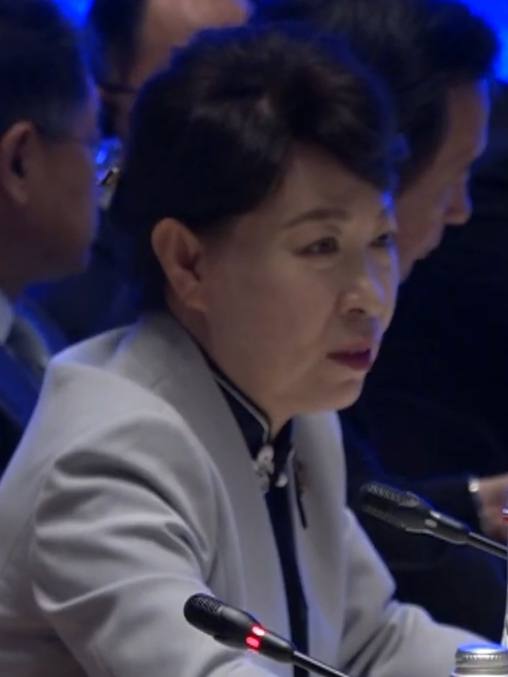
1. Origins in Liaoning and the Making of a Statistics Scholar (1964–2000)
Wang Lixia was born in June 1964 in Jianping County, Liaoning Province, and is registered as ethnic Mongol. Jianping, under Chaoyang prefecture in western Liaoning, borders Chifeng in Inner Mongolia and is a mixed Mongol-Han area — but her entire upbringing and education unfolded inside the Chinese-language academic and bureaucratic system, not inside Inner Mongolia's Mongolian-language world. That background matters for understanding her later role: among the regional leaders who stood on the implementing side of the 2020 Mandarin-instruction policy, she was a Mongol by registered ethnicity and an outsider by language and career formation — precisely the cadre type Beijing prefers in ethnic regions, and one reason Mongolian protesters reserved particular anger for her. This page records that only as background, not as a claim about her motives.
She graduated from the planning statistics programme of Liaoning University's economics department in September 1985 and went straight into a master's programme in statistics at the Shaanxi Institute of Finance and Economics (now part of Xi'an Jiaotong University). On graduating in July 1988 she stayed in Xi'an and taught at the Xi'an Statistics Institute (now Xi'an University of Finance and Economics) for twelve years — lecturer, then associate professor — joining the Communist Party in December 1992 while teaching. Between September 1997 and July 2000 she studied part-time at Xiamen University's economics school and took a doctorate in economics; in December 2000 she was made full professor. That same July she left the lectern to become deputy director of the Shaanxi Provincial Bureau of Statistics, turning from scholar to official at thirty-six.
This page treats her early years by the same rule as every other profile on this site: dates and posts follow the official résumé, the propaganda system's "scholar-official" narrative is not reproduced, and unsourced anecdotes are excluded. Her first half-life has no intersection with any persecution file. Its archival value is to establish her cadre type: a technocrat with no background in political-legal or police work and no grassroots township leadership, promoted step by step on a statistics and economic-management label. When she was transferred across provinces into Inner Mongolia in 2016, she was sent into an autonomous region whose central tension is ethnic and linguistic — and nothing in her professional formation had prepared her for that either.
2. Seventeen Years in Shaanxi: Statistics Chief, Mayor of Tongchuan, Vice Governor (2000–2016)
In Shaanxi she climbed the standard three rungs. Deputy director of the provincial statistics bureau from July 2000, she became its director in December 2005 and held the top statistics job for more than five years — a post of modest rank but one that reports directly to the provincial government and commands the province's economic data, a classic springboard for technocrats into the decision-making circle. In January 2011 she was sent to Tongchuan as deputy Party secretary and acting mayor, and was elected mayor in April, governing a locality for the first time. Tongchuan is a small resource city built on coal and cement and deep in the pains of industrial transition; her roughly two years as mayor left a public record of routine economic and livelihood administration, with no major event attached to her name.
On 31 January 2013 she was elected a vice governor of Shaanxi, with a portfolio covering commerce, health and family planning, opening-up and Taiwan affairs, serving until her transfer in November 2016. She was among the younger members of the provincial government leadership, and mainland media of the time described her as one of the youngest vice governors. No human-rights incident of this period is attached to her name in any international organization's reporting: her portfolio sat in the trade and health systems, not in the political-legal apparatus and not in ethnic or religious affairs.
Shaanxi's seventeen years are in this file to make one fact legible. Wang Lixia became a responsible figure of the 2020 events not because she had a repressor's record, but because the system successively placed an economics official who had never handled ethnic conflict into the posts of United Front chief, capital-city Party secretary and regional government chair. In the Party's cadre logic that is called an organizational arrangement. In the logic of an archive it means that when the cost of the policy was borne by Mongolian students, parents and teachers, the signature on the implementing side belonged to a person with neither attachment to Mongolian-language education nor professional understanding of it — only a duty to execute. Her personal traits — caution, obedience, the technocratic manner — are exactly what that staffing logic selects for. The judgment is institutional analysis, is labelled as such here, and is not mixed with the case facts below.
3. Transfer to Inner Mongolia: The Policy Climate of Her United Front Years (2016–2019)
In October 2016 Wang Lixia was transferred to the Inner Mongolia Autonomous Region as a member of the regional Party Standing Committee, and in November she took over the regional United Front Work Department. The United Front department is the Party's standing interface with ethnic, religious, non-Party and private-sector constituencies; in an autonomous region its head is one of the day-to-day contact points of ethnic policy. In October 2017 she was elected an alternate member of the 19th Central Committee at the Party's Nineteenth Congress, completing the step from provincial technocrat to member of the central leadership body. Her nearly three years as United Front chief coincided with the period in which Xi Jinping's "second-generation ethnic policy" completed its turn in doctrine and policy: "forging a strong sense of the Chinese national community" as the纲领, the promotion of the national common language and of nationally compiled textbooks as its instruments, and a systematic narrowing of the linguistic and cultural space the first-generation policy had left open. The three nationally compiled subjects — Language and Literature, Morality and Rule of Law, and History — entered ordinary schools nationwide in 2017, Xinjiang's ethnic schools the same year, and Tibet's in 2018. Inner Mongolia was the scheduled next stop on that conveyor.
The boundary must be drawn honestly: no public material shows Wang Lixia participating, as United Front chief, in any concrete decision to bring the compiled textbooks into Inner Mongolia. When the 2020 plan appeared she had already been Hohhot Party secretary for a year, and the United Front portfolio had passed to Duan Zhiqiang — who, on 23 September 2020, published a signed article in his capacity as regional Standing Committee member and United Front chief providing the official doctrinal defence of the common-language rollout. This page therefore does not charge her with the "decision" of 2020: the policy came from the centre; its regional publisher was the Department of Education; the regional Party secretary of the day was Shi Taifeng and the government chair was Bu Xiaolin. Wang's intersection with the policy lies in two other places: in the autumn of 2020 she was the capital's Party secretary, responsible for front-line implementation and stability maintenance in Hohhot; and from the autumn of 2021 she was the regional government chair, under whom the policy's later phases were executed item by item. Those two responsibilities are treated in Sections 6, 8 and 9.
One period note may be recorded in passing: religious and ethnic-affairs management in Inner Mongolia tightened steadily during her United Front tenure, including scrutiny of Mongolian民间 cultural activity — but such routine control produces no documents or events bearing her personal name, and this page archives it at the level of tenure background without inventing specific instances.
4. Party Secretary of Hohhot: Succeeding the Fallen Yun Guangzhong (2019–2021)
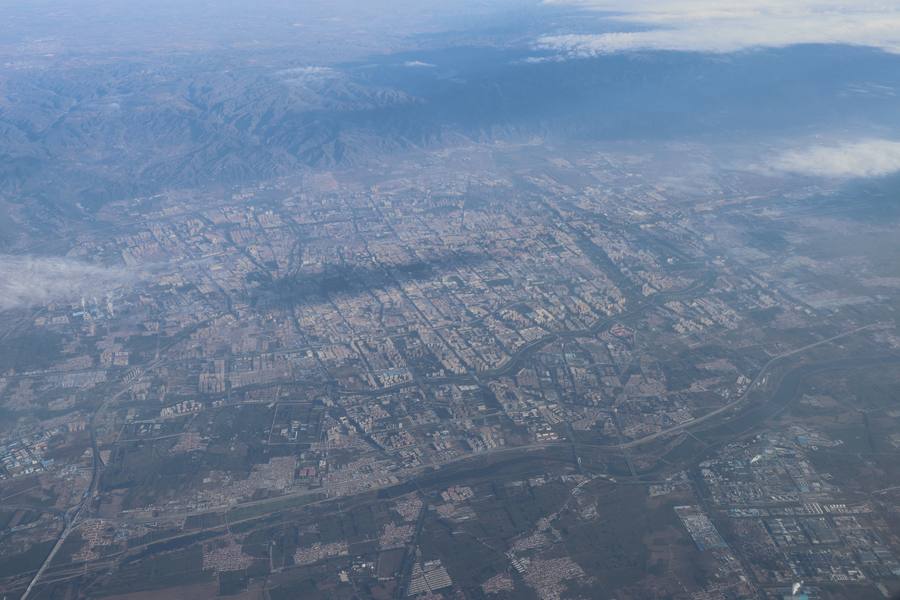
On 31 August 2019 Wang Lixia became Party secretary of Hohhot. She succeeded Yun Guangzhong, who had been announced as under investigation that June while serving as regional Standing Committee member and Hohhot Party secretary, and was later sentenced to fourteen years for bribery. The Hohhot secretaryship was already a dangerous seat before she took it: Caixin, in its February 2026 reporting, counted her as the fourth Hohhot Party secretary investigated since 2012, herself included. The official logic of her appointment was clean-up: an outsider woman cadre with no local roots and no political-legal background, sent to take over a capital whose Party chief had just been arrested for corruption.
Hohhot is the regional capital, with more than three million residents, seat of the regional Party and government organs and of universities including Inner Mongolia University, and home to key nodes of Mongolian-language education such as the Hohhot Mongolian Experimental School and the high school attached to Inner Mongolia Normal University. In the authority structure of a municipal Party secretaryship she was the city's first responsible person: the municipal Party standing committee leads the public security bureau, the intermediate court, the procuratorate and the political-legal apparatus, and decision power over major stability-maintenance operations sits with the Party committee, not the city government. That authority structure is the institutional basis on which this page assigns her responsibility — it derives from the Party's general organizational rules for local committees, not from conjecture about her personally. In September 2020, when the boycott and protests reached Hohhot's campuses, the person sitting behind that desk was Wang Lixia.
5. The 2020 Language Policy: The Decision Chain and Her Coordinates
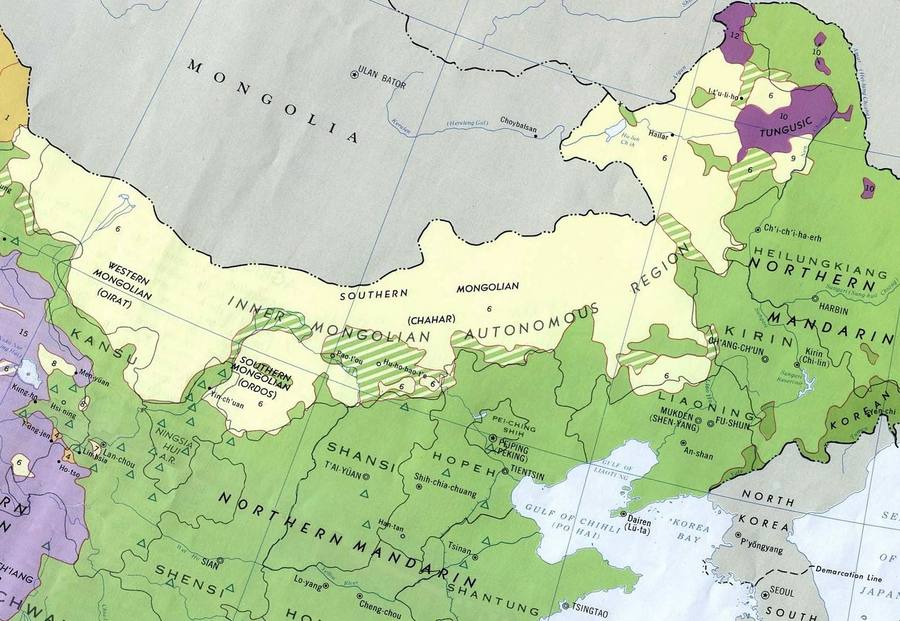
The policy's provenance must be stated before responsibility can be discussed. From 2017, the Ministry of Education's nationally compiled textbooks for the three subjects entered ordinary primary and middle schools across the country; by the centre's pre-set sequence, minority-language schools followed — Xinjiang in 2017, Tibet in 2018. Inner Mongolia's Mongolian-medium system still kept the "Type One bilingual" model: every subject taught in Mongolian, with a separate Chinese course added from second grade. In June 2020, a Ministry of Education inspection in Tongliao let the word out: Mongolian-medium schools would pilot the compiled Language and Literature textbook in the autumn. On 26 August 2020 the regional Department of Education issued its implementation plan for first grades of primary and junior-middle school: from 1 September, first-grade Language and Literature would switch to the compiled textbook, taught in Putonghua and standard characters; from autumn 2021, first-grade Morality and Rule of Law would follow; from autumn 2022, first-year junior-middle History. Education director Hou Yuan announced the first step publicly on 29 August, and on 31 August the regional government confirmed the three-step timetable.
The official characterization never varied — an "optimization of bilingual education," and a legal duty to promote the national common language. Mongolian society saw something else: the hours of Mongolian-medium instruction being withdrawn starting with the core subjects, and withdrawn in an order — language, politics, history — that picked out precisely the three subjects carrying ethnic memory and identity. The American scholar Christopher Atwood, in a widely read explainer of September 2020, pointed out that on this timetable every grade's three subjects would be taught in Chinese by 2022, leaving Mongolian with a single subject, Mongolian Language and Literature, taught in the manner of a foreign language. The solidarity protests in Mongolia and among Mongolians worldwide, and the later interventions of PEN International and the UN special procedures, all proceed from that judgment: this was not a dispute over textbook editions, but the beginning of the administrative dismantling of a people's mother-tongue school system.
Her position on this decision chain has three layers, to be kept apart. The decision layer is not hers: the tone was set by the centre, the plan was issued by the regional Department of Education, the regional Party secretary of the day, Shi Taifeng, was the region's first responsible person, and Bu Xiaolin headed the government. The regional Standing Committee layer includes her: she was a member of that collective leadership, and the regional Party committee's successive 2020 deployments on the textbooks were collective acts — but no public material records any specific statement of hers in that body, so this page records only her membership, and fabricates no position. The implementation layer is where her responsibility is most solid: implementation and stability maintenance in Hohhot were the charge of the municipal Party committee she led. The next section records the protests and the crackdown; the one after addresses attribution directly.
6. Protest and Crackdown: 31 August to October 2020
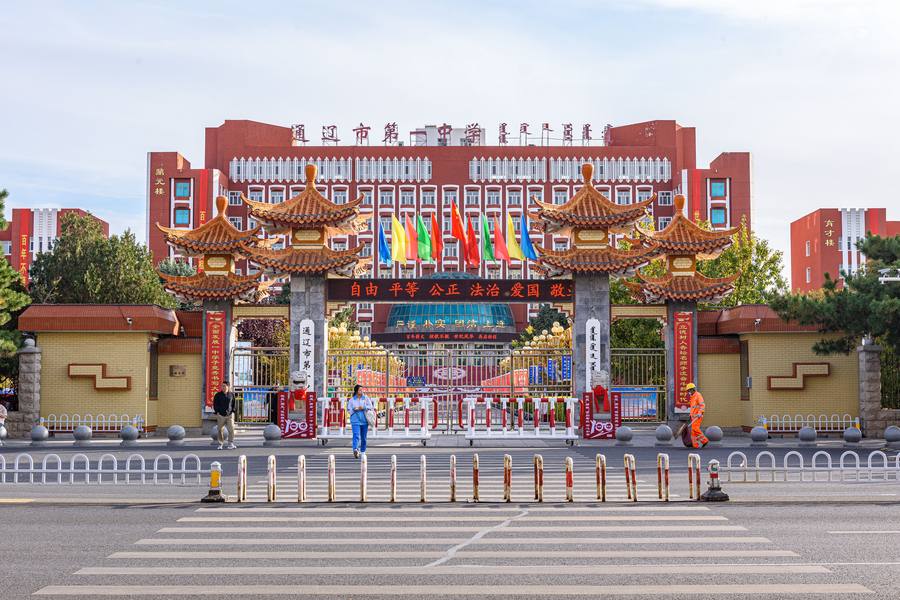
First, the scale of the protest. The Southern Mongolian Human Rights Information Center (SMHRIC), based in New York, broke the policy's contents on 20 August, and the news raced through Mongolian communities. Gatherings and petitions appeared from 28 August; on 31 August the protest broke out region-wide — parents kept children home, students took to the streets, herders came into the cities in support. SMHRIC estimated that on 1 September, the first day of term, some 300,000 Mongolian students across the region joined the boycott and many Mongolian-medium schools stood empty; more than three hundred Mongolian employees of Inner Mongolia Radio and Television signed a joint letter saying that if staff were punished as parents for the boycott, they would resign en masse — a collective statement from inside the system without precedent in contemporary China. In Xilin Gol League, high-school students began a hunger strike on 1 September. These figures and episodes rest mainly on SMHRIC's and Radio Free Asia's interview records; this page archives them at human-rights-organization level, their direction corroborated by contemporaneous Associated Press and Reuters reporting, their exact numbers open to no independent verification.
The documented crackdown is likewise archived item by item. Amnesty International's statement of 21 September 2020 counted at least 23 people arrested for "picking quarrels and provoking trouble" for taking part in, or sharing information about, the protests — a figure drawn from the Associated Press's tally of nine local police notices, and the most conservative, most checkable arrest number available. On 2 September the Horqin District public security bureau in Tongliao published a single notice listing 129 named suspects, with photographs, offering rewards for tips; SMHRIC, relayed by Radio Free Asia, put the total of wanted persons across Tongliao's banners and counties at over one hundred beyond the city list as well. The wanted-list poster aimed at parents who would not send their children to school became one of the defining images of the 2020 suppression. At the same time the only Mongolian-language social platform, Bainu, was shut down — its 400,000 users had already lost group-chat functions on 23 August — and content about "bilingual education" was systematically censored on WeChat and Weibo. In early September a credentialed Los Angeles Times correspondent reporting in Hohhot was surrounded by plainclothes men, detained for several hours and forced out of the region, an episode the paper reported publicly — direct evidence of the suppression at work in the capital under her administration.
The instruments against parents went beyond arrest. In early September the authorities ordered that the children of all public employees report to school by noon on 3 September, on pain of dismissal; in Zhenglan Banner two Party-member cadres were suspended without pay for failing to implement the policy; threats involving jobs, social benefits and "social credit" recur in multiple outlets' interviews with parents. By mid-October most students had been forced back into classrooms now teaching in Chinese. The allegation letter that SMHRIC and the Unrepresented Nations and Peoples Organization filed with the UN special procedures on 5 February 2021 estimated that between 8,000 and 10,000 Mongolians had been placed under some form of police custody since the civil disobedience began — 2,000 to 5,000 detained, 4,000 to 4,500 under house arrest, and a further 2,500 disappeared and believed detained. Those figures come from a single source system, SMHRIC's community information network, unverified by the United Nations; this page archives them at allegation level and sets them beside Amnesty's checkable floor of 23 arrests. The whole interval between the two numbers — the absence, to this day, of any reliable total for the crackdown — is itself part of the record.
Late in September the regional authorities briefly softened their tone: the Department of Education offered the "five no-changes," promising that apart from the three subjects, other textbooks, teaching languages, Mongolian class hours and the existing bilingual system would remain unchanged. The reassurance was soon repudiated on the ground that it "did not conform to central policy" — a formulation carried in subsequent official reporting and archived here at report level. Its importance is that it proves the hard line of autumn 2020 was not a local implementation error but a centrally set course on which regional officials had no room to retreat. Regional officials, this page's subject included, were left by the structure with a single role: execution. Hold that fact in mind when reading the attribution section that follows — it neither inflates institutional guilt into personal villainy nor lets "just following orders" acquit the specific executors.
7. The Suicide Reports: A Section That Must Be Graded
Through September 2020, reports of suicides emerged one after another. This page records them by evidentiary grade — not merged, not dramatized. Radio Free Asia reported on 3 September that at least two Mongolian parents had killed themselves after the authorities applied extreme pressure to force children back to school: one a mother who was also a teacher in Zhenglan Banner, Xilin Gol League; the other a father in Tongliao whose wife was a teacher. On 4 September RFA reported a further death that morning: Surnaa, a 33-year-old Mongolian woman who worked for a Party committee department in Alxa League; her husband and family, in a statement carried by SMHRIC, said she had taken her life in protest after a confrontation with her superior over the language policy. Hers was the fourth reported death; the earlier three, as relayed to RFA by a US-based Mongolian activist, comprised a fifth-grade pupil near Tongliao (Shebotu), a teacher in Zhenglan Banner, and a herder in Ongniud Banner. All of these cases share one feature: identity and cause rest on family members, activists or SMHRIC channels; no official notice, autopsy or investigation record has been published, and the Chinese authorities have never acknowledged any of these deaths as connected to the language policy. This page archives them at the level of family and human-rights-organization allegation, and does not write them as proven causation.
At the level of totals: the allegation letter SMHRIC and UNPO filed with the United Nations in February 2021 put the number of Mongolian students, parents and teachers who had killed themselves over the new policy at eleven; an academic abstract for the 2021 Central Eurasian Studies Society conference likewise used the formulation "at least eleven parents and teachers." Eleven is the most widely circulated figure in the protest narrative, but it too derives from SMHRIC's information network and has never been verified case by case by any independent body; this page archives it as an allegation-level total, presented separately from the individually named reports above. The page's position on this section is one sentence: even on the most conservative, individually reported count carried by Radio Free Asia, several people died by suicide during the policy's enforcement in September 2020 — and the regional leadership of which Wang Lixia was a member has never publicly responded to a single one of those deaths.
8. Attribution: Where Her Responsibility Lies, and Where It Does Not
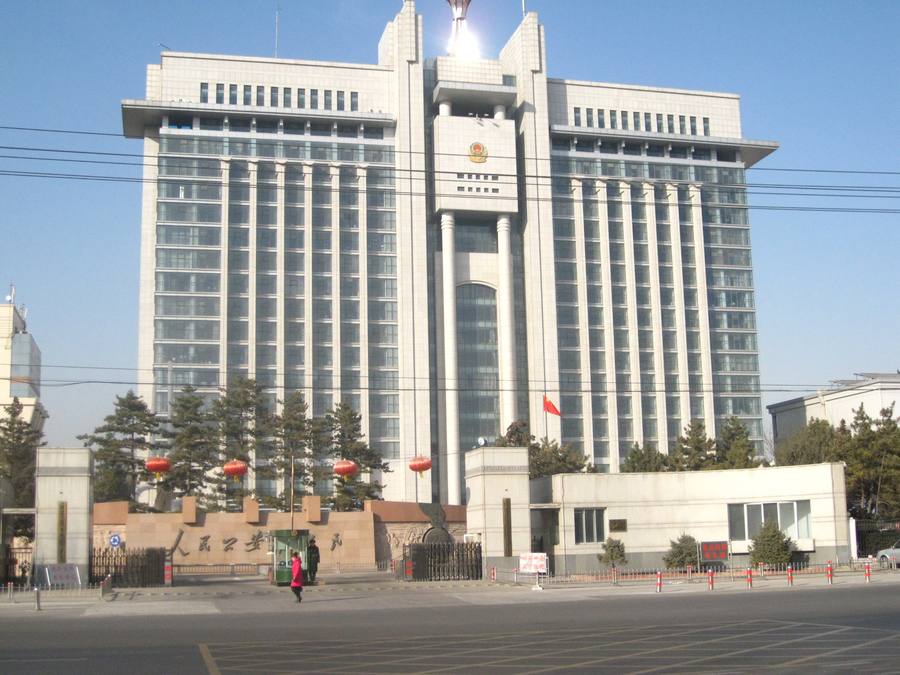
This section is the methodological core of the page, and it proceeds item by item. First, she bears no responsibility for deciding the policy. Bringing the compiled textbooks into Inner Mongolia was a scheduled step of the centre's second-generation ethnic policy; the decision and the timetable were made in Beijing; the regional Department of Education was the issuing organ; in 2020 she was neither regional Party secretary, nor government chair, nor education director. To credit her with inventing the 2020 policy is a misattribution, and this page does not make it. Second, she bears leadership responsibility for implementation and stability maintenance in the capital. From 31 August to October 2020 the Hohhot municipal Party committee sat under her chairmanship, and the city's public security bureau and political-legal system operate under the municipal committee's leadership; the detention and expulsion of a foreign correspondent in Hohhot, the summoning and pressuring of Mongolian-school parents, and the household-by-household mobilization to return students to class all occurred under her administration. Under the Party's own organizational rules for local committees, the decision chain for such operations converges on the municipal Party secretary's office — attribution at the level of institutional fact, supported by the organizational rules and the contemporaneous event record. Third, there is no evidence that she personally ordered the arrest, wanted-listing or persecution of any individual protester. Research for this page across Chinese- and English-language reporting and human-rights documentation found no document, recording or testimony naming her as the source of any specific suppression order; the Tongliao list of 129 wanted suspects issued from the Tongliao police system, outside the jurisdiction of the Hohhot Party committee, and must not be entered under her name. Fourth, she bears a share of the collective leadership responsibility of the regional Party Standing Committee: she was a member of that body throughout the collective decisions of autumn 2020 on implementation and stability, but her individual share cannot be separated out of the public record, and this page records membership and tenure only, and converts nothing into proportions.
Set side by side, the four layers show her real position in 2020: not the director of the campaign, but the director-system's executor in the capital; not an innocent bystander, but a person bearing institutional leadership responsibility for everything that happened under her administration, with no public record of dissent at any point. In China's political structure a Party secretary's "leadership responsibility" for stability operations has never been an empty title — it means the requests for instruction from the police and propaganda systems below ultimately reach her desk, and it means that afterwards the credit for "resolute handling" is entered in her record of achievement. In fact, less than a year after the crackdown was completed she was promoted to chair of the regional government, the region's number two. The official reasons for that promotion were never published, and this page does not write promotion and crackdown into a causal chain; but the timeline itself stands in the archive, side by side: execution in the autumn of 2020, promotion in August 2021.
9. As Chair: The Dismantling Completed on Her Watch (2021–2025)
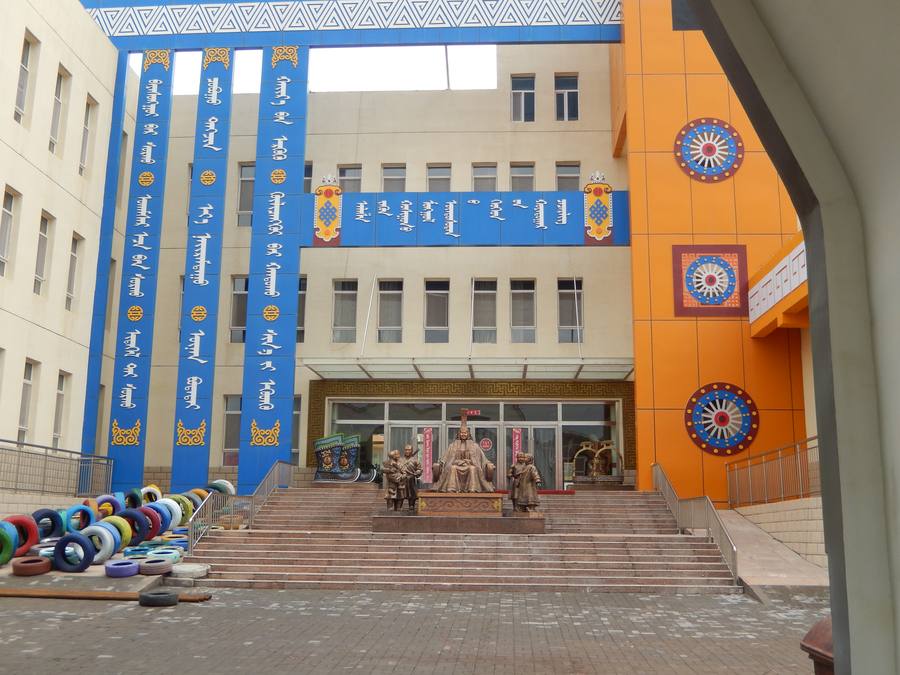
Unlike the layered attribution required for 2020, the account from August 2021 is plain: she was chair of the regional government, and every act of governmental execution fell within her authority. She first became deputy Party secretary in July 2021. When her predecessor Bu Xiaolin moved to a vice chairmanship of the National People's Congress Environment and Resources Protection Committee, the regional people's congress standing committee appointed Wang vice chair and acting chair on 5 August, and on 9 September the regional people's congress elected her chair. One detail was stressed by officials and media alike: she was the first chair of Inner Mongolia not to have risen through the region's own officialdom — the era of three generations of Ulanhu's family heading Inner Mongolia (Bu Xiaolin is Ulanhu's granddaughter) thus ended, and Beijing's new model of governing Inner Mongolia through outside cadres began with her.
The very month she took office, phase two of the policy landed on schedule: from the autumn term of 2021, first-grade Morality and Rule of Law switched to the compiled textbook taught in Chinese. The same autumn, kindergartens were required to conduct all childcare activity in Putonghua, and books on Mongolian history and culture were removed from classroom collections. In autumn 2022 phase three was completed: first-year junior-middle History switched to the compiled textbook in Chinese — all three steps announced in 2020 walked off, none delayed, none altered. Deeper restructuring followed: from 2023 the junior-to-senior high school entrance examination was set in Chinese; in 2025 the university entrance examination followed, merging Mongolian-medium students into a single track with Chinese-medium students. Research published in 2025 by James Leibold of the Australian National University and Soyonbo Borjgin counts nearly one hundred Mongolian-language schools renamed since 2021, the words "Mongolian" and "Mongol nationality" scrubbed from school names in batches — Tongliao Mongolian Middle School becoming Tongliao No. 6 Middle School — while Tongliao city officially announced in autumn 2024 that its 106 formerly ethnic-language schools, serving nearly 50,000 students, had fully transitioned to Putonghua instruction with compiled textbooks. The veteran Mongolian educator Gowaa, long-serving principal of the Tongliao Mongolian School and once a state-honoured model of national unity, was investigated on corruption charges and detained after the 2020 protests — a detail carried in the academic study just cited and archived here at academic-relay level.
Her own public posture in the process is equally checkable. On 15 May 2024 the Ministry of Education and the Inner Mongolia government held a ministry-region consultation in Beijing; Minister Huai Jinpeng and Wang Lixia both attended and spoke, a strategic cooperation agreement was signed, and the meeting's communiqué expressly called for strengthening ideological and political courses and "promoting the use of the national common language" — her most recent high-level public appearance as chair in support of the language policy, archived here from the Ministry of Education's own website at official-record level. Across her government work reports and public speeches, the language policy is always phrased in the affirmative official register of "comprehensively implementing the nationally compiled textbooks" and "promoting and popularizing the national common language"; research for this page found no public statement by her about the 2020 protesters, the wanted parents, or the dead. Silence and execution are, in her file, two faces of one coin.
One layer of background belongs here too, lest the account tilt. On 5 March 2021 Xi Jinping, joining the Inner Mongolia delegation at the National People's Congress, personally instructed that the work of promoting the national common language be done well and the compiled textbooks implemented across the board — the highest-level public endorsement of the line, delivered five months before she became chair. This page therefore writes it plainly: the post-2021 implementation was the execution, at regional-government level, of a central line; her responsibility is the executive and political responsibility of the regional government's head, not authorship of the line. But unlike 2020, this tenure ran four years, and every link in it — the examination reform timetable, the scope of the school renamings, the reach of kindergarten Putonghua — passed through the signature chain of the government she led. No public record of "the centre pressed hard and the region had no choice" exists to relieve her, and no evidence shows her attempting to slow any single step.
10. The Alxa "2·22" Mine Collapse: Government Failure on Her Watch (2023)
Beyond the language policy, the largest governance-responsibility event of her chairmanship was a mining disaster. At 13:16 on 22 February 2023 the open-pit mine of the Xinjing Coal Industry company in Alxa Left Banner collapsed across a wide area, killing 53 people, injuring six, and causing direct economic losses of more than 200 million yuan. The State Council investigation report, published on 29 August 2023, concluded that the disaster resulted from a company building and producing illegally, a contractor operating recklessly, regulators enforcing "laxly, softly and emptily," and "local Party committees and governments losing control and failing to inspect, so that major hidden risks persisted over a long period." In the handling that followed, Huang Zhiqiang, a regional Standing Committee member and vice chair, received a Party warning; Dai Qin, a vice chair who had previously led Alxa League, received a severe Party warning; 42 public officials were held accountable in all, judicial organs opened cases against 19 people, and 13 were arrested.
This page's finding on her responsibility for the disaster follows the boundary of the public record strictly. In the State Council report and the discipline lists, Wang Lixia herself was not named and received no sanction — that is a fact, and it is not rewritten because she is this page's subject. But the converse is also fact: she was chair of the regional government and the first administrative person responsible for production safety in the region; the finding of "local Party committees and governments losing control" landed on the government she headed; two vice chairs in her own leadership team were disciplined; and she herself continued undisturbed in office for two and a half years after the disaster. Claims circulating in a few overseas self-media outlets that she "covered up the mine disaster," with family interests behind it, are supported by no reliable source; this page marks them unverified, does not adopt them, and does not enter them as fact. The archive's formulation stops exactly there: institutional leadership responsibility stands, personal disciplinary allegations are unproven, and her name is absent from the official accountability list — three sentences that must stand together.
11. The Fall: 22 August 2025
On 22 August 2025 the CCDI and National Supervisory Commission websites announced that Wang Lixia was under disciplinary review and supervisory investigation for suspected serious violations of discipline and law. Barely a week earlier, regional official media had carried news of her leading flood-relief deployments. Her fall took the same form as those of the systems she had served: a notice of a hundred-odd characters, the person gone from public view, the offices peeled away one by one. She was the third sitting provincial-level government head to fall in 2025, after Shanxi governor Jin Xiangjun and Guangxi chair Lan Tianli; Caixin counts her as the fourteenth senior Inner Mongolia official investigated since 2012, and the fourth Hohhot Party secretary investigated since 2012 — she had arrived as the successor to a fallen man, and in the end joined the same list as the man she succeeded.
The subsequent steps follow the public record. On 4 September 2025 the regional people's congress standing committee accepted her resignation as government chair and terminated her credentials as a regional people's congress deputy; on 12 September the NPC Standing Committee removed her as a national people's congress deputy; her posts as deputy Party secretary and Standing Committee member were removed in the course of the investigation (no separate announcement date has been published, noted here as no public record). On 13 October 2025 Bao Gang was elected chair of the regional government — the same Bao Gang who had succeeded her as Hohhot Party secretary in 2021, taking over from her twice. The region's highest administrative power thus changed hands, with the other party to the handover inside the retention-and-investigation process of the supervisory system.
12. The Expulsion Notice and the Judicial Road Ahead (2026)
On 12 February 2026 the CCDI announced that Wang Lixia had been expelled from the Party and from public office, that her credentials as a delegate to the Twentieth Party Congress and to the region's Eleventh Party Congress were terminated, that her ill-gotten gains were confiscated, and that her suspected crimes were transferred to the procuratorate for examination and prosecution. The notice's characterizations of her, as relayed and summarized by Caixin and other outlets, include: loss of ideals and betrayal of the Party's original mission; surface compliance with, and covert opposition to, the "Two Safeguards"; using her authority to interfere in judicial activities; irregular selection and appointment of cadres for personal benefit; accepting banquets and pursuing luxury in violation of the eight-point austerity rules; and using her office to benefit others in the awarding and execution of construction projects while illegally accepting enormous sums, constituting suspected bribery — conduct that continued, unrepentant, after the Eighteenth Party Congress. Not one character of the notice touches public policy beyond corruption. That observation is this page's, and the next section develops it. In October 2026 the fifth plenum of the 20th Central Committee considered and approved the CCDI's review report on her case and ratified the expulsion, completing her intra-Party procedure.
On the judicial side, as of this research in November 2026 there is no public report of a procuratorial indictment against Wang Lixia, of a designated trial court, or of a hearing. Sun Shaocheng, the last Party secretary she served under (April 2022 to September 2025), also fell and came under investigation in the same period — Caixin reads the two successive falls as a sign of the Inner Mongolia anti-corruption campaign deepening; this page archives that at the level of Caixin's analysis and draws no inference about links between the two cases. Her eventual sentence awaits a court's public judgment. And whatever its length, one thing must be written plainly: it will be the price of bribery and indiscipline, and it will have nothing to do with the wanted parents of 2020, the silenced platform, or the dead.
13. Sanctions and Accountability: Two Ledgers That Do Not Cancel
On sanctions, the conclusion first: there are no foreign sanctions. Research for this page checked the public lists and reporting of the principal United States, European Union, British and Canadian sanctions mechanisms and found her name on none of them. For the 2020 language policy and crackdown itself, what the international community has named is the policy and the system; not one implementing official has entered any sanctions list — unlike the Xinjiang and Tibet files, where multiple CCP officials have been designated, the Mongolian-education file has to this day no foothold on any government's sanctions agenda. This page records that blank as it stands, without embellishment.
The domestic "accountability" must then be identified for what it is. The 2026 expulsion and referral are an internal reckoning by the Party's discipline system in the name of corruption and indiscipline: what the notice lists is banquets, luxury, cadre appointments and construction bribes — her offences against the organization above her, and her abuse of the power in her hands. Such a procedure differs from human-rights accountability in that it settles what she did upward, not what she did downward. The parents placed on wanted lists in September 2020 have received no apology; the families of the dead have received no investigation; the Tongliao Mongolian Middle School's name and the erased hours of Mongolian instruction have not been restored — and when she was taken away, the regional government offered no review of the language policy, and the government of her successor Bao Gang continues to execute the same line. This page's conclusion is therefore double-layered: as a corrupt official she is paying with her career and her freedom; as one of the responsible figures of 2020 she has never been held accountable at all. The two ledgers do not cancel each other, and the archive keeps them separately, neither entry dispensable.
14. Verification and Sources
The career and biographical facts of this page were cross-checked across multiple sources, principally: the official résumé system and the Chinese and English Wikipedia entries for Wang Lixia (born June 1964, Jianping County, Liaoning, ethnic Mongol; master's from the Shaanxi Institute of Finance and Economics, doctorate in economics from Xiamen University; Shaanxi statistics bureau director from December 2005, mayor of Tongchuan from April 2011, vice governor of Shaanxi from 31 January 2013, regional Party Standing Committee member from October 2016, United Front chief from November 2016, alternate member of the 19th Central Committee from October 2017, Hohhot Party secretary from 31 August 2019 to 2 August 2021, deputy Party secretary from July 2021, acting chair from 5 August 2021, elected chair on 9 September 2021, member of the 20th Central Committee from October 2022 — the entries citing official releases from China Economic Net, Inner Mongolia News and the Chinese government portal); the CCDI's investigation announcement of 22 August 2025 and expulsion notice of 12 February 2026, cross-checked between the Wikipedia citation trail and Caixin's in-depth report of 12 February 2026 (the characterizations of surface compliance and covert opposition, interference in the judiciary, irregular cadre appointments, construction-project bribery and violations of the eight-point rules; the counts of fourteenth senior regional official and fourth Hohhot Party secretary investigated since 2012; ratification by the fifth plenum in October 2026); her resignation as chair and the termination of her deputy credentials, per Inner Mongolia News of 4 September 2025 and the NPC Standing Committee decision of 12 September 2025; and Bao Gang's election as chair on 13 October 2025 in regional people's congress reporting.
Sources for the 2020 events: the regional Department of Education's implementation plan of 26 August 2020 and the regional government's three-step timetable of 31 August (checked against the Chinese Wikipedia article on the 2020 Inner Mongolia bilingual-education policy controversy and the official releases it cites, including Education director Hou Yuan's announcement of 29 August, the "five no-changes" and their subsequent repudiation, Duan Zhiqiang's signed article of 23 September 2020, Vice Minister of Education Zheng Fuzhi's remarks of the same day, and Xi Jinping's address to the Inner Mongolia delegation of 5 March 2021); Amnesty International's statement of 21 September 2020 (at least 23 arrests for picking quarrels; the Horqin District police list of 129 published on 2 September, the underlying count from the Associated Press's tally of nine police notices); Radio Free Asia's reports of 3 and 4 September 2020 (SMHRIC's estimate of some 300,000 boycotting students, over a hundred persons wanted, two parents' suicides, the death of Surnaa and the count of four reported deaths); the allegation letter filed by SMHRIC and UNPO with the UN special procedures on 5 February 2021 (the breakdown estimate of 8,000 to 10,000 persons under police control; the total of eleven suicides; the citation of Article 37 of the Regional Ethnic Autonomy Law); PEN International's statement on the language policy and house-arrested writers; Christopher Atwood's September 2020 explainer (the three-subject timetable and the 2022 full-coverage projection); James Leibold and Soyonbo Borjgin's 2025 study in the Made in China Journal (nearly one hundred Mongolian schools renamed since 2021, Tongliao's 106 schools fully transitioned by 2024, the relayed account of Principal Gowaa's detention, and the baseline of 485 Mongolian schools with over 250,000 students); research on Chinese language policy and human rights published by the China Center in 2023 (all-Putonghua kindergartens from autumn 2021, Chinese-medium entrance examinations in 2023 and the gaokao in 2025, the January 2021 reduction of Mongolian programming in regional media); and the Ministry of Education's official notice of the 15 May 2024 ministry-region consultation (Huai Jinpeng and Wang Lixia in attendance, the agreement signed, the communiqué's call to promote the national common language). Sources for the mine disaster: the State Council investigation report on the Alxa Xinjing Coal "2·22" collapse published on 29 August 2023 (53 dead, six injured, the finding that local Party committees and governments lost control and failed to inspect) and Xinhua's accountability notice of the same day (Party warning for Huang Zhiqiang, severe Party warning for Dai Qin, 42 officials held accountable).
Corrections made to the commissioning brief for this page, five in number, all incorporated into the text above. First, the name: the brief wrote 王丽霞; the official résumé, the CCDI notices and Wikipedia all write 王莉霞, and this page follows the official characters, noting the variant at its head. Second, the start of the Hohhot secretaryship: the brief gave "2016–"; the actual tenure is 31 August 2019 to 2 August 2021 — October 2016 is when she joined the regional Party Standing Committee and November 2016 when she became United Front chief, two nodes the brief had merged, separated in the text. Third, her election as chair: the brief gave January 2022; in fact she became acting chair on 5 August 2021 and was elected on 9 September 2021. Fourth, her latest posting: the brief asked whether she had moved to a national role; the record shows the opposite — no national appointment ever occurred; she fell in office on 22 August 2025, was expelled and referred to prosecutors on 12 February 2026, with the expulsion ratified in October 2026. Fifth, the vice-chairmanship: the brief's career summary had her serving as a regional vice chair; her formal trajectory is deputy Party secretary concurrently appointed vice chair and acting chair of the government on 5 August 2021, and the text follows the appointment's own wording. Matters held in reserve: no official total exists for the arrests and controls of 2020, and Amnesty's checkable floor of 23 and SMHRIC's allegation-level estimate of 8,000–10,000 are archived side by side with no midpoint taken; every suicide case rests on family and human-rights-organization channels without official confirmation and is graded case by case in the text; no public document was found proving a personal order by her for any specific arrest, and Section 8 states the distinction between institutional responsibility and evidence of personal instruction explicitly; overseas self-media claims that she covered up the Alxa mine collapse are unsupported by any reliable source and are marked unverified and not adopted. This page will be revised as indictments, judgments and other new public records appear.
Contact: endccpworld@proton.me
视频证据Video Evidence
以下为与本页人物直接相关的机构新闻影像与档案影像。Institutional news and archival footage directly related to this page's subject.
《蒙古人抗议以普通话取代蒙古语授课的计划》(DW News)|2020|原声:英语报道,含抗议现场影像Mongolians protest China's plan to replace Mongolian with Mandarin in schools (DW News) | 2020 | Audio: English report with protest footage
《中国被指在网络上抹除蒙古语与蒙古文化》(FRANCE 24)|2026|原声:英语报道China accused of erasing Mongolian language and culture online, new study finds (FRANCE 24) | 2026 | Audio: English report