
Peng Zhen (1902–1997)
Born Fu Maogong on 12 October 1902 in Quwo, Shanxi; a Shanxi founding member of the CCP from 1923, imprisoned by the Nationalists from 1929 to 1935. In the Yan'an Rectification he was an enforcer Mao relied on: on Yen-Lin Chung's 2024 biography he publicly attacked senior figures including Zhou Enlai at Mao's behest and ran cadre examination and the Rescue Campaign at the Central Party School, wrongfully persecuting cadres within his jurisdiction; he entered the Politburo in 1945. Party secretary of Beiping (Beijing) from 13 December 1948 to May 1966 and mayor from 1951, he presided over the capital's suppression campaign: in 1950 he attacked lenient policy as 'leniency without bounds', and in May 1951 he concurred in curbing the killing, citing the Central-South Region's 150,000 planned and 200,000 reported — the official national total was 712,000 executions, while Beijing's own figures are a matter of no public record. On 17 September 1954 he set out equality before the law at the First NPC and saw it written into the constitution; in 1957 that principle was condemned in the Anti-Rightist Campaign as a bourgeois legal viewpoint, while he himself addressed Beijing's People's Congress on the struggle's great significance and the capital's campaign ran under his committee. In the Great Leap he was in effect a principal operator of the Secretariat (Chung, 2015). Destroyed in 1966 as head of the 'Peng-Luo-Lu-Yang anti-party clique', he was detained and exiled until late 1978; his 85-year-old mother and his younger brother died after struggle sessions and a nephew killed himself — the victim ledger is kept apart from the responsibility ledger. Rehabilitated by Central Committee notice of 17 February 1979, he became the inaugural secretary of the Central Political and Legal Affairs Commission on 24 January 1980 (one dating gives March 1980), and chairman of the NPC Standing Committee from 17 June 1983 to 8 April 1988: the Strike Hard decision is booked to Deng Xiaoping and the Centre, while the Standing Committee he chaired passed the two decisions of 2 September 1983 raising maximum penalties to death and delegating death-sentence review — by then he was no longer commission secretary. In 1989 he supported martial law and Zhao Ziyang's removal. He died on 26 April 1997, aged 94, reportedly of blood cancer; there is no foreign designation on record, and he was never held accountable at home for his responsibility events. Of any personal order in an individual case there is no public record.
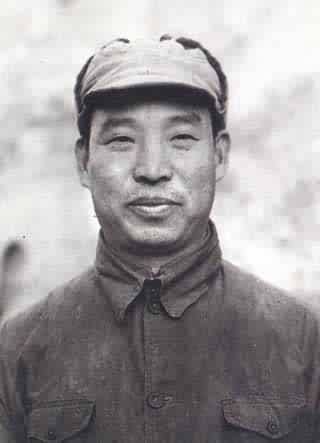
1. 12 October 1902, Quwo, Shanxi: a farmer's son, a founding Shanxi Communist, and six years in a Nationalist prison (1902–1935)
Peng Zhen was born Fu Maogong on 12 October 1902 in Dieshang village, Quwo County, Shanxi, in what is now the city of Houma. His parents, Fu Weishan and Wei Guizhi, were farmers; as a child he worked in the fields, and the family spun thread at night to make ends meet — details carried in the biographical materials cited by the English Wikipedia article "Peng Zhen" (drawing on Tian Youru's brief biography and others), recorded here at biography grade. In 1919 he entered Quwo County No. 2 Higher Primary School; in 1922 he entered Shanxi Provincial No. 1 Middle School in Taiyuan, where he took up Marxism and joined a progressive youth society. In the winter of 1923, on the recommendation of Gao Junyu and Li Yutang, he joined the Chinese Communist Party. When the first CCP organisation in Shanxi was established in 1924, he was a member of the committee of the Taiyuan branch and later its secretary — a founding member of the Party in Shanxi, on which the official and scholarly biographies agree.
From 1925 to 1927 his trajectory is a textbook sample of the north-China underground Party: in January 1925 he helped found the Shanxi Workers' Federation, in February he became secretary of the Taiyuan committee of the Communist Youth League; in May he helped lead the campaign against the warlord Yan Xishan's property valuation tax, which Yan withdrew; after the May Thirtieth Incident he organised a Shanxi association to protest the killings and served as its vice-chairman; he was then transferred to Shijiazhuang as secretary of the Zhengtai Railway general union, organised the Daxing cotton mill strike in the spring of 1926, and moved to Tianjin, serving successively as district committee secretary, organisation head of the Tianjin committee and labour-movement committee member. In August 1927 he became acting secretary of the Tianjin committee, and its secretary in November; in February 1928 he joined the standing committee of the Shunzhi provincial committee, and after its secretary Li Jida was arrested and executed he acted as provincial secretary while heading its organisation department. In June 1929, after an informant betrayed the Tianjin underground, he was arrested. The imprisonment lasted six years: he was released only in 1935. Official biographies dwell on his prison struggles; this file nails only the checkable dates — arrested June 1929, released 1935. After his release he rebuilt the Tianjin Party organisation; in April 1936 Liu Shaoqi arrived in Tianjin to reorganise the Northern Bureau and made him head of its organisation department. In 1937 he took the name Peng Zhen — his grandmother's surname Peng, and Zhen, "truth", explained by himself as upholding the truth and seeking the facts; the explanation is recorded at self-account grade.
Why record these years in this detail? Because they fix the starting point of everything booked later. Peng Zhen was no late-joining official but a professional revolutionary of the founding generation: a Party member at twenty-one, six years in a Nationalist prison, and by the eve of the war with Japan the organisation chief of the north-China underground. The fluency with which he later handled the category of "the enemy" — in the Yan'an Rectification, in the Beijing suppression campaign, in the Anti-Rightist Campaign — and his near-instinctive execution of organisational discipline were not skills learned on the job. An archive records first how a man became who he was — but it records posts and dates, not inferred psychology: what can be nailed down about his early years is the sequence above, and no further.
Sources: English Wikipedia, "Peng Zhen", early-life sections (born 12 October 1902 in Dieshang village; parents' names and farming background; Quwo No. 2 Higher Primary School 1919; Taiyuan Provincial No. 1 Middle School 1922; joined the CCP winter 1923 on Gao Junyu's and Li Yutang's recommendation; Taiyuan branch committee 1924; the 1925–1929 Shanxi and Tianjin post sequence; arrested June 1929; released 1935; the 1937 name change and his own explanation; citing Tian Youru's brief biography and Chung's biography); this site's coordinator verification spine of 6 November 2026 (original name Fu Maogong; joined 1923 as a Shanxi founding member; imprisoned by the Nationalists 1929–1935).
2. The Jin-Cha-Ji base area: from underground operative to border-region secretary (1937–1941)
After the war with Japan began, Peng worked first in Taiyuan and then in the Jin-Cha-Ji Border Region. In 1938 he became secretary of the Party's Jin-Cha-Ji sub-bureau, the Northern Bureau's representative in the region, and with Nie Rongzhen and others ran this enemy-rear base area: in 1939 he also headed the sub-bureau's newly founded Party school, in October he chaired its conference on organisational work, in December he directed the Party's response to Yan Xishan's December Incident in Shanxi, and in August 1940 he oversaw the drafting of the border region's administrative programme, the "Double Ten Programme", under which elections and political and economic reforms were carried out in the region. This file records the segment because the Jin-Cha-Ji experience was his ticket to Yan'an: his report to the Politburo and to Mao on the border region's specific policies and Party-building experience, systematically setting out the political tendencies of its classes and strata and the basis of its policies, drew Mao's attention. In other words, his heavy use in the Rectification was no accident — he had first proved himself, as the actual ruler of a base area, capable of executing the Centre's line.
One contrast usually overlooked must be nailed down at the same time. His public image in the Jin-Cha-Ji years was that of a border-region secretary who carried out elections, rent reduction and a relatively moderate united-front policy; the Double Ten Programme is still cited in official Party history as a model of base-area democratic governance. This file records that face, because an archive cannot keep only the black ledger. But it also points out that base-area governance and the later suppression and Anti-Rightist campaigns are two faces of one logic — a new regime courts every stratum, a secured regime eliminates "enemies" — and that which face is turned outward is decided by circumstance and central instruction, not by a change in the ruler's personal temperament. The fluency of Peng's switching between the two faces is precisely the puzzle Chung's biography sets out to explain; this file lays out the materials and leaves the judgement to the reader.
Sources: English Wikipedia, "Peng Zhen", war-years sections (secretary of the Jin-Cha-Ji sub-bureau 1938; head of its Party school 1939; organisational conference October 1939; response to the December Incident; drafting of the Double Ten Programme August 1940; the 1941 report to the Politburo and Mao on border-region experience; citing Chung's biography and Party-history materials).
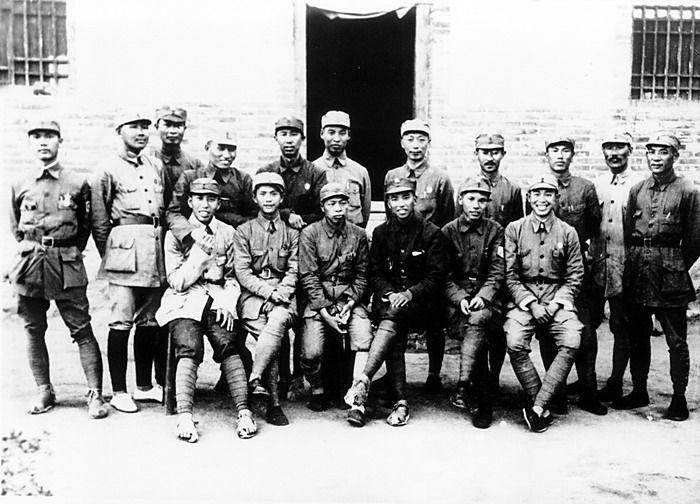
3. The Yan'an Rectification: an enforcer Mao relied on, Party School cadre examination and the "Rescue Campaign" (1941–1945)
The posts first, nailed down. In 1941 Peng went to Yan'an and worked at the Central Party School, becoming its director of education in September. In 1942 the Politburo placed the school directly under the Secretariat, with Mao responsible for its political direction and Peng remaining director of education. In 1943 Mao became president of the school and Peng its vice-president. On 5 March 1944 he became acting head of the Organisation Department; on 5 June he headed the urban work committee and on 1 September the urban work department; he took part in drafting the 1945 Resolution on Certain Questions in the History of Our Party, and during the Rectification he delivered a concluding report on questions of the method of thought. At the Seventh Congress in 1945 he chaired the credentials committee and was elected to the Central Committee; on 19 June the first plenum of the Seventh Central Committee elected him to the Politburo, and in August he became an alternate secretary of the Secretariat. From director of education to the Politburo in four years — Chung's research exists to answer how that step was climbed.
Chung's answer has two layers, relayed here as his research conclusions and labelled as such. At the level of high-level rectification: on the abstract of Chung's specialist study hosted by the Department of History at National Chengchi University, during the Yan'an Rectification led by Mao, Peng Zhen was a key figure on whom Mao relied; though Peng's own Party seniority and standing were not then prominent, he vigorously assisted Mao in subjecting the so-called "dogmatists" and "empiricists" to political criticism and pressure, and he also created the opportunities for Mao to step forward afterwards, settle matters and win people back. Person by person: as relayed by China Books Review's February 2026 review of Chung's 2024 biography, Peng Zhen: Mao Zedong's "Close Comrade-in-Arms" (1941–1966), Peng publicly criticised senior figures including Zhou Enlai at Mao's behest, and the review calls him a "brutal enforcer" in the 1942 Rectification who first won Mao's affection in that role — a quotation of under ten words, recorded at book-review-relay grade, not dressed up as the biography's own text. At the Central Party School level: to the senior cadres studying there and the delegates from across the country gathered for the Seventh Congress, Peng energetically marketed the correct line with Mao as its concrete embodiment, reviled the opposing erroneous lines and persons, and thereby trained and produced a cohort of senior cadres loyal to Mao without reserve, as the backbone of his subsequent rule — the sense of Chung's abstract, paraphrased here, not quoted verbatim.
The cadre-examination and rescue layer is the heaviest cell of this section and must be written with the most care. Chung's abstract states plainly that in the cadre examination movement Peng ran during the Rectification — especially at the Central Party School — a false estimate of the enemy situation and credulous acceptance of claims about enemy-agent infiltration, combined with examination methods that appealed to mass movement and used private punishment and coerced confession, produced for a time a malignant situation of wrongful persecution and injury to the innocent. The Yan'an "Rescue the Fallen" campaign of 1943 was driven centrally through the Social Affairs Department under Kang Sheng and was the extreme form of rectification-era cadre examination, in which large numbers of cadres were branded agents before the Centre corrected course and rehabilitated most of them; the central-level responsibility for that campaign is conventionally booked to Kang Sheng and to Mao. This file's booking of Peng Zhen is strictly layered: on Chung's research, the Party School cadre examination and rescue work he personally ran produced, within his own jurisdiction, a malignant situation of wrongful persecution — an academic finding on his personal executive responsibility, recorded here with its source. But booking the whole Yan'an Rescue Campaign's total account to him has no basis, and this file does not book it. The counter-material must also be recorded: Chung's abstract opens by noting that official CCP accounts of Peng in the Rectification habitually avoid the sensitive issues and play down his role, the better to preserve his exalted image. The official evasion and the independent research finding are archived side by side; readers may judge the weight of this segment for themselves.
The echo of this experience across his life is stated best in the closing line of Chung's abstract: Peng threw himself into the Rectification and helped Mao to a position of supremacy within the Party, yet the movement's influence and its model went on to hang over CCP politics for decades and in the end brought Peng himself political catastrophe. This file registers that sentence as a researcher's conclusion — the manner of his 1966 fall (big-character posters, struggle sessions, special-case groups, an "anti-Party clique") stands twenty-odd years from the Rectification's cadre examinations, but it is the same method come home. The archive stops at facts and sources: who helped forge the method, and on whom the method later fell, are both inside this page.
Sources: Yen-Lin Chung, study abstract "Peng Zhen's Roles and Activities in the Yan'an Rectification Movement of the CCP (1941–1945)", National Chengchi University Department of History page (a key figure Mao relied on; political criticism and pressure against "dogmatists" and "empiricists"; creating Mao's opportunities to settle and win back; marketing Mao's line at the Central Party School; false estimates of enemy infiltration and coerced-confession methods in cadre examination producing wrongful persecution; official accounts avoiding the sensitive issues; the movement model finally bringing catastrophe on Peng himself); China Books Review, review of Chung's Peng Zhen: Mao Zedong's "Close Comrade-in-Arms" (1941–1966) (Linking Publishing, December 2024, Taiwan edition), 19 February 2026 (public criticism of senior figures including Zhou Enlai at Mao's behest; Politburo in 1945, ten years before Deng; a man who helped destroy a legal system that might have protected him and was betrayed by Mao); English Wikipedia, "Peng Zhen" (director of education September 1941; vice-president 1943; acting Organisation Department head 5 March 1944; Politburo 19 June 1945; citing Chung's biography).
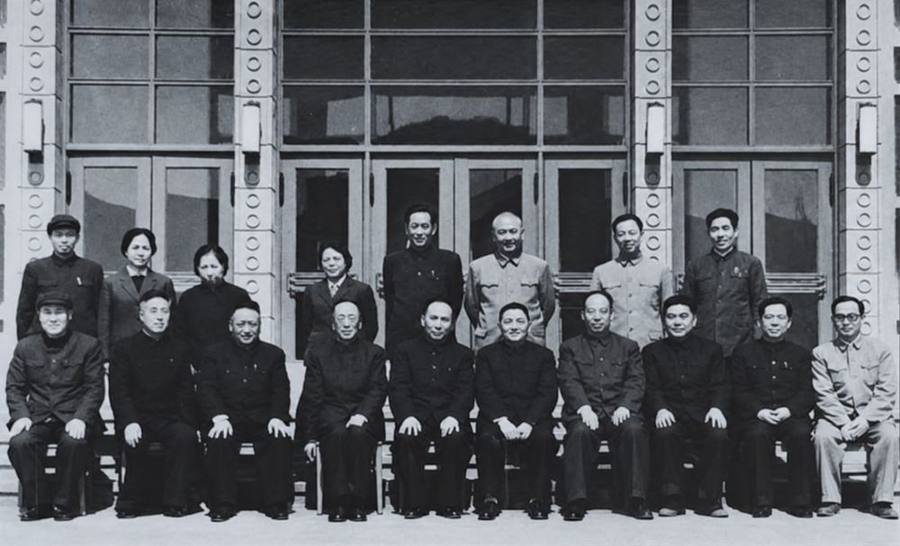
4. Defeat in the Northeast and the takeover of Beiping: Siping, demotion, and 13 December 1948 (1945–1949)
After the war with Japan, Mao sent Peng to take overall charge in the Northeast. In September 1945 he became secretary of the CCP Northeast Bureau, with Lin Biao assisting at the front in command of military operations; the Central Military Commission gave him the temporary rank of lieutenant general. En route, his aircraft overran the runway at a refuelling stop at Shanhaiguan and he suffered a blow to the head; the party continued by train and reached Shenyang on 18 September. On 31 October he became first political commissar of the Northeast People's Autonomous Army, renamed the Northeast Democratic United Army in January 1946. In March 1946 the Northeast Bureau decided to occupy Changchun, Harbin and Qiqihar to secure northern Manchuria; in April the Nationalists sent north the elite New 1st Army of Sun Li-jen, the New 6th Army of Liao Yaoxiang and the 71st Army of Chen Mingren; Lin Biao and Chen Yun proposed abandoning Changchun, but the Bureau, at the Centre's insistence, decided to hold the city, and Lin's forces were defeated at Siping and withdrew north of the Songhua River. On the account of the researcher Weng Yanqing, that defeat brought the disagreements between Lin and Peng into the open. On 16 June 1946 the Centre reorganised the Northeast Bureau: Lin Biao became its secretary and the commander and political commissar of the Northeast Democratic United Army, with Peng demoted to deputy secretary and deputy political commissar. China Books Review's relay of Chung's biography puts the segment more bluntly: Peng, who did not understand military affairs, ignored the objections of Lin, Chen and Gao Gang in the belief that he was doing what Mao wanted; when the chairman decided caution was necessary after all, Peng took the blame and was removed — a shattering blow to his career.
This file records the segment not for colour but because it explains a main line of Peng's behaviour for the next twenty years: on Chung's narrative, after Siping his way back was to execute Mao's wishes more thoroughly than anyone else, even at the price of making more enemies inside the Party. He afterwards served on the standing committee of the Central Working Committee and in 1948 again headed the Organisation Department and the policy research office. On 13 December 1948 he was appointed secretary of the CCP's Beiping committee to prepare the takeover of the city — the date from which his seventeen years of power in the capital must be counted, even though this site's tag year is 1951. After Beiping's peaceful handover in January 1949 he ran the city as Party secretary, rebuilding its political institutions, protecting and restoring industry, developing culture and education, and training cadres for other parts of the country. In September 1949 he attended the first plenary session of the Chinese People's Political Consultative Conference and was elected to its national committee and to the Central People's Government Council; on 1 October he attended the founding ceremony of the People's Republic.
Sources: English Wikipedia, "Peng Zhen", civil-war sections (Northeast Bureau secretary September 1945 and temporary lieutenant-general rank; arrival in Shenyang 18 September; first political commissar 31 October; the March 1946 decision to take the three cities and the Siping defeat; Weng Yanqing on the open Lin–Peng split; the 16 June 1946 reorganisation and demotion; Organisation Department head 1948; Beiping committee secretary 13 December 1948; duties after the takeover; citing Chung's biography and others); China Books Review, February 2026 review (Chung's narrative of the Northeast defeat: ignorant of military affairs, dismissive of Lin's, Chen's and Gao's objections, blamed and removed when Mao changed course, and winning status back by executing Mao's wishes better than anyone).
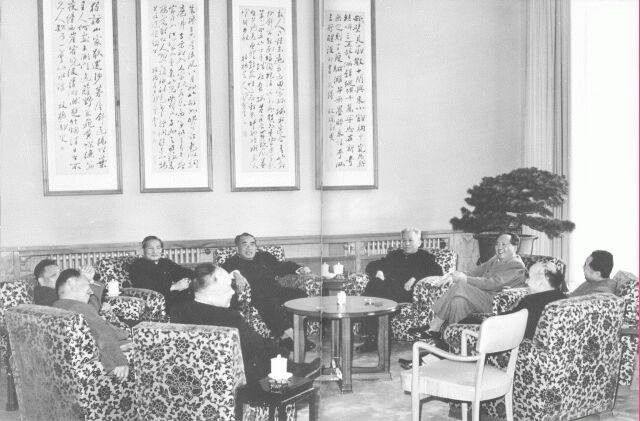
5. The suppression campaign in Beijing: a capital campaign executed under his municipal committee, and his own "leniency without bounds" intervention (1950–1953)
This site's tag year is 1951, and the posts held that year are nailed down first: in 1951 he succeeded Nie Rongzhen as mayor of Beijing and was repeatedly re-elected until 1966; he had held the municipal Party secretaryship since 13 December 1948, restyled first secretary from 1955. That is, for the whole three years of the Campaign to Suppress Counterrevolutionaries in Beijing (1950–1953) he was the capital's top Party official, and for the latter two years its mayor as well. On 19 October 1949 he had also become vice-chairman of the Political and Legal Affairs Committee of the Government Administration Council, and in February 1950 chairman of the Beijing Federation of Trade Unions. The organs that executed the campaign in Beijing — the municipal public security bureau, the courts, the procuratorate, and the district-level suppression committees — all sat under the municipal committee he led. This cell is the foundation of the institutional and post ledger: every proclamation, every mass trial and every execution in the capital took place inside a leadership structure headed by him.
Next, his own contemporaneous interventions, which mark this section off from mere occupancy of a chair. Early in the campaign the Centre had corrected a tendency to wanton beating and killing, and Liu Shaoqi, then overseeing the Centre, issued relatively lenient instructions. On the campaign literature (the English Wikipedia article "Campaign to Suppress Counterrevolutionaries", citing campaign documents), Peng Zhen was among those who attacked the leniency and demanded severity: he argued that Nationalist agents were exploiting the lenient policy to mount fresh attacks, and that after the correction of wanton killing, lenient policy in many places had swung to the opposite error — "leniency without bounds", leniency that demoralised the Party's own side, emboldened bandits and enemy agents, and alienated the people. By this page's discipline the passage is paraphrased, not quoted at length. Its evidential significance is that it is no retrospective endorsement: it is a contemporaneous text, from the campaign's first phase, by the Party chief of a great city, demanding that the measure be tightened. Its weight at the national level must also be stated honestly — the decisions to launch and to escalate the campaign were Mao's and the Party centre's (the March 1950 central directive, Mao's new directive of October, the Regulations on Punishing Counterrevolutionaries of 21 February 1951); Peng's intervention was the voice of a local chief echoing and pressing the Centre's measure, not the campaign's source. The source ledger is booked to Mao; the echoing and execution ledger is booked to him; the cells are not merged.
The numbers are queued by source and method and are never combined. National level: on the official statistics published by the CCP and the government in 1954, the campaign arrested at least 2.6 million people, imprisoned some 1.29 million and executed 712,000 (official statistics, via campaign historiography and reference syntheses); scholarly estimates range from 500,000 to one million, and up to two million. A Cambridge Journal of Chinese History study of the campaign's execution quotas gives a further internal figure: a total death toll of 753,275 by the end of 1953, under a system that worked to an execution quota of one per thousand of population (the three-tier quantification of ratio, quota and control number), with Public Security Minister Luo Ruiqing disclosing that by May 1951 the national death ratio had already reached one per thousand. Beijing level: this site's searches found no published official or scholarly statistical text giving Beijing's own arrest or execution totals for the campaign — the capital's specific figures are a matter of no public record, and this file neither estimates nor patches them. The one widely circulated Beijing narrative comes from Jung Chang's popular work: some 30,000 mass rallies in Beijing attended by over three million people, at one of which 200 people were paraded and then executed with blood spattering the bystanders while trucks carrying bloodied corpses drove through the streets. That account is single-source and popular in character, with no archival or scholarly corroboration found; this file marks it unverified (未核 in the Chinese text) and registers only its circulation, not its truth.
In May 1951, when Mao moved to curb the excessive killing — criticising at a central meeting those who had "not killed a single one in months or years and are now killing thousands in days", and rebuking those demanding the quota be raised to two, three or even five per thousand — the Cambridge quota study, citing the meeting record, has Peng Zhen concurring: the killing in many provinces had already exceeded one per thousand, the evidence showed a danger of losing control, and, for example, the Central-South Region had originally planned to kill 150,000 but reported 200,000 to the Centre. This cell must be read from both sides. On one side, it proves that by May 1951 he was speaking for the brake. On the other, it proves his insider knowledge of the quota system's scale and mechanics ran to quoting a macro-region's planned figures from memory — he was a senior knowing participant inside a machine of quantified killing, first pressing it tighter with "leniency without bounds" and then concurring in its reining-in with "a danger of losing control". Both interventions were internal calibrations of the machine, not dissent from outside it. Whether he personally signed any Beijing execution order, or fixed any control number for the capital, is a matter of no public record within this site's searches — personal direct instruction: no public record, registered as such. His ledger is three cells side by side: the municipal chief's post ledger, his own statements ledger, and the Centre's decision ledger — one cell more, or one cell fewer, would each be a falsification.
Sources: English Wikipedia, "Campaign to Suppress Counterrevolutionaries" (campaign 1950–1953; the 1954 official statistics of 2.6 million arrested, 1.29 million imprisoned, 712,000 executed; scholarly estimates of 500,000 to two million; Peng Zhen's contemporaneous attack on "leniency without bounds" and his argument that agents exploited leniency; Jung Chang's Beijing rallies and 200-execution account — single source, marked unverified by this site); "Quota, Class, and Political Violence in Mao's China", Journal of Chinese History, Cambridge (the one-per-thousand quota and its three-tier quantification; the internal total of 753,275 by the end of 1953; Luo Ruiqing's May 1951 disclosure; Mao's rebuke of demands to raise the quota; Peng Zhen's concurrence at the meeting and his Central-South example of 150,000 planned and 200,000 reported); English Wikipedia, "Peng Zhen" (succeeded Nie Rongzhen as mayor in 1951; vice-chairman of the Government Administration Council's Political and Legal Affairs Committee from 19 October 1949; first secretary from 1955).
6. The Three-Anti and Five-Anti campaigns and the governing of the capital: the other campaigns of his mayoralty (1951–1956)
On the biographical syntheses, Peng Zhen presided as mayor and municipal secretary over the early campaigns of the People's Republic in Beijing: the Three-Anti and Five-Anti campaigns, the socialist transformation of industry and commerce, and agricultural collectivisation were all carried through in the capital under his tenure (English Wikipedia, citing biographical materials). This file books those campaigns on the same rule as the suppression campaign: their launching is booked to the Centre, he is booked for the Beijing execution level. The Three-Anti and Five-Anti campaigns involved mass denunciation, coerced confession and suicide cases among capitalists and cadres; the case-level record stands in this site's persecution section, and this page does not expand it — it registers one structural fact: from the 1949 takeover to his fall in 1966, not one campaign in Beijing was conducted outside the leadership of his municipal committee. He was the local supreme responsible for every political campaign in the capital across seventeen years. That fact needs no rhetoric; it is the summary line of the post ledger.
The other line of the same years is city building. In December 1953 he oversaw the draft plan for Beijing's reconstruction and expansion, beginning work on the capital's construction, street widening and public security, in a planning process that consulted experts including the architect Liang Sicheng (biographical materials). He also worked on the planning of Tiananmen Square and the design of the Great Hall of the People in September–November 1958. This file records these matters because a complete archive cannot write a man only as a campaign executor — he was at the same time the shaper of Beijing's physical form, and the city's post-war construction and its successive campaigns came from the same hands and the same municipal committee. Both faces, side by side, are the man.
Sources: English Wikipedia, "Peng Zhen" (as mayor he oversaw the Three-Anti and Five-Anti campaigns, the socialist transformation of industry and commerce and agricultural collectivisation; the December 1953 draft reconstruction plan and consultation with Liang Sicheng; participation in the planning of Tiananmen Square and the design of the Great Hall of the People in 1958; citing biographical materials).
7. "All are equal before the law": the speech of 17 September 1954, and what became of the principle in the Anti-Rightist Campaign
This section, as instructed, is set down as archival fact: it neither sentimentalises the episode nor deletes it. In 1954 Peng Zhen was elected a deputy to the First National People's Congress, and on 17 September, speaking at its first session during the debate on the draft constitution, he argued that no one should be allowed to place himself above the law. On Liu Zheng's account, Peng was the first CCP leader to set out systematically the principle that all citizens are equal before the law, and the principle was written into the 1954 constitution and into the organic laws of the courts and the procuratorates (English Wikipedia, citing Liu Zheng). Reflecting late in life, he summed up his principles in two phrases — "all are equal before the truth" and "all are equal before the law" — and held that if both were upheld, China's social system, stability, democracy and legal system would develop soundly (the same article, citing his own account). That is his self-characterisation, recorded at self-account grade.
Then comes the principle's fate, on a list of executors that includes the system he himself served. In the Anti-Rightist Campaign of 1957 the principle was condemned as a "bourgeois legal viewpoint", and it subsequently disappeared from the constitutions of 1975 and 1978 (the same article, citing Liu Zheng). The year of that condemnation was the year he led the Anti-Rightist Campaign in Beijing as head of its municipal committee — the next section takes that up. Here this file nails only a juxtaposition of dates, without commentary: in September 1954 he wrote the sentence into a constitution from the rostrum of the First NPC; when in 1957 the sentence was branded bourgeois, the record of any public defence of it by him is, within this site's searches, a matter of no public record; the contemporaneous public text he did leave in 1957 was a speech explaining the significance of the anti-Rightist struggle. Where a man stood when a principle he had written into a constitution came under attack — the archive sets the three dates side by side and leaves the conclusion to the reader.
The principle's second life is recorded with the same plainness. After he took charge of the NPC Standing Committee's Legislative Affairs Commission in 1979, the principle was restored to the 1982 constitution and other basic laws, with an added provision that no privileges were to be permitted (the same article, citing Liu Zheng). Pitman B. Potter's 2003 Stanford University Press monograph analyses the evolution of Peng's legal views from the Leninist discipline of his revolutionary decades towards the greater reliance on formal rules and procedures he advocated in the 1980s; David M. Lampton argued that Peng saw law as an instrument of authoritarian rule — a means of creating predictability while preserving the rule of the Party elite, rather than something that also constrained that elite (English Wikipedia, citing Lampton in the New York Times obituary). The sympathisers' characterisation and the critics' stand side by side. The archive's task ends there: it records what the man said, what he wrote, and where he stood at the critical moments, and it does not smooth the contradiction away for him.
Sources: English Wikipedia, "Peng Zhen", political-views sections (the 17 September 1954 speech at the first session of the First NPC; Liu Zheng on his being the first to set out the principle systematically and its entry into the 1954 constitution; its condemnation as a bourgeois legal viewpoint in the Anti-Rightist Campaign and its absence from the 1975 and 1978 constitutions; its restoration in the 1982 constitution with a no-privileges provision; his late-life two-phrase self-summary; Lampton's argument via the New York Times obituary); Pitman B. Potter, From Leninist Discipline to Socialist Legalism: Peng Zhen on Law and Political Authority in the PRC, Stanford University Press, 2003 (the first English-language monograph on Peng; the evolution of his legal views from Leninist discipline towards reliance on formal rules and procedures; publisher and review records).
8. The Anti-Rightist Campaign in Beijing: his explanatory address to the capital's People's Congress, and the national figures outside the capital (1957–1959)
The launching level first. The Anti-Rightist Campaign was launched by Mao Zedong in 1957, in the wake of the Hundred Flowers; the People's Daily editorial of 8 June 1957 and Mao's inner-Party instruction mark its public start, and Deng Xiaoping, as general secretary running the Secretariat, directed its day-to-day advance through the Party apparatus. Peng Zhen's place, on the consistent account of standard references: the English Wikipedia article "Anti-Rightist Campaign" lists the campaign's perpetrators as Mao Zedong, Deng Xiaoping and Peng Zhen, and states that Deng and Peng also played important roles — a synthesis-level characterisation, recorded here at that grade and not promoted to archival evidence. The one checkable contemporaneous text of his own that this site has found is his address to a session of the Beijing People's Congress explaining the great significance of the anti-Rightist struggle, anthologised as a lesson in the English-language Readings in Chinese Communist Documents under the title "Comrade P'eng Chen Explains the Great Significance of the Anti-Rightist Struggle before the Conference of the People's Congress of Peking" (De Gruyter edition, table of contents). For a municipal Party secretary to explain, to the capital's own congress, the significance of a purge then under way is not passive execution; it is public endorsement and tone-setting, and this file books it in his personal ledger at the grade of "a public speech by him, its existence and theme checkable". The full text's wording has not been obtained in a form this site can verify word by word, and it is not quoted.
The numbers are layered as usual, and the Beijing cell must be left visibly blank. National level: on the official statistics published in the Boluan Fanzheng period, 552,877 people were labelled Rightists — a figure that excludes those labelled "centre-rightists", "anti-socialist elements" or "counterrevolutionaries" (official statistics, via campaign historiography); researchers' estimates of those actually persecuted run from one to two million or higher, under differing definitions, archived in parallel and never merged. Beijing level: this site's searches found no published official or scholarly statistical text giving the capital's total of labelled Rightists — Beijing's specific number is a matter of no public record. Of the national official total of more than 550,000, how many fell in Beijing and how many were designated through the municipal system he headed, this file does not estimate. What can be nailed down is structure only: Beijing's campaign was run by the municipal committee he led, and the labelling work in the capital's universities, cultural world, press and democratic parties took place entirely inside that structure. Wu Han — a deputy mayor of his own municipal government and a man of letters — was one whose discursive environment tightened through exactly those years; Wu Han's own account is booked in the 1965–66 section below and in this site's persecution pages; here only the structure is registered.
One further cell concerns the texture of his relation to the campaign. Unlike Deng Xiaoping, who issued labelling quotas through the Secretariat system and held the campaign's machinery in his hands, Peng's public role in the Anti-Rightist Campaign was chiefly that of the capital's executor and explainer: he was both first secretary of Beijing and, after the Eighth Congress in 1956, a secretary of the Secretariat assisting Deng, with responsibility for united-front work, legal affairs, and Hong Kong and Macau (English Wikipedia). The united-front portfolio was precisely the channel for the democratic parties and the intellectuals — the process by which democratic-party leaders such as Zhang Bojun and Luo Longji were made headline Rightists cannot be separated from the united-front system's line. This file's booking stops there: whether he personally approved any Beijing Rightist list, or fixed any labelling ratio for the capital, is within this site's searches a matter of no public record — personal direct instruction: no public record. His ledger for this section is three cells: the reference books' "important role", his own explanatory address to the capital's congress, and the municipal chief's post ledger.
Sources: English Wikipedia, "Anti-Rightist Campaign" (campaign 1957–1959; launched by Mao; Deng Xiaoping and Peng Zhen played important roles and are listed among the perpetrators; the official figure of 552,877 labelled, excluding centre-rightists and others; researchers' estimates of one to two million and above; Deng's admission of mistakes in the campaign); Readings in Chinese Communist Documents, De Gruyter edition, table of contents (Lesson 8: "Comrade P'eng Chen Explains the Great Significance of the Anti-Rightist Struggle before the Conference of the People's Congress of Peking"); English Wikipedia, "Peng Zhen" (Secretariat secretary from 1956 assisting Deng, responsible for united-front work, legal affairs and Hong Kong and Macau).
9. Standard-bearer of the Great Leap: the Three Red Banners, real power in the Secretariat, and the words of January 1962 (1958–1962)
In June 1958 Mao restructured the Party and government, creating leading groups for finance, political-legal affairs, culture and education and other portfolios that bypassed the State Council; Peng Zhen became head of the central political and legal affairs group, reporting directly to the Politburo and the Secretariat (English Wikipedia, citing biographical materials — the post that was the forerunner of his 1980 commission secretaryship, cross-registered here). The same year, Mao, furious at the pace of Zhou Enlai's State Council, handed leadership of the economy to the Secretariat. On China Books Review's relay of Chung's biography, Deng Xiaoping was not detail-oriented and liked to spend his time playing cards, while the workaholic Peng in effect ran the Secretariat day to day; Mao counted on Deng and Peng to chase higher production targets with enthusiasm, and Peng often wanted to move even faster than Mao. Chung's 2015 study in The China Journal reaches a consistent conclusion: Peng played an active leadership role in the Great Leap's major policies — the mass steel-making campaign, the Anti-Right-Opportunist campaign and the people's commune movement — and the significance of that role has long been underestimated and misunderstood; the study's title calls him outright the unknown standard-bearer of the Three Red Banners. This file records that conclusion at academic-research grade: the Great Leap was not a catastrophe he watched from the sidelines — at the Secretariat level he was one of its principal operators. The famine's death toll belongs to this site's events archive; this page registers only one relayed detail for what it shows of his posture: after mass starvation could no longer be concealed, Peng sent Mao historical materials on famine in the imperial era, to comfort him and make such death seem nothing new (China Books Review's review relaying Chung's biography, recorded at review-relay grade).
The Seven Thousand Cadres Conference of January 1962 is the key text for his relationship with Mao, and it must be presented from both sides. In the received narrative, Peng, addressing a session of the report-drafting committee on 18 January, said in substance that Chairman Mao was not without mistakes either, argued with the granite, sedimentary rock and Mount Tai metaphors that shovelling off a few tons of earth left the mountain as high, and held that from Mao down to the lowest branch secretary everyone bore his own responsibility — words long read as among the most forceful accountings Mao ever faced (the sense of the passage as quoted in China Books Review). Chung's biography advances an overturning rereading: before the conference, Deng Xiaoping and Peng Zhen had already sent Mao a Secretariat self-criticism taking full responsibility and affirming Mao's correct leadership; Mao, unhappy with it, replied through Deng on 11 January to the effect that their report treated him like a saint, that there are no saints, that everyone has deficiencies and makes mistakes, and that they should not fear to speak of his. On Chung's reading, Peng's words of 18 January were a loyalty performance delivered on Mao's signal, which criticised the collective leadership present — including Liu Shaoqi — as well as Mao, and whose nature was attempted loyalty, not dissent. This file archives both readings side by side: the text of the speech is one and the same; the disagreement is at the level of motive. The archive can nail the text and the date; the motive cell is registered as disputed and is not adjudicated.
Sources: Yen-Lin Chung, "The Unknown Standard-Bearer of the Three Red Banners: Peng Zhen's Roles in the Great Leap Forward", The China Journal, no. 74 (2015) (active leadership in mass steel-making, the Anti-Right-Opportunist campaign and the commune movement; the role underestimated and misunderstood); China Books Review review, February 2026 (Peng in effect running the Secretariat; Mao counting on Deng and Peng for targets, with Peng often wanting to go faster; the famine-era historical materials sent to comfort Mao; the sense of the 18 January 1962 passage; Chung's rereading — the pre-conference Secretariat self-criticism, Mao's 11 January reply, and the speech as loyalty rather than dissent); English Wikipedia, "Peng Zhen" (head of the central political and legal affairs group from June 1958; at the 1962 conference, "Chairman Mao is not free from mistakes either").
10. Head of the Five-Person Group, the "February Outline", and the fall: May 1966 (1964–1966)
In July 1964 the Secretariat set up the Five-Person Group on the Cultural Revolution, with Peng, nominated by Mao, as its head, charged with implementing the Party's directives on literature, art, philosophy and the social sciences (English Wikipedia; some syntheses date the formal Politburo appointment of the group to January 1965 — both datings are recorded, and the discrepancy is registered in the verification note). The group was the last station of his political life. In November 1965 the Shanghai newspaper Wenhui Bao published Yao Wenyuan's attack on the historical play Hai Rui Dismissed from Office, aimed at its author, Beijing's deputy mayor Wu Han; the article was instigated by Jiang Qing (on some accounts by Mao himself) and had not been notified, as organisational procedure required, to Peng, who oversaw the cultural portfolio. Peng opposed the way the article handled the matter. On 3 February 1966 he convened an enlarged meeting of the Five-Person Group, which drew up the "Outline Report on the Current Academic Discussion", the February Outline: academic questions were to be kept separate from political ones, and Wu Han was not to be linked to the Lushan Conference of 1959 or to Peng Dehuai. On 5 February the Politburo Standing Committee under Liu Shaoqi approved the outline, and Peng, Lu Dingyi and others flew to Wuhan to report on it to Mao; Peng then drafted, on behalf of the Central Committee, the notice forwarding the outline, which was circulated to the whole Party as a central document.
Mao's answer came at the end of March: in conversations with Kang Sheng, Jiang Qing and others he criticised the outline for blurring class lines, ordered it withdrawn, and said the Beijing municipal committee was so closed that not even a needle could be stuck in nor water splashed in, and should be dissolved. On 16 May the May 16 Notification — drafted by Chen Boda and others and revised by Mao several times — was adopted by an enlarged Politburo meeting: it accused Peng of presenting his own views as the group's without consulting Kang Sheng and its other members, revoked the February Outline, dissolved the Five-Person Group and replaced it with the Central Cultural Revolution Group. At the enlarged Politburo meeting of 4–26 May, Peng was criticised, suspended as a secretary of the Secretariat and removed as first secretary of the Beijing committee and as mayor — Li Xuefeng succeeded him in Beijing. On 24 May the Politburo Standing Committee set up a special-case committee to investigate the "anti-party clique of Peng Zhen, Luo Ruiqing, Lu Dingyi and Yang Shangkun", and Peng was accused of being a spy. In December 1966 he was seized by Red Guards, including Ye Xiangzhen and Liu Shikun, and detained. On Chung's biography as relayed by China Books Review, at the enlarged Politburo session that heralded the Cultural Revolution Peng cried out in grief, in substance: who was the first person to shout "long live"? Years later he himself said, in substance: the May 16 Notification was about persecuting me, but I still raised my hand in support — at the time I thought the Chairman was still right. This file registers the two items at review-relay grade and self-account grade respectively; the self-account is the hardest material there is for understanding his bond with Mao: the document that destroyed him bore his own raised hand.
For this site's section discipline one more layer must be made explicit: the chain of charges that destroyed him began with his attempt to confine the Hai Rui affair to academic discussion and to shield his subordinate Wu Han. Wu Han died in prison in 1969; his account stands in this site's persecution section. This page records only Peng's side: a man who rose by executing purges was purged in 1966 for refusing to let one purge widen without limit — a fact this file records without refining any narrative of redemption from it. What the February Outline defended was procedure and boundary, not Wu Han's innocence as such; the outline itself characterised Yao Wenyuan's offence as a method error, the politicising of an academic question, rather than defending the play. Both cells are set out; that is what an archive is.
Sources: English Wikipedia, "Peng Zhen", Cultural Revolution sections (the Five-Person Group set up in July 1964 with Peng as Mao's nominee at its head; Yao Wenyuan's November 1965 article and Jiang Qing's instigation; the enlarged meeting of 3 February 1966 and the February Outline's contents; Standing Committee approval on 5 February and the Wuhan report; Mao's late-March criticism and the "needle and water" words; the May 16 Notification's charges, the Outline's revocation and the Group's dissolution; the enlarged meeting of 4–26 May removing him from the Secretariat, the Beijing secretaryship and the mayoralty; the 24 May special-case committee and the spy accusation; seizure by Red Guards in December 1966; citing Chung's biography and others); China Books Review review, February 2026 (Chung's biography on his cry at the enlarged session and his later self-account: the Notification was about persecuting him, he still raised his hand, at the time he thought the Chairman was still right).
11. The victim's ledger: detention, exile, and the deaths in his family (1966–1978)
This site's rule is that victims stand in the persecution section and responsible figures in the people section. Peng Zhen stands in the people section, and his responsibility ledger occupies the first ten sections of this page. But his twelve years after 1966 are the inseparable other face of the same file, and this section records them separately, with no offsetting in either direction: the persecution he suffered does not lighten the account of the persecution he executed, and the persecution he executed does not make the persecution he suffered unworthy of record. The timeline is nailed down: seized and detained by Red Guards in December 1966; he and his wife Zhang Jieqing — they had married in Yan'an in 1939 — were both imprisoned (biographical materials); on 19 May 1975 he was sent from Beijing to Shang County, Shaanxi (in today's Shangluo area), where his movements remained restricted; one account has the couple released from Qincheng Prison in 1975 and sent together to Shangluo — "Shang County" and "Shangluo" are the same place under different names, and both are recorded. Only after the third plenum of the Eleventh Central Committee ended on 28 December 1978 did he return to Beijing.
The family cell, on the account of the biography cited by the English Wikipedia article (footnote pages 267–269): during his detention his family home in Dieshang was also targeted — his 85-year-old mother and his younger brother died after being subjected to struggle sessions, and his nephew Fu Ruzheng killed himself. The evidential grade of this cell is flagged prominently, as it must be: it reaches this file through a second-hand relay chain from biographical material whose original pages this site has not inspected, and it is archived at "encyclopaedia article citing biography" grade, not promoted. Even so, the three lives belong on this page, because they are the most concrete footnote to Chung's line that the movement's model in the end brought catastrophe on Peng himself: cadre examination, struggle sessions, implication of kin — the methods he had helped to forge at Yan'an and wielded as Beijing's ruler fell, after 1966, on his mother, his brother and his nephew. One later detail of his is recorded in the same spirit: after his rehabilitation and return to Beijing, when young people who had struggled against him came to apologise, he said the responsibility did not lie with them (biographical materials, same grade). From what stance the sentence was spoken, and whether partly as political posture, the archive does not adjudicate; he said it, and it is written down.
Sources: English Wikipedia, "Peng Zhen" (seized and detained December 1966; sent to Shang County, Shaanxi, on 19 May 1975 with movements restricted; the 85-year-old mother and younger brother dead after struggle sessions and the nephew Fu Ruzheng's suicide — citing biography pages 267–269; return to Beijing after 28 December 1978; the 1939 Yan'an marriage to Zhang Jieqing and both spouses' imprisonment; the variant account of release from Qincheng in 1975 to Shangluo; the words to apologising young people that the responsibility did not lie with them; citing biographical materials).
12. Rehabilitation and return: the notice of 17 February 1979, the Legislative Affairs Commission and seven laws (1979–1980)
On 17 February 1979 the Central Committee issued a notice rehabilitating Peng Zhen, declaring that all the charges imposed on "Comrade Peng Zhen" during the Cultural Revolution, and all slanderous and untrue statements about him, were overturned (the sense of the notice, English Wikipedia citing Party-history literature at page 1139; paraphrased here, not quoted verbatim). A circulating error must be corrected: the lead of the English Wikipedia article says he was "rehabilitated under Deng Xiaoping in 1982 along with other 'wrongly accused' officials", which directly contradicts the article's own body text and its dated notice of 17 February 1979. This file follows the body's specific dated notice: the rehabilitation was in 1979, and the "1982" version is not adopted; the discrepancy is registered in the verification note. At the NPC Standing Committee session of 17–23 February that month he was appointed head of its newly established Legislative Affairs Commission, directing some eighty legal officials in drafting laws; from March to June 1979 he oversaw the revision of the Electoral Law, the Organic Law of Local People's Congresses and Local People's Governments, the Organic Law of the People's Courts and the Organic Law of the People's Procuratorates, and the drafting of the Criminal Law, the Criminal Procedure Law and the Law on Sino-Foreign Equity Joint Ventures — seven legal texts completed and submitted in three months, in what contemporaries termed a "miracle" (English Wikipedia, citing research literature). At the second session of the Fifth NPC in June and July 1979 he was elected a vice-chairman of the Standing Committee; at the fourth plenum of the Eleventh Central Committee in September he was restored to the Central Committee and the Politburo; in November he also became acting secretary-general of the Standing Committee.
This file keeps its account of the return in two cells. Cell one: this was a real turn in his personal record — a man imprisoned and exiled for twelve years by the movement politics he had helped to build, who on release staked his remaining years on legislation and procedure; the rehabilitation notice and the seven laws are both checkable archival facts. Cell two: on the convergent observation of Potter's monograph and other studies, the motives and limits of his law-building must be recorded as well — law as an instrument of governance and a framework of order, in a legislative programme of the 1980s that never included judicial constraint on the Party itself (Lampton, section 7). The Criminal Law and Criminal Procedure Law he directed, effective from 1980, were among the textual foundations on which the 1983 Strike Hard could later proceed "according to law" at speed and with compressed procedure — this file registers the timing and the textual fact of that connection only, and does not book Strike Hard's procedural compression to the legislator personally; Strike Hard's account is kept in the next section, in its own three layers of decision, legislation and execution.
Sources: English Wikipedia, "Peng Zhen", reform-era sections (return to Beijing after 28 December 1978; the Central Committee rehabilitation notice of 17 February 1979 and its sense; appointment to head the Legislative Affairs Commission at the 17–23 February 1979 session; the March–June 1979 revision and drafting of seven laws and the "miracle" characterisation; vice-chairman of the Standing Committee June–July 1979; restoration to the Central Committee and Politburo in September; acting secretary-general in November; the lead's conflicting "rehabilitated in 1982" formulation, not adopted by this file in favour of the body's dated notice).
13. Inaugural secretary of the Central Political and Legal Affairs Commission: the date discrepancies recorded openly, and the 1982 constitution (1980–1983)
The posts first — and this section must openly register a date discrepancy. The body text of the English Wikipedia article records that on 24 January 1980 Peng Zhen became secretary of the Central Political and Legal Affairs Commission (citing Chung's biography at page 340); the same article's infobox gives March 1980 to May 1983, with the office newly created and Chen Pixian as successor. The article on the Commission itself records that the Commission was established in 1980 with Peng back as its secretary — its predecessor, the 1958 Politics and Law Leading Group, had also been led by him, and the group leadership had continued under others until the reorganisation of 24 January 1980 — while its list of secretaries gives Peng Zhen 1980–1982 and Chen Pixian succeeding in 1982–1985. The three accounts diverge on the starting month (24 January against March) and on the leaving year (1982 against May 1983). This file's pinning: the start is worked at 24 January 1980, the date carrying a biographical citation, with the infobox's March recorded alongside; the end is worked at May 1983 on the infobox, with the list's 1982 recorded alongside. On any of the datings one conclusion holds, and it is crucial for the next section: when the central Strike Hard decision issued in August 1983, he was no longer secretary of the Political and Legal Affairs Commission — the political-legal system's serving chief was someone else, and Strike Hard's political-legal execution ledger is not booked to his serving post.
Three items of the tenure are recorded. First, on 17 March 1980 he was appointed head of the committee directing the trial of the "Lin Biao and Jiang Qing counter-revolutionary cliques" (English Wikipedia, citing research literature) — the special-court trial of the Gang of Four was an event in which procedure and politics were thoroughly mixed, and this file records his post only, without expanding an evaluation here. Second, at the third session of the Fifth NPC in August and September 1980 he became a vice-chairman of the committee for revising the constitution; from February to November 1982 he oversaw the drafting of the revised constitution, presented his report on the draft on 26 November 1982, and on 4 December the NPC adopted the new constitution. Third, as commission secretary he coordinated the public security, procuratorial, court and justice systems — and the nature of that post must be stated plainly on this page: the Political and Legal Affairs Commission is the Party's organ for leading political-legal work, and its secretary bears chief responsibility for the policy line of the national political-legal system. Within his tenure (1980–1983) this file has not separately developed the system's individual cases and campaigns, because the one great campaign after August 1983 falls outside his tenure, and within the tenure no single checkable major persecution event tied to a personal instruction of his has been found — the cell is registered honestly as: tenure-period personal instruction events, no public record. That blank, taken together with the distinctions of the next section, is the accurate shape of his 1980s account.
Sources: English Wikipedia, "Peng Zhen", body text and infobox (body: secretary of the Central Political and Legal Affairs Commission from 24 January 1980, citing Chung's biography at page 340; head of the direction committee for the trial of the two cliques from 17 March 1980; vice-chairman of the constitution revision committee August–September 1980; overseeing the 1982 revision, the report of 26 November 1982 and adoption on 4 December; infobox: commission secretary March 1980 – May 1983, successor Chen Pixian); English Wikipedia, "Central Political and Legal Affairs Commission" (the Commission established in 1980; the 1958 Politics and Law Leading Group led by Peng Zhen; the list of secretaries giving Peng Zhen 1980–1982 and Chen Pixian 1982–1985).
14. Chairman of the NPC Standing Committee and the 1983 Strike Hard: the decision booked to Deng, the legislation to the Standing Committee he chaired, the execution not to him (1983–1988)
In June 1983, at the first session of the Sixth NPC, Peng Zhen succeeded Ye Jianying as chairman of the NPC Standing Committee; the infobox dates the tenure 17 June 1983 to 8 April 1988, with Wan Li as successor. In his tenure the Standing Committee's legislative and supervisory powers expanded relative to before, and he used the NPC as a base to strengthen the Standing Committee's position (research literature). Two months after he took the chair, the 1983 "Strike Hard" was launched. This section takes the three ledgers apart under this site's iron rule, and lets none of them bleed into another. The decision layer: Strike Hard was initiated under Deng Xiaoping's leadership — amid worsening public security in the summer of 1983 and several major cases, the Centre issued its decision on severely cracking down on criminal activity on 25 August 1983, and the campaign ran formally from September for three years and five months (campaign historiography syntheses). That layer is booked to Deng Xiaoping and the Party centre, not to Peng Zhen.
The legislative layer: on 2 September 1983 the Standing Committee he chaired adopted two decisions — the Decision on Severely Punishing Criminals Who Seriously Endanger Public Order, which raised the maximum penalty for hooliganism, grave injury and several other offences to death; and an accompanying procedural arrangement (in the form of a decision on the speedy trial of such criminals) which compressed appeal time — commonly given as three days — and delegated the review of death sentences to the high courts of the provinces, autonomous regions and centrally administered municipalities, removing case-by-case review by the Supreme People's Court (syntheses of campaign and death-penalty scholarship; this site has not verified the second decision's exact title and clauses word by word against the original text, and its title is registered at synthesis grade — see the verification note). Those two decisions were the legal engine that let Strike Hard proceed "severely and swiftly": without them, the campaign's death toll could not have been realised at that speed within the textual order of the day. The man in the chairman's seat of the Standing Committee when they passed was Peng Zhen — the heaviest institutional entry of his 1980s: he did not launch Strike Hard, but the legislature he chaired, in the very week the campaign began, removed for it two procedural gates, the statutory ceiling on punishment and Supreme Court review. What he personally said in the Standing Committee's deliberations on the two decisions, and the detail of any vote, is a matter of no public record; a chairman bears post and presiding responsibility for the decisions his committee passes, and this file books it at that grade, not promoted to a personal order.
The execution layer and its numbers are registered in strata. The campaign ran in three "battles": on campaign historiography syntheses and the figures they cite, some 197,000 criminal groups were targeted, about 1.77 million people were arrested, some 321,000 were sent to re-education through labour, and about 1.74–1.75 million received legal punishment; for executions, one widely cited figure gives about 24,000 (mainly in the first battle), while scholars estimate some 30,000 were sentenced to death — the 24,000 and the 30,000 are different measures (executions against death sentences estimated) and are archived in parallel, never merged. The campaign's controversies — torture, extrajudicial detention, arrest quotas, forced confessions and miscarriages of justice in which innocents were executed or long imprisoned — are on record in research and reporting (same syntheses). That execution took place in the hands of the public security, procuratorial and court systems and of local Party committees, at a time when the secretary of the Central Political and Legal Affairs Commission was no longer Peng Zhen (previous section); the execution ledger is not booked to him. In January 1987 he played a pivotal role in the criticism of General Secretary Hu Yaobang at a Party "democratic life meeting" that led to Hu's resignation (the New York Times' account); after the Thirteenth Congress in 1987 he left the Politburo and the Central Committee, and in April 1988 he retired as Standing Committee chairman. Taken together, the five years 1983–1988 give this account: a man who styled himself a legislator supplied, at the opening of his legislative tenure, the legal engine for a campaign-style strike-hard, and at its close helped to bring down a reform-minded general secretary. Both cells are matters of post and political conduct, documented, and need no rhetoric to weigh what they weigh.
Sources: English Wikipedia, "1983 'Strike Hard' Anti-crime Campaign" (initiated by Deng Xiaoping; formally from September 1983 for three years and five months; three battles; some 197,000 criminal groups; about 1.77 million arrested; some 321,000 re-educated through labour; about 1.75 million legally punished; about 24,000 executed against scholars' estimate of some 30,000 sentenced to death — the dual measures; the torture, quota and miscarriage controversies); English Wikipedia, "Peng Zhen" (chairman 17 June 1983 – 8 April 1988, predecessor Ye Jianying, successor Wan Li; using the NPC as a base to expand its powers; the pivotal role in the January 1987 criticism of Hu Yaobang — citing the New York Times; departure from the Politburo after the Thirteenth Congress in 1987; retirement April 1988); death-penalty scholarship syntheses (the Standing Committee decisions of 2 September 1983 raising maximum penalties and delegating death-sentence review to provincial high courts).
15. The stance of 1989, death, and two obituaries (1988–1997)
After retirement, only one public political entry remains, and this file records it in full: during the Tiananmen protests of 1989, Peng Zhen supported the imposition of martial law in Beijing and the removal of Zhao Ziyang as general secretary (English Wikipedia, citing the New York Times obituary). He was not a decision-maker of the martial law — the decision layer of 1989 was Deng Xiaoping, the then Politburo Standing Committee and the elders' circle; his "support" was the political stance of a retired elder, a thing of real weight in the actual working of elder politics, but the occasions and wording of any representations he made are a matter of no public record, and this file registers only the checkable formulation, support for martial law and for Zhao's removal, without expansion. Thereafter there is no public record of political activity by him — no public record.
On 26 April 1997 Peng Zhen died at Beijing Hospital, aged 94, about two months after Deng Xiaoping's death (19 February 1997); the cause of death, on public reporting, was blood cancer. The joint obituary of the Central Committee, the NPC Standing Committee, the State Council, the CPPCC and the Central Military Commission called him "a great proletarian revolutionary and statesman" and "a principal founder of China's socialist legal system" (the obituary's wording, as relayed by the English Wikipedia article and recorded here at official-text-relay grade); after cremation his ashes were placed in the Babaoshan Revolutionary Cemetery. The New York Times obituary's characterisation differed: it wrote that he had worked closely with the veteran hardliner Chen Yun to obstruct the economic reforms Deng promoted in the 1980s, including through his opposition to private property, capitalism and Western culture (the same article, citing that obituary). The two obituaries are archived side by side — one records him as a founder of the legal system, the other as a conservative obstruction to reform. The materials of the fourteen preceding sections show that each of the two records catches only part of him; the archive's duty is to set out every cell, not to choose between obituaries.
Sources: English Wikipedia, "Peng Zhen", retirement and death sections (support for martial law and for Zhao Ziyang's removal in 1989 — citing the New York Times; death at Beijing Hospital on 26 April 1997, aged 94; the five-body joint obituary's characterisation; ashes at Babaoshan; the New York Times obituary on his cooperation with Chen Yun in obstructing economic reform, citing that obituary); this site's coordinator verification spine of 6 November 2026 (cause of death: blood cancer).
16. Three ledgers kept apart: his personal account, his post account, and the cells of no public record
The first ledger is personal — matters proved by contemporaneous text or reliable research to have come from his own words and acts. One: in the Yan'an Rectification, publicly criticising senior figures including Zhou Enlai at Mao's behest, and running cadre examination at the Central Party School with wrongful persecution inside his own jurisdiction (Chung's research and the review's relay; sections 2–3). Two: the contemporaneous 1950 intervention attacking lenient policy as "leniency without bounds" and demanding a tighter measure, and the May 1951 meeting concurrence on controlling the killing, citing the Central-South Region's planned figures as evidence (section 5). Three: the systematic statement of equality before the law at the First NPC on 17 September 1954 (section 7). Four: the 1957 address to the Beijing People's Congress explaining the great significance of the anti-Rightist struggle (section 8). Five: the active advancing role at Secretariat level in the Great Leap Forward (Chung's 2015 study; section 9). Six: his chairing and drafting of the February Outline, and his self-account of raising his hand for the May 16 Notification (section 10). Seven: the January 1987 attack on Hu Yaobang at the democratic life meeting, and the 1989 stance supporting martial law and Zhao Ziyang's removal (sections 14–15). The personal ledger ends there; every item carries its source in the body of this page.
The second ledger is post and institution — acts premised on the offices he held: the military-political direction of the Jin-Cha-Ji base area (1938–1941); as Beijing Party secretary and mayor, the capital's suppression campaign, Three-Anti and Five-Anti campaigns, Anti-Rightist Campaign, socialist transformation and collectivisation (1948–1966 — the launching decisions of every campaign are booked to the Centre, he is booked for the capital's execution level); as a Secretariat secretary, assisting Deng in running the Secretariat through the post-1958 period of economic leadership (1956–1966); head of the Central Political and Legal Affairs Group (from 1958); as inaugural secretary of the Central Political and Legal Affairs Commission, the policy coordination of the political-legal system and the direction of the trial of the two cliques (1980–1983); and as chairman of the NPC Standing Committee, the Standing Committee's adoption of the two Strike Hard decisions of 2 September 1983 and the passage of the 1982 constitution (1983–1988, the constitution work straddling 1982). The weight of this ledger comes from the offices themselves: the capital for seventeen years, the political-legal summit twice, the legislature for five — of the three machines of Chinese politics that decide ordinary people's fates, he sat at the top of each in turn.
The third ledger has two cells, and neither may be omitted. The victim cell — his own face as a victim of this movement politics: destroyed in 1966 as head of an "anti-party clique", struggled against, detained, exiled to Shaanxi until the end of 1978, his 85-year-old mother and his younger brother dead after struggle sessions, his nephew a suicide (section 11; evidential grades flagged there). The no-public-record cells — listed together here so that no side's imagination fills them: of any personal order by him in an individual suppression, Rightist or Strike Hard case, there is no public record; of Beijing's suppression-campaign execution total and of Beijing's total of labelled Rightists, there is no published statistical record; whether he approved Beijing Rightist lists or fixed a labelling ratio in 1957, there is no public record; of his personal remarks and voting detail in the Standing Committee's deliberations on the two Strike Hard decisions of 1983, there is no public record; of the occasions and wording of his 1989 representations supporting martial law, there is no public record. Only when the three ledgers and these two cells are read together is the man's complete archival portrait present: a founding-generation executor who helped forge the full method-set of rule by campaign, who held the capital and the political-legal machine for decades, who was then ground for twelve years by the same methods, and who finally returned as a legislator and left behind legal texts the next campaign could use. The archive draws no moral from that arc; the archive guarantees only that every cell is nailed to its original date.
Sources: This section is this site's classified summary of the sources already cited in sections 1–15 — the personal ledger's items rest respectively on Chung's research and the China Books Review review, the campaign literature and the Cambridge quota study, Liu Zheng's account, the De Gruyter documents reader's contents, and the New York Times obituary; the institutional ledger's items rest on the post sequence and section sources of the English Wikipedia article "Peng Zhen"; the victim cell rests on the same article's biographical citations (grades as in section 11); the no-public-record cells are the negative results of this site's searches of 6 November 2026, whose scope and method are set out in the verification note.
17. Verification note
Verification date: 6 November 2026. The facts of this page are pinned in four grades. Grade one (contemporaneous documents and official texts as relayed): the 1950 "leniency without bounds" intervention and the 1954 official campaign statistics, via campaign historiography citing the documents; the May 1951 meeting concurrence and the Central-South figures, via the Cambridge Journal of Chinese History quota study citing the meeting record; the rehabilitation notice of 17 February 1979, via Party-history literature; the official obituary's characterisation, via the encyclopaedia article's relay of the official text. Grade two (academic research): Chung's 2024 biography, his 2015 China Journal study and his 2021 Yan'an Rectification study — accessed through the National Chengchi University research abstract and the China Books Review review of 19 February 2026; everything reaching this file through the review is flagged in the body at review-relay grade, and the review's wording is nowhere dressed as the biography's own text; Potter's 2003 Stanford University Press monograph, accessed through the publisher's bibliographic record and the China Quarterly's review notice. Grade three (reference syntheses): post dates and the career sequence rest on the body text of the English Wikipedia article "Peng Zhen", whose footnotes draw mainly on Chung's biography and Tian Youru's brief biography. Grade four (single source, unverified): Jung Chang's account of Beijing's rallies and the 200 executions at one of them — flagged unverified in the body and not used as fact.
Discrepancies and corrections registered: five items. One (the commission secretaryship's dates): the article's body gives appointment on 24 January 1980 (citing Chung's biography), its infobox gives March 1980 to May 1983, and the Commission article's list gives 1980–1982 with Chen Pixian succeeding in 1982 — section 13 records all three, and this file's argument rests only on the conclusion all three support, that he was no longer commission secretary when the Strike Hard decision issued in August 1983. Two (the rehabilitation year): the article's lead gives "rehabilitated in 1982", contradicting its body's dated Central Committee notice of 17 February 1979; this file follows the body's dated notice and does not adopt the lead. Three (the Five-Person Group's appointment): the body dates the group's creation by the Secretariat to July 1964 with Peng as Mao's nominee at its head, while some syntheses give a formal Politburo appointment in January 1965; both are recorded. Four (the place of exile): the 19 May 1975 removal to "Shang County", Shaanxi, and the variant "released from Qincheng to Shangluo" are the same place under different names; both are recorded. Five (the nature of the January 1962 speech): the older reading takes it as a face-to-face accounting; Chung's biography reads it as a loyalty performance delivered on Mao's signal; section 9 presents both and adjudicates neither. Two method notes follow. The exact title of the second Standing Committee decision of 2 September 1983, and the "three-day appeal" detail, are registered from campaign and death-penalty scholarship syntheses; this site has not verified the decision's original text word by word, and the body flags this. The cause of death, blood cancer, rests on public reporting and this site's coordinator verification spine; the official obituary itself states no cause, and the body's wording keeps the two apart. Materials not used: the various "full texts" of suppression-era and Anti-Rightist-era speeches circulating online under his name were searched and, where no checkable provenance could be found, none is quoted; materials on his children's careers and other family matters bear no direct relation to the responsibility events, and this page sets no family section, registering only, at biography grade in section 11, what befell his family during the Cultural Revolution.
Sources
- Yen-Lin Chung, Peng Zhen: Mao Zedong's "Close Comrade-in-Arms" (1941–1966), Linking Publishing, December 2024, Taiwan edition; China Books Review, "Did Peng Zhen Rebel Against Mao?", 19 February 2026: https://chinabooksreview.com/2026/02/19/peng-zhen/
- Yen-Lin Chung, "Peng Zhen's Roles and Activities in the Yan'an Rectification Movement of the CCP (1941–1945)", study abstract, Department of History, National Chengchi University: https://history.nccu.edu.tw/PageDoc/Detail?fid=8362&id=10027
- English Wikipedia, "Peng Zhen" (birth and death, all post dates, the Yan'an and Beijing tenures, the Cultural Revolution ordeal and family, the rehabilitation notice, the commission and NPC tenures, the 1954 speech and late-life self-summary, the obituaries; footnotes citing Chung's biography and Tian Youru's brief biography): https://en.wikipedia.org/wiki/Peng_Zhen
- English Wikipedia, "Campaign to Suppress Counterrevolutionaries" (campaign timeline; the 1954 official statistics; scholarly estimates; Peng Zhen's "leniency without bounds" intervention; Jung Chang's Beijing narrative — single source, unverified): https://en.wikipedia.org/wiki/Campaign_to_Suppress_Counterrevolutionaries
- "Quota, Class, and Political Violence in Mao's China", Journal of Chinese History, Cambridge (the one-per-thousand quota; the internal total of 753,275; the May 1951 meeting speeches of Mao and Peng Zhen): https://www.cambridge.org/core/journals/journal-of-chinese-history/article/quota-class-and-political-violence-in-maos-china/3BDFA6FBD4AE0CBB42A234E34D62F69F
- English Wikipedia, "Anti-Rightist Campaign" (Deng Xiaoping and Peng Zhen played important roles; the official figure of 552,877 labelled; researchers' estimates): https://en.wikipedia.org/wiki/Anti-Rightist_Movement
- Readings in Chinese Communist Documents, De Gruyter edition, table of contents (Lesson 8: Peng Zhen's address to the Beijing People's Congress explaining the significance of the anti-Rightist struggle): https://www.degruyterbrill.com:443/document/doi/10.1525/9780520317208-010/html?lang=en
- Yen-Lin Chung, "The Unknown Standard-Bearer of the Three Red Banners: Peng Zhen's Roles in the Great Leap Forward", The China Journal, no. 74 (2015): https://www.journals.uchicago.edu/doi/abs/10.1086/681663?cookieSet=1
- Pitman B. Potter, From Leninist Discipline to Socialist Legalism: Peng Zhen on Law and Political Authority in the PRC, Stanford University Press, 2003 (publisher's catalogue record): https://commons.allard.ubc.ca/books/230
- English Wikipedia, "Central Political and Legal Affairs Commission" (the 1958 Politics and Law Leading Group led by Peng Zhen; the Commission established in 1980; the list of secretaries): https://en.wikipedia.org/wiki/Central_Political_and_Legal_Affairs_Commission?oldid=719381649
- English Wikipedia, "1983 'Strike Hard' Anti-crime Campaign" (initiated by Deng Xiaoping; the three battles' figures; the dual execution measures; the controversies): https://en.wikipedia.org/wiki/1983_%22Strike_Hard%22_Anti-crime_Campaign
Contact: endccpworld@proton.me