
Peng Qinghua (1957– )
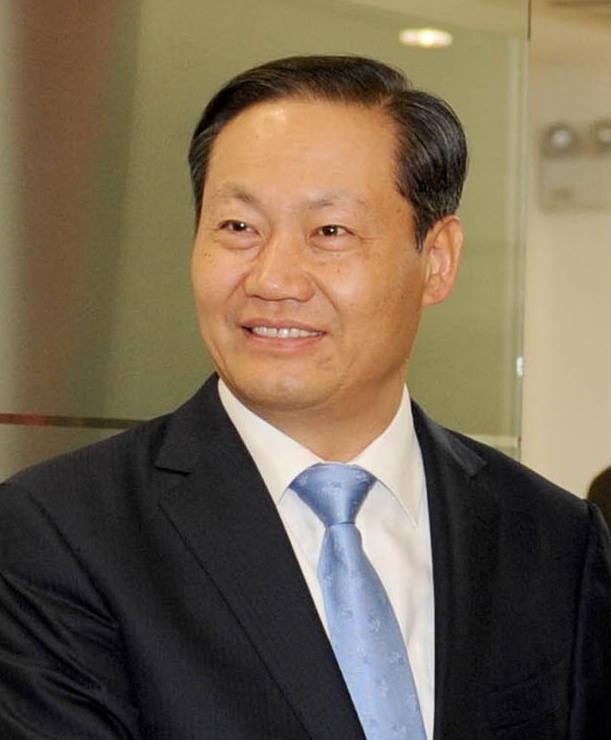
Peng Qinghua, born in Daye, Hubei, in April 1957, spent twenty years in the CCP Central Organization Department after graduating from Peking University, directed the Hong Kong Liaison Office (2009–2012) and served as Party secretary of Guangxi (19 December 2012 – 21 March 2018) before becoming Party secretary of Sichuan on 21 March 2018, a post he held until 22 April 2022; on 10 March 2023 he was elected a vice-chairperson of the 14th NPC Standing Committee. The core of this file is his Sichuan four years: less than nine months after his arrival, Chengdu police seized more than one hundred members of the Early Rain Covenant Church citywide on 9 December 2018, and Pastor Wang Yi was sentenced on 30 December 2019 to nine years for inciting subversion, with Elder Qin Defu receiving four years; also on his watch, a Mianyang court secretly sentenced rights-website founder Huang Qi to twelve years on state-secrets charges on 29 July 2019, the 19-year-old Garzê monk Tenzin Nyima died of custodial injuries on 19 January 2021, and 113 Tibetans in Dza Wonpo were detained in August 2021 over Dalai Lama images. Attribution is strictly tiered: no public document shows Peng personally ordering any of these cases, so this page books his responsibility as top provincial leader and collective leadership responsibility, the national religious-tightening policy to the center, and execution to Chengdu police and Sichuan courts. Sanctions: none — his name is on no US, EU, UK or Canadian public list; he left Sichuan at term's end for promotion to vice-state rank and was still appearing publicly as an NPC vice-chairperson in June 2026.
1. Daye Origins and Twenty Years in the Organization Department (1957–2003)
Peng Qinghua was born in April 1957 in Daye, Hubei. His career did not begin in public security or propaganda but at county level: in August 1974, aged seventeen, he started work in his home county, and in June 1976 he joined the Communist Party. In 1979 he entered the philosophy department of Peking University — one of the first intakes after the restoration of the university entrance examinations. On graduating in 1983 he was assigned to the Central Organization Department, the Party's personnel ministry, and there he stayed for twenty years.
That posting list is worth reading item by item, because it explains how he later governed as a provincial secretary. He served as a secretary in the department's cadre bureaus; from 1988 as a secretary of the department itself; then as deputy director and director of the Party Building Research Institute, concurrently editor-in-chief of the journal Party Building Research; then director of the department's research office; and in 2001 director of the First Cadres Bureau and a member of the department's leadership — the First Cadres Bureau handles the vetting and appointment of centrally managed cadres and is one of the most powerful offices in the building. Along the way he collected two in-service degrees, a master's in engineering from Hunan University's business school and a doctorate in business administration from Sun Yat-sen University. Put plainly: Peng is a cadre the personnel system made itself. His craft is not economic management and not policing; it is people, leading groups and organizational procedure. His later public persona — few words, no spotlight, almost no interviews, every statement in collective phrasing — is the standard manner of an Organization Department man: the individual disappears behind the procedure.
For this early period this page records offices only. Research found no material connecting his twenty Organization Department years to any specific wrongful personnel case or persecution file, and this page makes no such connection. But one structural fact must be fixed here because it runs through everything that follows: a man who spent twenty years in the Organization Department understands better than anyone how power is transmitted down the Chinese system, level by level. A provincial Party secretary does not need to telephone a police bureau himself. Stability targets, religious-work deployments and political-legal coordination are written into meeting minutes and responsibility-system documents and pressed downward step by step. His four Sichuan years must be read through that transmission structure: the absence of a personal instruction from him is the system's normal condition, not evidence that he bears no responsibility — and writing every operation as personally commanded by him would equally exceed the evidence. Those two sentences are this page's bottom line.
2. How This Page Attributes Responsibility: Three Tiers
The difficulty in writing about Peng is the difficulty of writing about any provincial Party secretary: large provincial crackdowns almost never surface in public documents as an arrest order signed by the secretary. The provincial stability machine works like this: the center sets policy and law, the provincial Party committee sets deployment and tone, the provincial political-legal committee coordinates police, prosecutors and courts, municipal public-security and religious-affairs organs execute, and the courts close the file with individual verdicts. Every link of the Early Rain case can be found in the public record with an executor's name on it — except a sheet of paper bearing Peng Qinghua's. This page therefore applies the same three-tier scale used across this site's people files, marking each item as it goes and never mixing tiers.
Tier one, personally documented: matters that public documents show Peng himself holding, signing, attending or saying — for example his documented chairmanship of Sichuan's provincial COVID response leading group, his speeches at provincial meetings and Party lectures, and the official appointment and removal notices for his own posts. Items in this tier attach to him personally, but only within the limits of what the document actually says: that he chaired the COVID leading group does not make every Sichuan pandemic measure his personal decision.
Tier two, top provincial leader and collective responsibility: large-scale actions carried out during his tenure as Sichuan Party secretary by the province's Party, government and political-legal systems — the coordinated arrests of 9 December 2018 against Early Rain, the years of continuing harassment and re-arrests of that church, the twelve-year sentence handed down by a Mianyang court to Huang Qi in 2019, and the arrests and the custodial death recorded in Sichuan's Tibetan areas. The wording for this tier is always "on his watch, executed by the Sichuan system, with Peng bearing top provincial leadership responsibility." That is not a standard this page invented: under the Party's own organizational doctrine — the Party commands the political-legal apparatus, the Party manages religious work, and the secretary is the first responsible person — the provincial secretary answers for the province's political-legal and religious work. But first-responsible-person responsibility is not a personal order, and this page never rewrites any tier-two item as "Peng ordered it."
Tier three, national policy and the unattributable: the revised Regulations on Religious Affairs that took effect on 1 February 2018, the nationwide sinicization-of-religion drive, and the nationwide tightening against unregistered churches were Beijing's policies, set before Peng arrived in Sichuan and driven by the Xi-era central religious-work system. The Early Rain case was a local execution of that national policy in Sichuan; this page books the policy account to the center and only the execution-place provincial responsibility to the Sichuan tier. Conversely, cases that occurred on his watch but for which the public record cannot show provincial-level participation in the decision are cited as background only, with the break in the chain marked. One time boundary must be stated up front: Chengdu's mass lockdown of September 2022 happened after he had left office, under his successor Wang Xiaohui, and is not booked to Peng here. Attribution by evidence begins with not misbooking accounts.
3. The Hong Kong Liaison Office and Five Years in Guangxi (2003–2018)
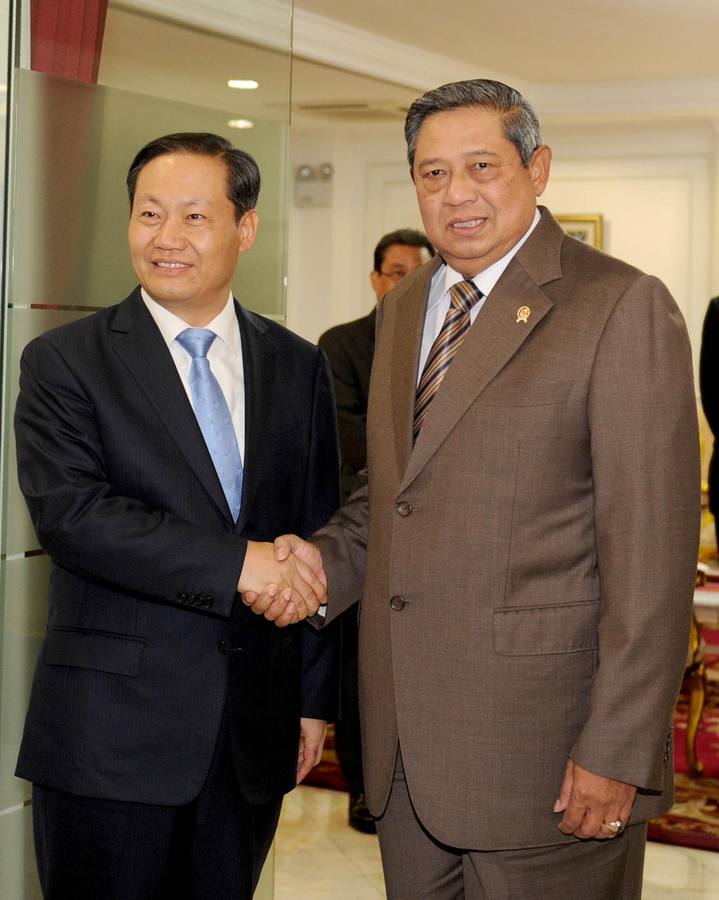
In December 2003 Peng left the Organization Department and went south to Hong Kong as deputy director of the Liaison Office of the Central People's Government in the Hong Kong Special Administrative Region; on 25 May 2009 he became its director, succeeding Gao Siren, as Beijing's senior representative in the city. This tenure needs its dates nailed down, because it is often blurred together with Hong Kong's later history: Peng directed the Liaison Office from 2009 to December 2012. The Umbrella Movement of 2014, the anti-extradition movement of 2019 and the Hong Kong National Security Law of 2020 all happened after he had left, under his successors and the Hong Kong and Macao system, and this page does not book Hong Kong's later repression to him. His own Hong Kong years were comparatively quiet; his signature public remark in the record is from the 2010 constitutional-reform debate, when he observed that "rational voices discussing reform are growing stronger" — a Liaison Office director's routine intervention in Hong Kong's constitutional discussion, archived here as an office fact.
On 19 December 2012 he returned to the mainland as Party secretary of the Guangxi Zhuang Autonomous Region, succeeding Guo Shengkun, later concurrently chairing the regional People's Congress Standing Committee (until January 2016), and was re-elected at the region's 11th Party congress in November 2016. The Guangxi tenure — five years and three months — was his first provincial top job. In the public record its face is economic and ASEAN-facing: the China–ASEAN Expo in Nanning was his fixed annual appearance, and in June 2013 he visited Vietnam as Guangxi secretary and met its prime minister. This page made a dedicated check of the Guangxi years, and the result must be stated honestly: within the sources searched — the public reports and case databases of Human Rights Watch, Radio Free Asia, the US Congressional-Executive Commission on China and Amnesty International — no signature persecution case was found that is named for Peng personally or expressly tied by those organizations to a Guangxi provincial deployment decision. That does not mean Guangxi saw no demolitions, arrests or religious enforcement in those five years; the nationwide stability machine ran there too, and scattered cases appear in rights-defense reporting. It means only that no case's public evidence chain reaches this site's threshold for hanging an event on a provincial secretary's name. This section accordingly stops at offices and the verification result, with no padding and no invention. Its archival value is the contrast: the same man, in the same rank of job, left almost no trace in the international human-rights record in five Guangxi years — and in four Sichuan years left a case, Early Rain, documented in full by the US State Department, a UN working group and multiple rights organizations. The difference is not personal temperament. It is that Sichuan on his watch collided with a national religious-tightening policy and a flagship church that refused to register and preached open criticism of the regime.
4. 21 March 2018: Taking Over Sichuan
On 21 March 2018 Xinhua announced adjustments to the Party leadership of five provinces and regions: Peng Qinghua would serve as member, standing committee member and secretary of the Sichuan Provincial Party Committee, leaving his Guangxi posts, succeeding Wang Dongming, who had been elevated to vice-chairperson of the NPC Standing Committee; Lu Xinshe took over Guangxi from him. New secretaries arrived the same day in Jiangxi, Henan and Qinghai — the first large rotation of provincial chiefs after the 19th Party Congress, with Peng one of those moved laterally from one provincial top job to another. Sichuan then had more than eighty million people; it is a demographic and economic giant whose territory includes the Garzê (Ganzi) Tibetan Autonomous Prefecture, the Ngaba (Aba) Tibetan and Qiang Autonomous Prefecture and the Liangshan Yi Autonomous Prefecture, and stability work in the Tibetan and Yi areas has always been among the most sensitive files on a Sichuan secretary's desk. On 19 January 2019 he was elected chairman of the Sichuan People's Congress Standing Committee, concentrating the province's top Party and legislative posts in one pair of hands.
When he arrived, national religious policy had just completed a tightening: the revised Regulations on Religious Affairs had taken effect on 1 February 2018, the space for unregistered religious bodies had been compressed in written law, and the sinicization of religion had become the central religious-work slogan. Sichuan's religious and united-front deployments that year read, in public reporting, as routine implementation of central directives; this page did not find — and states plainly that it did not find — any speech or document signed by Peng personally and aimed at Early Rain Covenant Church or any specific congregation. The counterpart fact must be written just as plainly: counting from his arrival in March 2018, pressure on Early Rain in Chengdu escalated sharply — a large May raid within two months (Section 5), then the citywide coordinated operation of 9 December at year's end. In the first year of a new provincial secretary's tenure, the disposition of the provincial capital toward a nationally known unregistered church moved from years of harassment to wholesale abolition and criminal prosecution. That sequence is itself part of provincial leadership responsibility: even where deployments originate in the political-legal and united-front systems, a new secretary's arrival and the post-transition resetting of the stability tone form the institutional background against which the machine accelerates. This page goes exactly that far and no further: sequence and office responsibility are provable; a personal instruction is not. Both are stated.
5. Early Rain Covenant Church: From the May Harassment to the 9 December Citywide Arrests (2018)
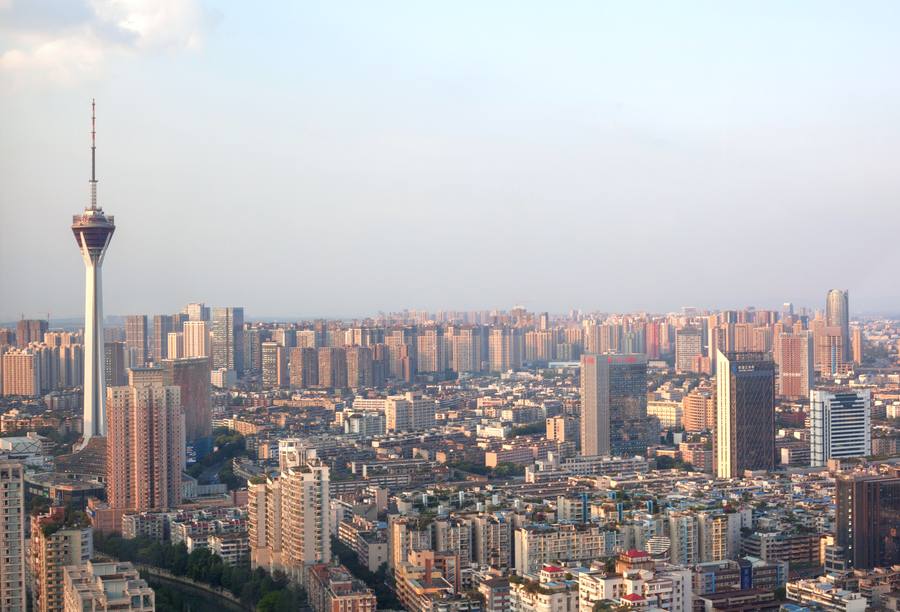
Early Rain Covenant Church was an unregistered Reformed Protestant house church in Chengdu founded by Wang Yi, a former legal scholar: born in 1973, once a lecturer at Chengdu University and one of China's best-known public intellectuals, Wang converted to Christianity in 2005 and in 2008 founded the church (first as Early Rain Reformed Church, later renamed Early Rain Covenant Church), with a congregation sized differently by different sources — about 500 in Human Rights Watch's account, about 800 in church-background material and much reporting — plus an affiliated kindergarten, seminary and Bible college. What made this church different was that it never hid: it worshipped publicly, preached publicly, prayed every year from 12 May to 4 June for the Wenchuan earthquake dead and for the June Fourth victims, ran a fellowship for petitioners, and Wang Yi himself publicly criticized religious controls and joined pastors' statements opposing the revised Regulations on Religious Affairs. In the policy climate of 2018, the existence of such a church was itself a standing challenge to the local authorities — a point both sides understood.
The first signal after Peng's arrival came in May 2018. The church had planned an evening prayer service on 12 May marking the tenth anniversary of the Wenchuan earthquake. By the church's account, carried by several organizations, police and state security demanded on 10 May that Wang Yi cancel the service, fellow workers were threatened on 11 May, and on 12 May police raided the church: about two hundred congregants were held until late that evening, and Wang Yi was detained overnight on a "picking quarrels" rationale. In early June, when the church planned a June Fourth memorial prayer, police entered again, and the Qingyang District ethnic and religious affairs office served the church a notice that same day stating it had violated the newly revised Regulations on Religious Affairs. These two operations were the rehearsal for December: the same executing departments, the same regulatory basis, the same sequence — first demand cancellation, then move against the whole body.
On Sunday 9 December 2018, at about six in the evening, the Chengdu Municipal Public Security Bureau launched its coordinated operation against Early Rain. Human Rights Watch's statement of 14 December 2018 remains the fullest contemporaneous record: on 9 and 10 December, Chengdu police took Pastor Wang Yi and more than one hundred congregants from church premises and homes; authorities ransacked and sealed the church's offices, kindergarten, seminary and Bible college and searched many congregants' homes; the notice received by Wang Yi's mother stated that Wang had been criminally detained on suspicion of inciting subversion of state power; and Elder Li Yingqiang's wife was told Li had been detained for picking quarrels and provoking trouble. Church-side and later accounts run higher: about 150 people taken over the course of the week. Jiang Rong, Wang Yi's wife, was seized that night from her mother-in-law's home, later placed under residential surveillance, and released on bail only in June 2019; Wang's elderly mother and young son were kept under round-the-clock surveillance. Forty-eight hours after his arrest, the church published the statement Wang had written in advance, "My Declaration of Faithful Disobedience" — he had long known this day would come. On 10 December Chengdu's religious-affairs authorities issued a notice declaring the church's activities in violation of the revised Regulations on Religious Affairs. The international reaction was immediate: the US ambassador-at-large for international religious freedom protested publicly, the State Department on 10 December again listed China among Countries of Particular Concern for religious freedom, and the US Commission on International Religious Freedom condemned the arrests on 12 December. That night was the most fully internationally documented act of repression of Peng Qinghua's Sichuan tenure: in one evening, in a southwestern provincial capital, a church of some eight hundred people was uprooted entire.
6. Sentencing and the Church That Would Not Scatter: Wang Yi's Nine Years, Qin Defu's Four, and Continuing Harassment (2019–2022)
Every procedural step after the arrests was completed on Peng's watch. In August 2019 the UN Working Group on Arbitrary Detention adopted an opinion holding the detention of Wang Yi and Jiang Rong to be arbitrary. Elder Li Yingqiang was released on bail in August 2019 after eight months in criminal detention. On 29 November 2019 the Qingyang District People's Court in Chengdu tried and sentenced Elder Qin Defu in secret: four years in prison for illegal business operations — the "business" in the prosecution's account being some twenty thousand hymnals and gospel tracts the church had printed. According to ChinaAid's reporting, the authorities had promised Qin's family that if they accepted state-assigned lawyers he would be released; the lawyers were changed, and what the family got was a four-year sentence. Qin Defu completed his sentence and was released on 9 December 2022 — note the date: he walked out eight months after Peng had left Sichuan, but his arrest, prosecution and sentencing all fall inside Peng's tenure.
On 26 December 2019 Wang Yi was tried in secret at the Chengdu Intermediate People's Court — his defense lawyer, Zhang Peihong, having first been barred by the authorities from representing him. On 30 December the court announced the verdict: for inciting subversion of state power and illegal business operations, Wang Yi was sentenced to nine years in prison, deprived of political rights for three years, and RMB 50,000 of his personal assets was confiscated (some reports render the 50,000 as a fine; this page follows the court's published formulation and notes the discrepancy). Nine years was among the heaviest sentences imposed on a Chinese house-church pastor in more than a decade. The next day, 31 December, the US State Department issued a statement: spokesperson Morgan Ortagus said the United States was alarmed that Wang had been tried in secret and sentenced to nine years in connection with his peaceful advocacy for religious freedom, and called for his immediate and unconditional release; Secretary of State Mike Pompeo followed on Twitter on 1 January 2020. Wang Yi has since been held at Jintang Prison in Chengdu, where he remains; USCIRF and the US Congress's Tom Lantos Human Rights Commission both carry him as a tracked prisoner-of-conscience case. The court that sentenced him, the prison that holds him and the police who executed the operation are all inside Sichuan province; the sentence fell in the middle of Peng Qinghua's Sichuan term.
The church did not scatter, so the handling did not stop. After Wang Yi's imprisonment the congregation shifted to homes and small groups, and Chengdu police harassment became routine — a line that likewise runs the length of Peng's tenure. On Easter Sunday, 12 April 2020, as members worshipped online, police came to homes, took several members away for questioning and cut power as a threat, as Radio Free Asia recorded. On 22 August 2021 police burst into a small group meeting at member He Shan's home and took away twenty-eight people — eighteen adults and ten children, including an infant under one year old; Preacher Dai Zhichao and He Shan were given fourteen days' administrative detention. These operations were far smaller than 9 December 2018, but their meaning is that abolishing Early Rain was not a one-off campaign: it was a standing disposition policy executed inside Sichuan for years, running to the end of Peng's tenure and continuing after he left (a fresh round of arrests against the church in the Chengdu–Deyang area in 2026 is no longer his tenure account, and this page notes the time boundary in its sources section). For a provincial first-in-command to claim no knowledge of a multi-year disposition policy that international bodies named year after year would not hold under the Party's own organizational rules — the standing committee and political-legal meetings the secretary chairs are precisely where such policies are decided. This page keeps Section 2's scale all the same: the provincial leadership responsibility for the policy is booked to his tenure; the specific instruction for each successive raid is not booked to him personally.
7. The Huang Qi Case: A Secret Trial and Twelve Years (2019)
The second signature Sichuan verdict of Peng's tenure is the Huang Qi case. Huang Qi, born in 1963 in Sichuan, founded the 64 Tianwang Human Rights Center — a website launched in 1998 publishing petitioners' appeals and reports of rights abuses, work for which Huang twice won the Reporters Without Borders press-freedom award and twice went to prison. On 28 November 2016 police took him from his Chengdu home and arrested him on suspicion of illegally providing state secrets to foreign entities — that arrest predates Peng's arrival, and this page says so. But the trial and the sentence fell entirely within Peng's tenure: on 14 January 2019 the Mianyang Intermediate People's Court tried Huang in secret, with supporters, journalists and diplomats intercepted and turned away and his family not notified; and on 29 July 2019 the court announced its verdict — for intentionally leaking state secrets and illegally providing state secrets to foreign entities, a combined sentence of twelve years in prison, four years' deprivation of political rights, and a fine of RMB 20,000 (ChinaAid's account renders the 20,000 as confiscation from his personal account).
Human Rights Watch, in a statement issued the day of the verdict, called it a baseless twelve-year sentence that should be quashed, recording a secret prosecution riddled with procedural problems and allegations of torture and mistreatment; Amnesty International noted that the UN Working Group on Arbitrary Detention had already found in April 2018 that Huang's detention was arbitrary. Huang suffers from serious kidney and heart disease. His mother, Pu Wenqing, campaigned for him for years — and did not learn of the 2019 sentence from the court at all; Tianwang volunteers told her. A man who spent twenty years giving petitioners a voice was given twelve years in a secret courtroom for leaking state secrets that, as an ordinary citizen holding no government post, he had no access to in the first place. Set beside the Early Rain case, Huang Qi completes the picture of Peng's Sichuan along its two axes, speech and belief: one man for running a church, one for running a website; one in Chengdu, one in Mianyang; different executing systems — and the same first-responsible-person's office. The tiering for Huang Qi is stated with the same care: the arrest belongs to his predecessor's tenure; the secret trial and the twelve-year sentence fall in Peng's, at the provincial tenure tier; no public material shows that Peng intervened in the case, and this page does not write that he did.
8. The Tibetan Areas: The Death of Tenzin Nyima and the Hundred-Plus of Dza Wonpo (2019–2021)
Sichuan's other face is its Tibetan west. The Garzê Tibetan Autonomous Prefecture and the Ngaba Tibetan and Qiang Autonomous Prefecture cover large parts of the traditional Tibetan regions of Kham and Amdo, and overall responsibility for their stability work sits with the Sichuan Provincial Party Committee. Both cases in this section occurred on Peng's watch, and both were executed in Garzê.
Tenzin Nyima — religious name Tamey — was a young monk of Dza Wonpo Monastery in Wonpo Township, Sershul (Shiqu) County, Garzê. On 7 November 2019 he and three other monks distributed leaflets and shouted Tibetan-independence slogans outside the Wonpo township government offices; he was detained on 9 November. Six other young Tibetans, including a sixteen-year-old boy, were sentenced to up to five years over the same series of peaceful protests. Human Rights Watch's release of 21 January 2021 records the ending in full: released in May 2020, Tenzin Nyima was rearrested on 11 August 2020, reportedly for sharing news of the arrests with contacts abroad; in early October 2020 prison authorities told his family to collect him — he was in a coma; after transfers between hospitals in Chengdu and Kangding, doctors declared his condition hopeless, his family brought him home, and on 19 January 2021 Tenzin Nyima died, aged nineteen, of injuries inflicted, on the HRW and Tibet Watch record, by beatings and mistreatment in custody. A nineteen-year-old monk hands out a few leaflets and is carried home comatose to die. After his death, Dza Wonpo was subjected to large-scale searches by soldiers and police hunting the source of the leak and confiscating images of the Dalai Lama — follow-up handling that also falls within Peng's tenure.
In August 2021 Dza Wonpo was swept again, village-wide. Radio Free Asia's Tibetan Service reported the series: around 22 August police raided the township and took away some fifty-nine to sixty Tibetans — nineteen monks and forty laypeople — for possessing photographs of the Dalai Lama; on 25 August authorities convened a mass meeting warning residents against keeping the images or contacting people abroad; from 25 to 29 August house-to-house searches took fifty-three more; in all, 113 Tibetans were detained and held in Sershul County. Weeks earlier, on 13 July 2021, Tibetans in Serthar (Seda) County, Garzê, had been detained after police phone searches around the Dalai Lama's birthday turned up related images, a case carried in both the USCIRF and CECC databases. More than a hundred people arrested over a photograph; a nineteen-year-old beaten into a coma over leaflets — none of this requires anyone to invent a new policy; the Tibetan-area stability machine produces it by running its ordinary procedures. But the province where the machine ran had a first responsible person named Peng, in office 2018 to 2022, and this page writes that line as found. The same boundary holds here as everywhere in this file: no public material shows Peng personally intervening in any Tibetan-area case, and this page makes no such claim; the line between provincial leadership responsibility and a personal order remains exactly where Section 2 drew it.
9. Other Tenure Matters and Explicit Boundaries
Four further tenure facts belong in the file, for completeness. First, COVID: in early 2020 Peng chaired Sichuan's provincial leading group for COVID response — a personally documented office, with official reporting of, among other things, his 21 February 2020 inspection of vaccine and drug research at Sichuan University's West China campus. Sichuan's pandemic handling on his watch ran mainly to border controls and localized lockdowns. The boundary must be drawn sharply: Chengdu's citywide static-management lockdown of September 2022 came five months after he left office and was his successor Wang Xiaohui's decision; it is not booked here, and neither is the national zero-COVID policy's overall account booked to any single provincial secretary. Second, petitioners: Sichuan is a major petitioner province, and most of the appeals Huang Qi's Tianwang published over twenty years came from Sichuan's grassroots; but this page's research found no completely documented case of a province-wide petitioner-interception or petitioner-handling campaign ordered at Sichuan provincial level and recorded as such by a reliable organization, so this file records the Tianwang case itself and does not dress the general plight of petitioners up as a named Peng campaign. Third, his Sichuan years also contained major public emergencies such as the Liangshan forest fires and the conclusion of the poverty-alleviation campaign; those belong to administration and governance, not to this site's human-rights remit, and are not developed here — this page is not a general ledger of his achievements or failures, only of the responsibility lines within this archive's subject. Fourth, two dates readers often misbook: Qin Defu's release on completion of his sentence on 9 December 2022, and the fresh 2026 round of arrests against Early Rain, both fall after Peng left Sichuan — the first was sentenced on his watch and the second has nothing to do with him, and this page has marked each accordingly so the accounts do not get crossed.
10. The Absence of Sanctions and a Smooth Landing
The sanctions column of this file reaches the same short conclusion as several of his peers' pages: none. As of this writing in November 2026, Peng Qinghua's name appears on no public sanctions list of the US Treasury's Office of Foreign Assets Control or the State Department, nor on those of the European Union, the United Kingdom or Canada, and he appears in no Xinjiang-, Tibet- or Hong Kong-related designation wave. Two adjacent facts help locate that absence. First, in December 2020 the United States sanctioned, in a single action over the Hong Kong National Security Law decision, fourteen then-serving vice-chairpersons of the NPC Standing Committee — Peng did not become a vice-chairperson until 2023 and was Sichuan secretary at the time, unconnected to that list. Second, his successor as Hong Kong Liaison Office director, Zhang Xiaoming, was sanctioned by the United States in August 2020 for his role in imposing the National Security Law from the Hong Kong and Macao Affairs Office: two men from the same Liaison Office directorship, one name on the list and one not, the difference being tenure and subject matter — Peng's Hong Kong years ended in 2012, long before the city's situation collapsed. And although his Sichuan tenure left as complete a record as Early Rain and Huang Qi, it never became the object of any government's sanctions narrative. Sanctions practice has historically concentrated on topics designated as standalone files — Xinjiang, Hong Kong — and provincial-level executors of religious and speech repression, even where a UN working group and the US State Department have named their cases one by one, have not to date entered the designation categories. This page speculates no further about reasons; it archives the absence itself.
On the domestic side there was likewise no accountability — there was an upward move. When he left Sichuan on 22 April 2022 the official formulation was routine rotation; he kept the provincial congress chairmanship until its term expired in January 2023; and two months later, aged sixty-six, he was elected a vice-chairperson of the NPC Standing Committee and entered the vice-state-level ranks. One provincial secretary, on whose watch a nationally known church was uprooted entire, its pastor sentenced to nine years, a rights-website founder sentenced to twelve, and a Tibetan monk beaten in custody and carried home to die — and four years on he had risen half a grade and moved calmly to Beijing. That is not one man's story; it is the system's normal condition: so long as repression stays within procedure and within the approved phrasing, it is not a stain on a career but part of the résumé. This page sets that contrast down as found, without a commentary conclusion; the facts are heavy enough on their own.
11. After Sichuan: Status Verification (2023–2026)
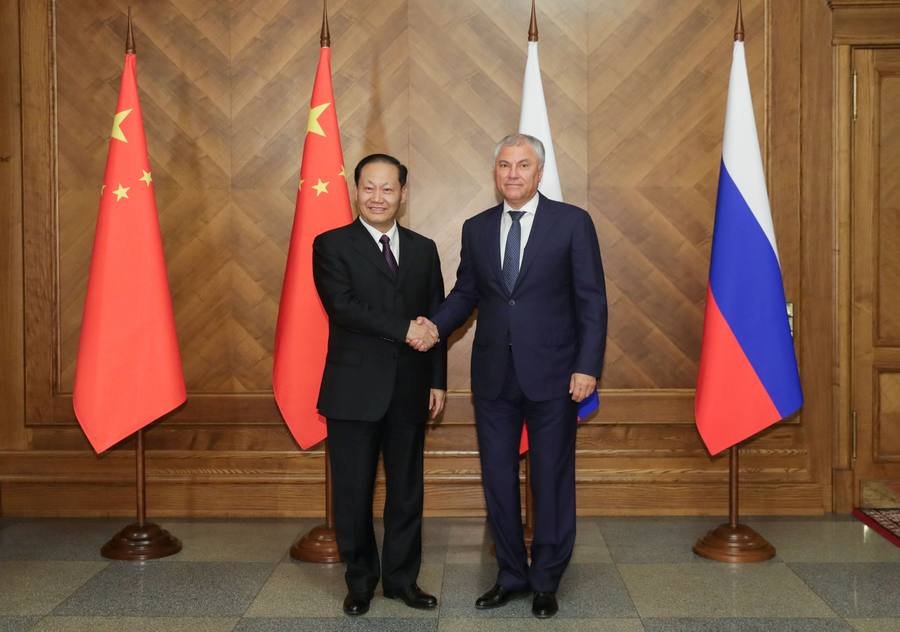
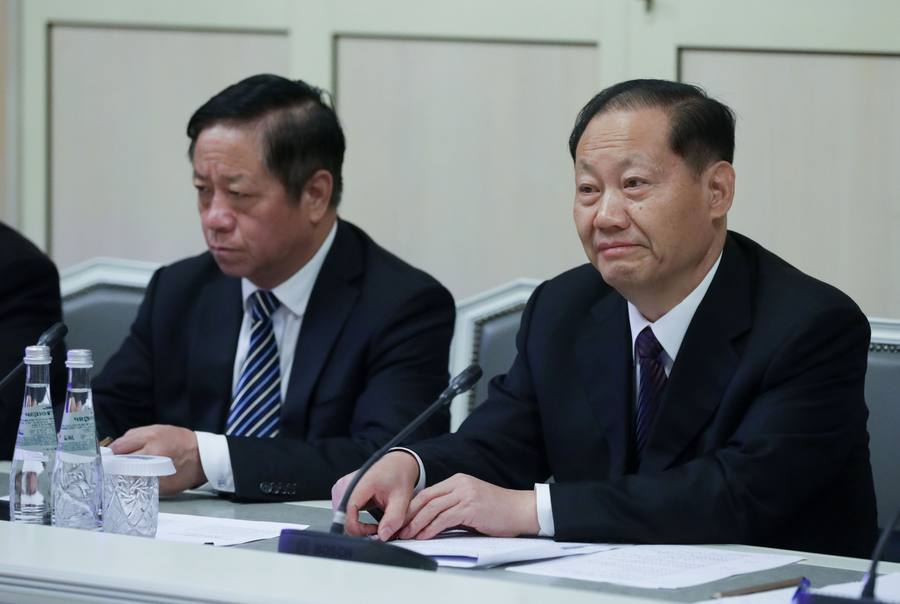
On 10 March 2023 the first session of the 14th National People's Congress elected the new NPC Standing Committee leadership: Peng Qinghua was elected a vice-chairperson alongside Li Hongzhong, Wang Dongming and eleven others, under Chairman Zhao Leji. The presence of Wang Dongming's name on that list is worth a line — Wang is the very predecessor Peng succeeded in Sichuan in 2018, and the two men now sit as fellow vice-chairpersons of the same Standing Committee. Peng did not enter the 20th Central Committee; his Beijing role from 2023 onward is ceremonial and diplomatic, his public portfolio among the vice-chairpersons weighted toward legislative exchanges and special-envoy travel.
The verification path for his current status is as follows. First, his public activity in NPC and Xinhua reporting is continuous: on 1 November 2023 he met a Danish parliamentary foreign-policy delegation in Beijing; in April 2024 he led an inspection team on foreign-related rule of law in Guangdong, in June 2024 he led a delegation to Russia, and on 30 July 2024 he attended Iranian President Masoud Pezeshkian's inauguration in Tehran as President Xi's special envoy and was received by him; on 21 March 2025 he attended the inauguration of Namibian President Netumbo Nandi-Ndaitwah in Windhoek as special envoy; on 25 May 2025 he returned to Chengdu to address the opening of the 20th Western China International Fair, reading out Xi Jinping's congratulatory letter; on 15–16 September 2025 he led a delegation to Serbia, meeting National Assembly Speaker Ana Brnabic and Prime Minister Djuro Macut and co-chairing the fifth meeting of the China–Serbia legislative cooperation committee; on 9 December 2025 he met the Sultan of Brunei; and on 12–13 December 2025 he attended the High-Level International Forum for the International Year of Peace and Trust in Ashgabat as special envoy. Second, his 2026 activity is likewise on the record: on 9 January 2026 he met a delegation of Iran's Expediency Discernment Council in Beijing, and on 11 June 2026 he addressed the Russia Day reception at the Russian embassy in Beijing, in Xinhua photo reporting on file. Third, both the Chinese and English Wikipedia entries list his NPC Standing Committee vice-chairmanship as incumbent, with complete predecessor and successor information for his earlier posts, and no report of departure, investigation or death has appeared. On this basis this page confirms: as of November 2026 Peng Qinghua remains a vice-chairperson of the 14th NPC Standing Committee, aged sixty-nine, in a Standing Committee term running to March 2028. His health, family circumstances and personal assets have no reliable public record and are not supplemented here.
视频证据Video Evidence
以下为与本页人物直接相关的机构新闻影像与档案影像。Institutional news and archival footage directly related to this page's subject.
《中国牧师王怡因「煽动颠覆」被判九年》(南华早报)|2019|原声:英语报道China's Pastor Wang Yi gets nine years in jail for 'inciting subversion' (South China Morning Post) | 2019 | Audio: English report
12. Verification and Sources
The office and biographical facts of this page were cross-checked across multiple sources, principally: the official biography of Peng Qinghua published by Xinhua and the Chinese government portal (born April 1957 in Daye, Hubei; began work August 1974; joined the CCP June 1976; in-service doctorate in management from Sun Yat-sen University; research fellow — rechecked against the government portal's 11 March 2023 biographical page for the vice-chairpersons of the 14th NPC Standing Committee); the Sun Yat-sen University business school's alumni page carrying his full career list (the Organization Department posting sequence, the Guangxi secretaryship and regional congress chairmanship, the March 2018 Sichuan appointment, membership of the 17th–19th Central Committees); Hong Kong government press releases (his appointment as Liaison Office director on 25 May 2009; his 7 November 2018 meeting with Chief Executive Carrie Lam in his capacity as Sichuan Party secretary); Xinhua's 21 March 2018 announcement of Party leadership adjustments in five provinces and regions; and the Chinese and English Wikipedia entries for Peng Qinghua (Sichuan Party secretary 21 March 2018 – 22 April 2022; Guangxi Party secretary 19 December 2012 – 21 March 2018; Liaison Office director 25 May 2009 – 18 December 2012; Sichuan People's Congress Standing Committee chairman 19 January 2019 – 15 January 2023; elected NPC Standing Committee vice-chairperson 10 March 2023), each tenure checked item by item against the official sources. The Early Rain material rests on: Human Rights Watch's statement of 14 December 2018 (Wang Yi and more than one hundred congregants taken on 9–10 December; church premises ransacked and sealed; Wang criminally detained for inciting subversion; Li Yingqiang detained for picking quarrels); ChinaAid's reporting series and church chronicle materials (Qin Defu sentenced to four years on 29 November 2019 over some twenty thousand church books, released on completion on 9 December 2022; Li Yingqiang released on bail after eight months); the USCIRF prisoners-of-conscience database (Wang Yi: detained 9 December 2018, sentenced by the Chengdu Intermediate Court on 30 December 2019 to nine years with three years' deprivation of political rights, held at Jintang Prison, Chengdu; the Qin Defu entry cross-checking the dates); the US State Department's statement by spokesperson Morgan Ortagus of 31 December 2019 and Secretary Pompeo's follow-up of 1 January 2020; the UN Working Group on Arbitrary Detention's August 2019 opinion on Wang Yi and Jiang Rong; and compiled church-persecution chronicles (the 12 May 2018 raid on the Wenchuan tenth-anniversary prayer service with about two hundred held; the disruption of the 12 April 2020 Easter online service; the 22 August 2021 raid taking twenty-eight people including ten children, with Dai Zhichao and He Shan administratively detained for fourteen days), cross-checked against Radio Free Asia and International Christian Concern reporting. The Huang Qi material rests on: Human Rights Watch's statement of 29 July 2019 (twelve years after a secret trial at the Mianyang court); Amnesty International's urgent-action files (secret hearing 14 January 2019, verdict 29 July 2019, the UN Working Group's April 2018 arbitrary-detention opinion); and the Chinese Human Rights Defenders case page (charges as framed; incarceration at Bazhong Prison). The Tibetan-area material rests on: Human Rights Watch's 21 January 2021 release and Tibet Watch / Free Tibet materials (Tenzin Nyima detained November 2019, rearrested August 2020, died of his injuries on 19 January 2021 aged nineteen); Radio Free Asia's Tibetan Service reports of 26 August and 1 September 2021 (about sixty plus fifty-three, 113 in total, detained in Dza Wonpo over Dalai Lama images); and the USCIRF database (the 13 July 2021 Serthar phone-search detentions). The current-status material rests on Xinhua and People's Daily reporting (the July 2024 Iran envoy trip, the March 2025 Namibia trip, the 25 May 2025 Western China International Fair, the September 2025 Serbia visit, the December 2025 Turkmenistan forum), NPC news reporting (the January 2026 Iranian delegation meeting; the 2025 fair), and Xinhua photo reporting as catalogued by picture agencies (the 11 June 2026 Russia Day reception).
Corrections and findings against the original briefing material are recorded as follows. One, birth: official biographies give only April 1957; the Chinese Wikipedia's 28 April is expressly a lunar-calendar conversion, and this page keeps the month and year as its text and archives the day with its provenance, rather than writing it as multi-source fact; the title year 1957 is confirmed by official sources. Two, tenures: the Sichuan Party secretaryship is cross-verified as 21 March 2018 to 22 April 2022; the Guangxi secretaryship as 19 December 2012 to 21 March 2018 (one secondary list gives 19 September 2012, inconsistent with Xinhua's appointment announcement, and is not adopted); the NPC Standing Committee vice-chairmanship dates from election on 10 March 2023, not an undifferentiated "March 2023." Three, Early Rain numbers: Human Rights Watch says more than one hundred taken; church and later accounts say about 150 over the week; this page prints both figures with their provenance rather than choosing one. Wang Yi's nine years and Qin Defu's four are cross-verified between the court's published formulation and multiple organizations; the RMB 50,000 in Wang's case is the court's confiscation of personal assets, rendered as a fine in some reports, and the discrepancy is noted in the text. Four, the personal-order question: an exhaustive search of public sources for this page found no document showing Peng Qinghua personally ordering the Early Rain arrests, the Huang Qi trial or any Tibetan-area case; every statement of his responsibility in this file is therefore written at the tier of top provincial leader and collective responsibility, with the boundary marked section by section, and any future material claiming a personal order will be admitted only after verification to the same standard. Five, time boundaries: Huang Qi's arrest (November 2016) predates Peng's arrival, and Chengdu's September 2022 lockdown and Early Rain's fresh 2026 round of arrests postdate his departure; all three are cut out of his tenure account in the text. Six, sanctions: searches of the US, EU, UK and Canadian public lists found no listing of his name; the fourteen NPC Standing Committee vice-chairpersons sanctioned by the United States in December 2020 were the serving 13th-Congress holders, not including Peng, and the two facts are recorded separately. Seven, images: a search of Wikimedia Commons found no compliantly licensed free photograph of Peng Qinghua himself; his public photographs are overwhelmingly Xinhua and agency rights-managed images, which this site's rules do not permit it to use, and the image status of this page is accordingly registered as no compliant source (see the metadata). Matters for which no public source exists — his family and assets, the internal provincial discussions of the Early Rain case, any case-level communication between him and the political-legal system — are marked in this file as having no public record and have not been supplemented in any way. This page will be revised as new archives become public.
Contact: endccpworld@proton.me