
Lou Yangsheng (1959– )
Lou Yangsheng, born in Pujiang, Zhejiang, in October 1959 and trained in the Party's organization system, served as mayor of Jinhua, Party secretary of Lishui, vice chair of the Zhejiang CPPCC and provincial United Front head, then as organization department head of Hainan (2009) and Hubei (2012), deputy Party secretary of Shanxi from 2014, governor of Shanxi from 2016 and Shanxi Party secretary from 30 November 2019, before becoming Party secretary of Henan on 1 June 2021. Seven weeks into the job, the Zhengzhou '7·20' flood killed or left missing 398 people province-wide; the State Council investigation found 139 cases deliberately concealed, Zhengzhou Party secretary Xu Liyi was removed and demoted, 89 public employees were disciplined — and no provincial leader was touched. The year 2022 defined his tenure: from April, four village banks froze some RMB 40 billion belonging to roughly 400,000 depositors; from 13 June, 1,317 depositors heading to Zhengzhou were given red health codes, 871 of them while outside the province, and Zhengzhou punished five people, calling the decision one made by municipal officials 'on their own authority'; on 10 July more than a thousand depositors outside the People's Bank of China branch in Zhengzhou were beaten and dragged away by unidentified men in white shirts whom the authorities have never identified, and repayments were announced the next day; in late October tens of thousands of Foxconn workers fled the Zhengzhou plant on foot, 'point-to-point' transport was announced on 30 October, and in late November workers clashed with police over changed bonus terms. Attribution runs in three tiers: his post-disaster statements and his own harvest-crisis account attach to him personally; the institutional and tenure responsibility for the three crises is booked to the provincial Party secretaryship; the red-code decision and the white shirts' identity are not traced to personal orders by him. Sanctions: none — his name appears on no US, EU, UK or Canadian list. He stepped down on 31 December 2024 on reaching the age limit and on 25 February 2025 became a vice chairperson of the NPC Education, Science, Culture and Public Health Committee, the post he still holds.
1. Zhejiang Roots and the Organization Cadre's Ladder (1959–2014)
Lou Yangsheng was born in October 1959 in Pujiang, a small county under Jinhua in Zhejiang. His résumé carries the standard marks of his generation: he began work in August 1976, before his seventeenth birthday, and joined the Party in November 1981 while studying at Zhejiang Normal University. The official biography lists only an in-service postgraduate degree and an MBA; there is no glittering academic pedigree to sell. He is an organization-system cadre who climbed rung by rung from Youth League work — not a technocrat, and not a man of the propaganda or public-security systems. Keep that background in mind for the Henan years that follow: the trade he had practised all his life was personnel and stability — "keeping the situation steady" — not the professional substance of finance, meteorology or public health.
His two decades in Zhejiang ran through the Youth League and local administration: Youth League posts from 1984, then mayor of Jinhua from November 1999, then Party secretary of Lishui. The Lishui appointment deserves a date: he took it in 2003, when the Zhejiang Party secretary was Xi Jinping (in post 2002–2007), and overseas personnel trackers — Brookings and the Plenum personnel database among them — commonly count Lou among Xi's Zhejiang alumni. This page applies its usual discipline to that classification: that the two men served within the same provincial leadership system is verifiable, and that Lou received a prefectural Party secretaryship — a key promotion — during those years is a fact; turning shared service into a proven personal patronage bargain goes beyond the public evidence and is not adopted here. The classification is archived as "career overlap plus commentators' labelling," nothing more.
In January 2008 he rose to vice-provincial rank as vice chair of the Zhejiang CPPCC and head of the provincial United Front Department. Then came a run of cross-province organization portfolios: Hainan in January 2009, as Standing Committee member and head of the Organization Department, concurrently secretary of the provincial Education Work Commission from February 2010; Hubei in March 2012, in the same organization post, concurrently president of the provincial Party school. One verification note belongs in the text: the overview paragraph of the English Wikipedia entry says he headed the Hainan Party committee's Publicity Department, which contradicts the official résumé carried by Xinhua and Henan Daily, which gives the Organization Department. This page follows the official résumé — the organization portfolio, control over cadre appointments, is also the one that matches the whole line of his career — and flags the English Wikipedia overview as apparently erroneous. In June 2014 he was transferred to Shanxi as deputy Party secretary and president of the provincial Party school. Shanxi was then in the aftershock of a "collapsing-style" corruption purge that had felled a string of provincial leaders; Lou, an organization man, was parachuted in, in the official narrative, to rebuild political order — to sort out a cadre corps in ruins.
2. Seven Years in Shanxi: Governor, Then Party Secretary (2014–2021)
The Shanxi years were the decisive step of Lou's career. On 30 August 2016 the provincial legislature appointed him acting governor, and on 28 November he was confirmed as governor, running the provincial government for over three years under Party secretary Luo Huining — who later moved to head Beijing's Liaison Office in Hong Kong. On 30 November 2019 Luo stepped down on reaching the age limit and Lou succeeded him as Shanxi Party secretary, adding the provincial People's Congress chairmanship in January 2020: the full handover from governor to first-in-command of a province. His public image in Shanxi was that of the consolidator and executor — coal supply-side reform, state-enterprise reform and poverty alleviation were the headline files, the coverage was routine, and there was neither a signature scandal nor a signature outburst. This page records the Shanxi period at the level of offices and dates for a plain reason: every responsibility event that made his name happened in Henan, not Shanxi. What the Shanxi years establish is that he arrived in Henan as anything but a novice — a man who had already served as both governor and Party secretary of a province and had just finished cleaning up after another province's political disaster. The chain of events in Henan in 2022 cannot be excused by "a new man unfamiliar with the situation," and that point is fixed here, in advance.
On 1 June 2021 Xinhua announced the Central Committee's decision: Lou Yangsheng would serve as member, Standing Committee member and secretary of the Henan Provincial Party Committee, leaving his Shanxi posts; Lin Wu succeeded him in Shanxi, and Wang Guosheng stepped down in Henan. On 16 June he added the chairmanship of the Henan People's Congress Standing Committee. The Henan he inherited had over 100 million people — China's third most populous province, its largest grain producer, and the home of Foxconn's biggest iPhone plant on earth. Under its calm surface sat three fuses: Zhengzhou's urban flood defenses, the New Fortune Group fraud behind dozens of village banks, and a social-control infrastructure built around the health code. Seven weeks later, the first fuse went off.
3. The Zhengzhou "7·20" Flood: A Storm in His Seventh Week (July 2021)
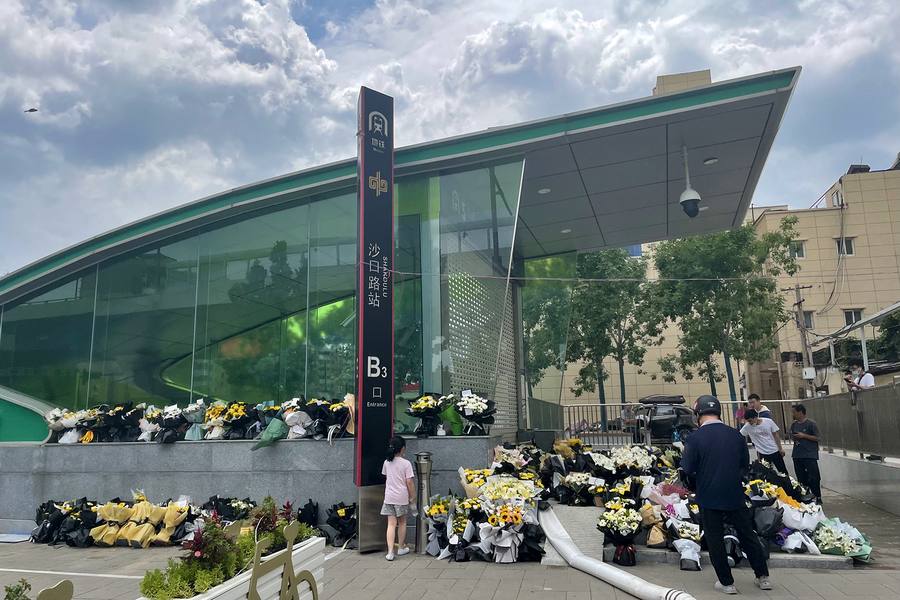
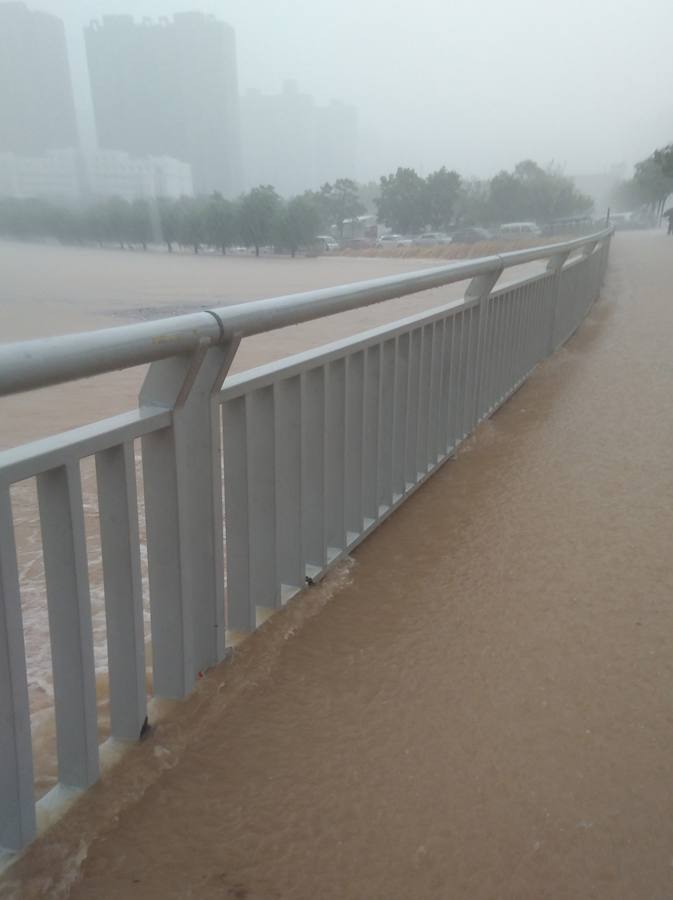
From 17 to 23 July 2021, Henan was hit by sustained extreme rainfall. On 20 July, Zhengzhou recorded 201.9 mm of rain in one hour — the highest figure since measurements began in 1951. That day floodwater poured into Metro Line 5; a train was forced to stop between Shakou Road and Haitansi stations, more than 500 passengers were trapped for nearly four hours, and 14 passengers died. The Jingguang North Road tunnel filled within minutes, killing six. The Guojiazui reservoir overtopped. Across the province, 150 counties and more than 14.78 million people were affected. The figure the provincial government announced on 2 August 2021 was 302 dead and 50 missing — a figure later proven to understate the toll by close to a hundred.
Lou's position in this disaster must be stated exactly, neither inflated nor excused. On timing, he had taken office on 1 June 2021; the storm hit in his seventh week. Zhengzhou's flood-control standards, the metro and tunnel emergency protocols and the Guojiazui reservoir's defects were years in the making, not products of his seven weeks. The 46-page investigation report published by the State Council's investigation group on 21 January 2022 classified the event overall as an "extraordinarily serious natural disaster," while finding that the Zhengzhou municipal Party committee and government and the relevant districts, counties and departments had shown weak risk awareness and poor emergency handling, with negligence and dereliction of duty. Its heaviest finding was the cover-up: Zhengzhou and other localities had failed to tally and report casualties daily as required and had "deliberately impeded and withheld" reports of 139 deaths and disappearances — 75 at municipal level, 49 at county level, 15 at township and street level. The final verified toll was 398 dead or missing across the province, of whom 380, or 95.5 percent, were in Zhengzhou. The report ruled the Metro Line 5 and Jingguang tunnel tragedies liability incidents, and the Guojiazui overtopping an unlawful incident.
Accountability landed with the report: Zhengzhou Party secretary Xu Liyi was removed from his post and given a serious Party warning and an administrative demotion; Mayor Hou Hong received a serious Party warning and demotion; Vice Mayor Wu Fumin was stripped of his Party posts and dismissed from government office; public security organs arrested 8 company personnel; and discipline and supervision organs held 89 public employees to account — 97 people handled in total. Note the radius: every person punished was a municipal-level or lower cadre or a company employee; not one provincial leader appears on the list. Lou's documented personal action in the affair is his statement when the State Council investigation group arrived in Henan: at the group's meeting on 20 August 2021, according to Henan Daily, he pledged to raise his political standing, cooperate proactively with the investigation, sincerely accept supervision and draw profound lessons. That statement belongs to the first tier of this page's attribution system — words he publicly said, on the record. What is equally on the record is what followed: he remained securely in the secretary's chair, was elected to the 20th Central Committee in October 2022, and the flood's accountability stopped at the city Party secretary. How much personal blame a secretary of seven weeks bears for a city's accumulated flood debt is open to argument; that the provincial Party committee and government he headed collectively failed to detect a 139-case cover-up inside their own province is not argument but the investigation report's own numbers. Who drew the line that stopped the blame at city level, the public record does not say — and this page does not invent an answer; it fixes the report's text and the boundary of the punishment list exactly as they stand.
4. The Village Banks: 400,000 People Locked Out of Their Own Money (April–July 2022)
On about 18 April 2022, four Henan village banks — Yuzhou Xinminsheng Village Bank, Shangcai Huimin County Bank, Zhecheng Huanghuai Community Bank and the New Oriental Country Bank of Kaifeng — shut down their online withdrawal and transfer channels almost simultaneously, hiding at first behind a vague "system upgrade." Depositors soon learned this was no technical fault. The four banks, together with Guzhen Xinhuaihe Village Bank in neighboring Anhui, were actually controlled by a single major shareholder, Henan New Fortune Group Investment Holding; police later announced that a criminal gang headed by Lu Yi (Lü Yi) had used New Fortune, third-party internet finance platforms and money brokers to take in deposits, then illegally moved the funds out through fictitious loans and other devices. Media estimates of the deposits involved run between RMB 39 and 40 billion; this page uses about RMB 40 billion. The number of depositors affected was around 400,000 — RFA and Reuters cited 413,000. Most of them were not Henan locals at all: they were ordinary people across China who had been drawn by interest rates of about 4.8 percent on third-party platforms and had put pension money, house money and medical money into a handful of tiny banks they had never seen.
From the start, the depositors' campaign to recover their money was handled as a stability-maintenance problem. In May 2022 depositors began travelling to Zhengzhou; on 23 May, hundreds rallied outside the Henan office of the banking regulator carrying banners reading "Return my savings." Through the whole spring, the public actions of provincial regulators and the local financial supervision apparatus consisted mainly of telling depositors not to believe or spread rumors, to express their demands rationally and lawfully — with no timetable for where the money had gone or when anyone would be repaid. One tier must be recorded fairly: day-to-day supervision of village banks belonged to the banking regulator and the local financial regulator, the fraud was run by New Fortune and Lu Yi — who fled abroad after the case broke — and the direct account for the financial crime does not belong on a provincial Party secretary's file. But the second tier is equally factual: from April to July, the visible priority of Henan's Party-state machine was not "get depositors their money back quickly" but "do not let the depositors gather." The evidence for that priority is the next two sections — the red codes and the white shirts.
5. The Red Codes: A Health Code Turned into a Roadblock (June 2022)
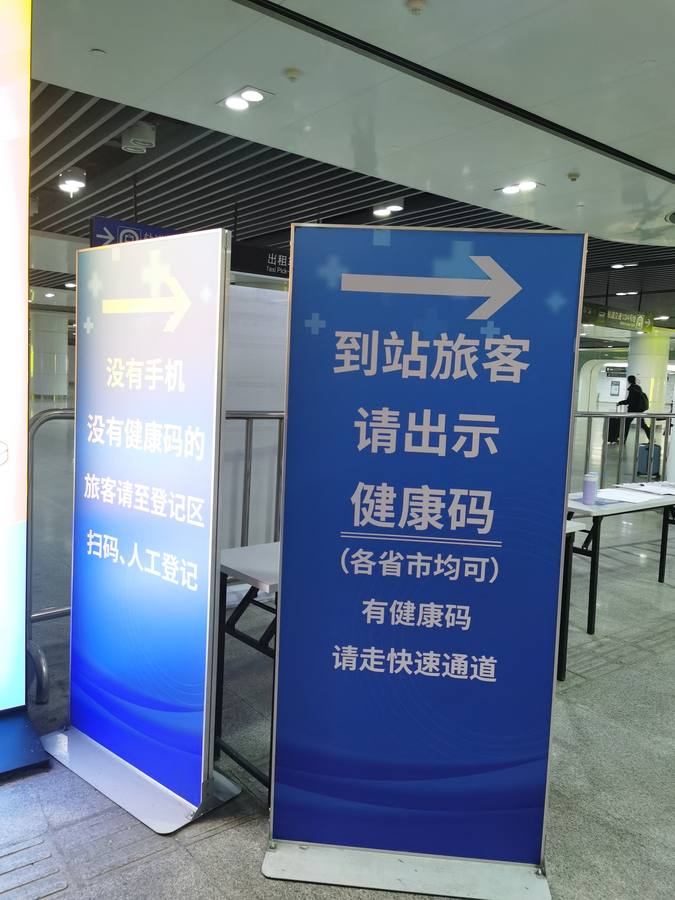
On 13 June 2022, village-bank depositors began complaining in numbers on social media: the moment they arrived in Zhengzhou — in some cases the moment they had merely bought a ticket — their health codes turned red without warning. Under the COVID rules of the time, a red code was reserved for confirmed cases and close contacts; it meant compulsory quarantine and no movement. Some depositors scanned a venue code at Zhengzhou railway station, turned red on the spot and were taken straight to quarantine sites; some were forced out of the city overnight; some were "persuaded to return" by community workers the moment they arrived. The pattern quickly became obvious to the depositors themselves: it was not people who had been to outbreak areas who turned red, but people registered as coming to Zhengzhou to demand their deposits. The health-code assignment system had been picked up and used as an interception list for petitioners. The story detonated nationally, for a precise reason: three years of public obedience to the health code had been purchased with the trust that it was "for epidemic control only," and using a red code as a stability tool publicly announced that the trust could be repurposed at any time.
On 17 June the Zhengzhou discipline inspection and supervision authorities announced an investigation. On 22 June the "Qingfeng Zhengzhou" account published the accountability notice, unusually specific, and this page archives it on its own terms: the investigation found that Feng Xianbin, executive deputy secretary of the Zhengzhou Politics and Law Commission and head of the social-control guidance department of the municipal epidemic-control headquarters, and Zhang Linlin, secretary of the municipal Youth League committee and a deputy head of the same social-control department, had "on their own authority decided" to assign red codes to some village-bank depositors coming to Zhengzhou, and had arranged for Zhao Yong, head of the Politics and Law Commission's stability-maintenance guidance office, Chen Chong, head of the headquarters' health-code management group, and Yang Yaohuan, deputy general manager of Zhengzhou Big Data Development Co., to assign red codes to depositors scanning venue codes in the city. In total, 1,317 depositors were given red codes: 446 who had entered Zhengzhou and scanned venue codes, and 871 who were not in Zhengzhou at all and were coded red after scanning images of Zhengzhou venue codes sent to them by others. The notice's language: Feng and Zhang had weak awareness of law and rules, had violated Henan Province's health-code management measures, and theirs was "a typical case of reckless action" that seriously damaged the authority of health-code management and caused serious adverse social impact. The punishments: Feng, bearing principal leadership responsibility, was removed from his Party posts and removed from government office; Zhang, bearing important leadership responsibility, received a serious Party warning and an administrative demotion; Chen Chong received a major administrative demerit; Yang Yaohuan and Zhao Yong, bearing direct responsibility, received administrative demerits. Five people — four officials and one big-data company executive — every one of them at Zhengzhou municipal level.
Two features of that notice must be stared at. The first is the phrase "on their own authority." It converts a complete execution chain — running from the Politics and Law Commission's stability apparatus through the epidemic-control headquarters to a big-data company — into the personal improvisation of municipal officials. But where the list came from — how the identities of 1,317 depositors were screened, compiled and fed into the code-assignment system — the notice does not explain; and who at provincial level knew, and when, the notice also does not explain. There is no public evidence that Lou Yangsheng or any provincial official ordered the red codes, and this page will never write that order under his name; but there is equally no public evidence that this was an isolated improvisation unconnected to the provincial stability situation — depositors converging on the provincial capital were Henan's number-one stability concern at that moment, a point the notice itself does not deny. The second feature is what happened afterwards. The red codes did not disappear with the punishments: around 15 July, more depositors reported their codes turning red again, while they were outside Henan; Zhengzhou's Big Data Administration Bureau explained it as "technical issues" during a system upgrade, and the codes turned green after a call to the mayor's hotline (Sixth Tone). And Zhang Linlin, the demoted official, was found by media in 2024 to have become Party secretary of the Zhengzhou Municipal Bureau of Culture, Radio, Television and Tourism — her rank restored to its pre-punishment level, at a date seemingly inside the 24-month punishment period the Civil Service Law prescribes for a demotion, prompting a fresh round of public questioning; the departments concerned replied that the appointment was "procedurally legal." The punishment was written on paper; the person was promoted back anyway. This page records the facts and lets the conclusion jump out on its own.
6. 10 July: Men in White Shirts Beating People in the Street (July 2022)
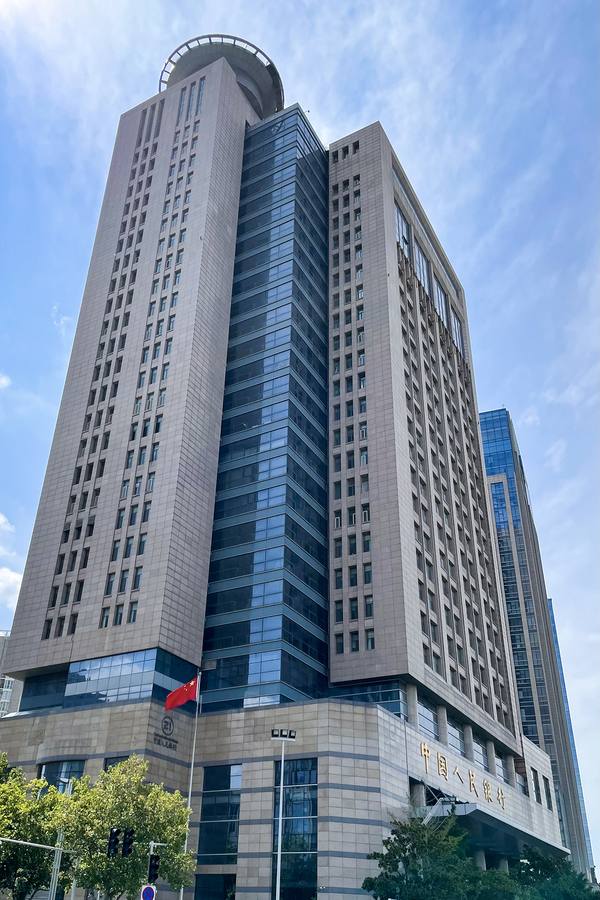
The red codes did not stop the depositors. From 4 a.m. on 10 July 2022, more than a thousand depositors from across the country gathered on the steps of the People's Bank of China's Zhengzhou central branch — they had deliberately arrived before dawn to slip past interception. Among them were elderly people, pregnant women and people with disabilities. Their banners demanded the return of their lawful deposits; one banner named its target directly: "Oppose the Henan government colluding with criminal forces to violently beat depositors." At about 9:40 a.m., the head of the Henan banking regulator appeared and assured the crowd that lawful deposits would be protected. Police then broadcast that the gathering was illegal and ordered the crowd to leave. Between about 10:00 and 11:20 a.m., a group of men in white shirts and black trousers charged into the crowd. Video and multiple eyewitness accounts corroborate each other: they pulled hair, applied chokeholds, punched and kicked, dragged depositors down the steps and forced them onto buses bound for schools, hotels, factories and village committee compounds used as temporary holding sites — while uniformed police stood at the scene and watched. The Associated Press, the BBC, Radio Free Asia and other international outlets reported the beatings the same day; the account of one depositor, whose RMB 1.11 million was frozen and who was set upon by four men, is preserved in NGOCN's in-depth reporting of 22 July.
To this day, the authorities have never publicly identified the men in white. Reporters who called the Henan Provincial Public Security Department and the Zhengzhou police at the time got no answer; no notice has ever explained who sent them, whose orders they followed, why they beat people, or whether anyone was held responsible for the beatings. Scholars — Lynette Ong of the University of Toronto, in her work on "outsourced repression," among others — note that unidentified plainclothes muscle is a standard configuration of grassroots stability work precisely because violence by non-uniformed men leaves no one to hold to account. This page records by evidentiary tier: the beatings themselves are supported by video, multiple eyewitness accounts and international reporting — solid; the attackers' identities and chain of command have no public record and remain an open question; no public material traces the 10 July clearance order to Lou Yangsheng personally. But one entry in the ledger is clear: the beatings happened in a core district of the provincial capital, in the province he governed — and the day after they happened, the money started to move.
On 11 July 2022 the Henan banking regulator and the provincial local financial supervision bureau announced classified advance repayments for the four banks' customers: starting 15 July, customers whose combined balance at a single institution was under RMB 50,000 would be repaid first; the ceiling then rose in batches — RMB 100,000 later in July, RMB 150,000 on 1 August, RMB 400,000 on 22 August, and a cap of RMB 500,000 on 30 August, with amounts above the cap repaid at RMB 500,000 for the time being and the claim to the remainder preserved pending disposal of the seized assets; in January 2023, depositors above RMB 500,000 began registering appointments. The announced funding source was the assets seized and recovered from the New Fortune Group. In other words, after being blocked at the railway station by red codes and beaten outside the bank by men in white, most depositors eventually got their principal back — but no public document has ever acknowledged any causal link between those two facts, and this page does not supply the acknowledgment on the authorities' behalf. It simply lays the dates side by side: red codes on 13 June, beatings on 10 July, repayments announced on 11 July. The reader can look at the sequence.
7. Foxconn: The Walk Home and the "Point-to-Point" Buses (October–November 2022)
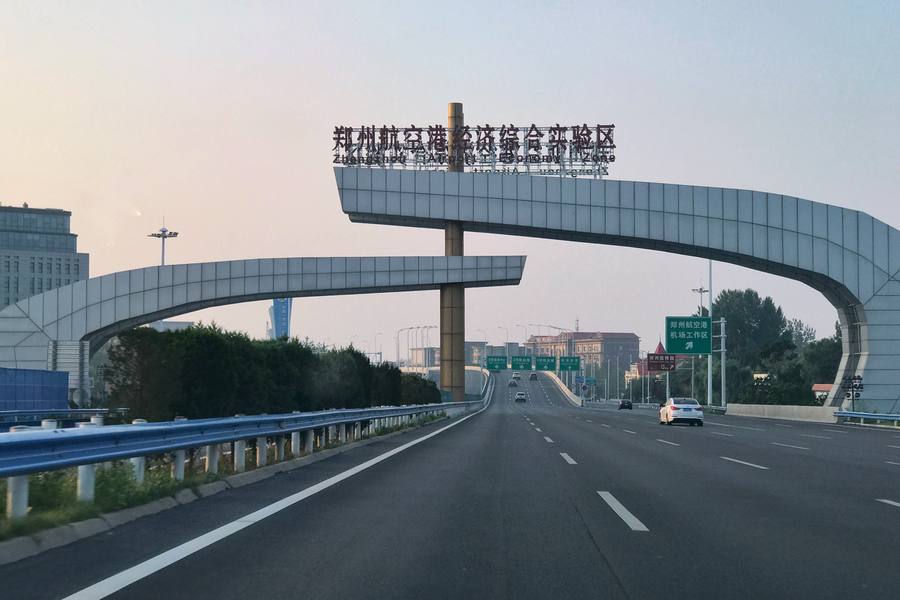
In the autumn of 2022 a new COVID wave hit Zhengzhou. Foxconn's Zhengzhou Airport Economy Zone plant is the largest iPhone assembly site in the world, employing more than 200,000 people at peak season, the overwhelming majority of them Henan migrant workers from the province's own countryside. From 13 October the plant ran under "silence management" and closed-loop production: workers could move only "point to point" between workshop and dormitory, with daily PCR tests; from 19 October the canteens stopped serving sit-down meals and workers carried food boxes back to their dormitories. As rumors of infections inside the plant spread — where were positive workers being taken, what were quarantine conditions, what about food and medicine — the workers could get no reliable information through official channels, and panic fermented on its own in the dormitory blocks. From the night of 29 October, large numbers of workers hauled their luggage over the plant's fences and set off home on foot along expressways and through wheat fields, some facing walks of more than a hundred kilometers; villagers along the routes set out free water and food by the roadside, and the images spread across the country. On 30 October the Zhengzhou municipal government announced that Foxconn would arrange vehicles to deliver workers who wished to leave "point to point"; governments in Xuchang, Hebi, Xinxiang, Zhoukou and other home counties issued open letters, sent coaches to collect their people, and placed returnees in quarantine on arrival. The provincial government and the company then stressed that the plant's outbreak was "under control" and that there were no severe cases.
The roots of the walkout must be separated by evidence. Direct responsibility lies with the company's closed-loop management and its information blackout, and with Zhengzhou's layered, one-size-fits-all lockdown policies of that moment — the workers were not revolting against any single order; they were voting with their feet, fleeing an information environment they no longer trusted. The provincial tier of responsibility is just as concrete: Henan is a great labor-exporting province, the Zhengzhou Foxconn plant is its single largest employer and export engine, and after the outbreak the provincial and municipal governments jointly maintained closed-loop production with the company to keep iPhones shipping — that "protect production" priority was itself a provincial-level decision, not anyone's improvisation. After the exodus, Henan reversed into a mass recruitment drive: local cadres and military veterans were mobilized to sign up, governments paid referral fees and subsidies per head, and by mid-November the headcount gap was roughly refilled. What happened next proved that refilling heads did not refill trust.
On the night of 22–23 November, newly recruited workers discovered that the bonus terms in their recruitment offers had been changed. According to worker Li Sanshan, who described the terms to the Associated Press, the advertising had promised RMB 25,000 for two months' work; on arrival, workers were told they would have to work two additional months at a lower rate to receive that sum. Thousands of workers poured out of the dormitories in protest and clashed with security guards and police in white protective suits. In the circulating videos workers chant "Give us our pay!"; some smashed surveillance cameras and windows; personnel in white hazmat suits drove workers back with shields and batons and beat some of them, while workers fought back with fire extinguishers. Reuters, the Associated Press and the BBC all reported the clashes. On 24 November Foxconn admitted a "technical error" in its onboarding system, apologized to the workers and guaranteed that actual pay would match the recruitment posters; according to Reuters' sources, Foxconn offered departing new hires a RMB 10,000 settlement, and more than 20,000 new workers then left the plant. November iPhone output at the Zhengzhou plant was at one point estimated to have fallen by as much as 30 percent. Lou's personal-tier record in this affair remains limited, as in the earlier ones: in the public documents the handling ran in the names of Zhengzhou city and the company, and no special public speech by him on the Foxconn affair has been found; but the "point-to-point" convoys, the cross-city bus mobilization and the organized recruitment drive were operations of the provincial government machine, and the provincial Party secretary is that machine's first responsible person — the entry is booked to the tenure and institutional tier, not as a personal order, in exactly the same measure as the two affairs before it.
8. The Closing Two Years: Sprouted Wheat, the Congress and the Exit (2023–2024)
From late May into early June 2023, Henan's wheat harvest ran into continuous rain, and ears of wheat sprouted and mildewed in the fields — an episode the public dubbed the "rotten-tail wheat." This time the provincial response moved visibly faster than in 2022: ten emergency harvesting and drying measures were rolled out across the province, machinery was dispatched across regions, and daily harvested area set a record. Lou personally recounted the episode at the Henan delegation's deliberations during the 2024 national legislative sessions: the previous summer's harvest, he said, had met the heaviest rain since 1961, and the province's total grain output had still exceeded 65 million tonnes (as reported by the NPC's official English site). This is one of the few crisis handlings of his tenure that he narrated himself, in the first person — first-tier evidence, archived here as found, together with the contrast it invites: the same man and the same team could have the Party secretary personally front the grain story, while on the red codes and the white shirts no provincial leader ever came out and said one complete sentence, from beginning to end. In October 2022 he was elected to the 20th Central Committee at the 20th Party Congress. On 31 December 2024 the Central Committee announced that Liu Ning would succeed him as Henan Party secretary; official accounts and the Chinese Wikipedia entry alike give the reason as his reaching the age limit — born in October 1959, he turned 65 that month, handing over in orderly fashion on the customary retirement line for provincial-level chiefs. On 11 January 2025 he resigned the chairmanship of the provincial People's Congress Standing Committee, and his three and a half years in Henan formally closed.
9. Attribution in Three Tiers: Whose Ledger Each Entry Belongs To
This page pins Lou's responsibility down in three tiers, item by item. Tier one, personally documented: matters the public record shows coming from Lou himself or publicly claimed by him — his 20 August 2021 statement to the State Council investigation group pledging proactive cooperation and sincere acceptance of supervision; his first-person account, at the 2024 legislative sessions, of the ten emergency measures in the wheat harvest; and his chairmanship, in his capacity as provincial Party secretary, of Standing Committee meetings and province-wide deployment conferences (official readouts establish that he chaired; their content is mostly readout formulae, and this page records the chairmanship only, without extrapolating personal decisions from it). Beyond that, this page dares not compose a single sentence for him: within the scope of research, no public speech by Lou on the red codes, the 10 July clearance or the Foxconn bonus dispute has been found. A provincial Party secretary's public silence on the biggest scandal of his year is itself part of the archive; this page records the silence as it stands — it does not speak in his voice, and it does not rewrite silence as an order.
Tier two, institutional and tenure: as provincial Party secretary, Lou bore overall responsibility for the province's political situation and its cadre corps — that is the statutory and intra-Party definition of the office and needs no specific document to establish. Applied to this file's events: the flood cover-up chain operated inside the province he governed, 139 dead and missing were concealed, and not one provincial leader was held to account — who drew the line that fixed the radius of blame, the public record does not answer, but the fact that the radius stopped at the city Party secretary is a settled fact of his tenure. In the village-bank crisis, the provincial response's center of gravity sat for months on stability rather than repayment; the red-code execution chain ran through two chains of command directly administered at provincial level — the Politics and Law Commission's stability apparatus and the epidemic-control headquarters — and after the beatings of 10 July, no Party committee or government at any level in the province ever issued a public explanation or apology for the men in white, while repayments began the next day. That sequence — stabilize first, pay afterwards, never mention it again — is the collective behavior of the provincial machine, and the secretary is the machine's first responsible person. The same applies to the Foxconn decisions to maintain closed-loop production and to run an organized recruitment drive. This tier does not record "what he ordered"; it records "what the machine he led did on his watch, and what it refused to account for."
Tier three, what cannot be laid on him personally, cut cleanly: the red-code decision was found by the Zhengzhou discipline notice, in so many words, to have been made "on their own authority" by Feng Xianbin and Zhang Linlin, and the five executors have been punished — that is where the public evidence stops. Anyone claiming Lou ordered the red codes, and anyone claiming the affair had nothing to do with the provincial stability situation, is going equally beyond the public evidence; this page writes neither. It simply archives side by side the notice's text, the unexplained provenance of the list, and three sequelae: the codes' reappearance after the punishments, and the demoted official's restoration within two years. The identity and dispatch chain of the 10 July men in white has no official disclosure and no reliable named evidence, and remains an open question. The village-bank fraud itself was the financial crime of Lu Yi and the New Fortune Group; the rainfall of July 2021 is a meteorological fact; Foxconn's bonus contracts were a company's act — each of these has its own directly responsible names, and this page does not dump them on a provincial Party secretary, just as it does not credit him personally with Henan's grain harvests or the building of the Zhengzhou land port on his watch. An archive's credit comes from being hard at both ends: not one entry missing from the institutional ledger, not one entry added to the personal one.
10. Sanctions and the International Record
The sanctions column concludes as it does for most provincial secretaries on this site: none. As of this writing in November 2026, searches of the US Treasury OFAC lists, US State Department designation announcements, the EU's consolidated list in the Official Journal, the United Kingdom's financial sanctions list and Canada's autonomous sanctions list show no entry for Lou Yangsheng. His personal international record is equally thin: he barely appears as an individual in international media — Reuters, AP and BBC coverage of the 2022 Henan affairs names Zhengzhou city, the Henan provincial government and "local authorities," with the Party secretary's name surfacing mainly in disaster statements and personnel news. Human-rights organizations' condemnation of the red-code affair and the 10 July beatings is genuinely on the record — Human Rights Watch and others pointed out at the time that turning an epidemic-control tool against rights defenders was the inherent direction of abuse in the health-code system — but those documents address the system and the events; none of them aims a sanctions or accountability demand at Lou personally. One term as provincial Party secretary, four major affairs on his watch — 139 concealed dead, 1,317 people coded red, more than a thousand depositors beaten in the street, tens of thousands of workers walking home — and his name appears on no international list and no domestic accountability list. This page sets that contrast out as found, without commentary added.
11. Status Verification (as of November 2026)
This page verified his current status by the following path. First, on 31 December 2024 the Central Committee announced the Henan Party secretary change, with Liu Ning succeeding Lou — carried in Xinhua and other official readouts, with the Chinese Wikipedia entry noting the reason as the age limit. Second, on 11 January 2025 the Henan People's Congress Standing Committee accepted his resignation as its chairman, per the provincial congress website. Third, on 25 February 2025 the fourteenth session of the Standing Committee of the 14th National People's Congress voted to appoint Lou Yangsheng a vice chairperson of the NPC Education, Science, Culture and Public Health Committee — a point on which an easy assumption needs explicit correction: one might expect a secretary from a great agricultural province to retire into the Agriculture and Rural Affairs Committee; the verified appointment is to the Education, Science, Culture and Public Health Committee, as the NPC Standing Committee's appointment announcement states. Fourth, a Brookings analysis of Fourth Plenum personnel questions in October 2025 lists Lou among retired Central Committee members and notes that such members by convention retain Central Committee membership until the term expires — consistent with the current Chinese and English Wikipedia entries. On this basis this page confirms: as of November 2026, Lou Yangsheng is a vice chairperson of the Education, Science, Culture and Public Health Committee of the 14th National People's Congress, with no public report of investigation or removal — a normal age-limit move to a second-line post. His health and family circumstances have no reliable public record and are not supplemented here.
视频证据Video Evidence
以下为与本页人物直接相关的机构新闻影像与档案影像。Institutional news and archival footage directly related to this page's subject.
《河南中部特大洪灾:至少18人遇难、20万人转移》(南华早报)|2021|原声:英语报道,含现场影像Heavy floods in central China kill at least 18 people, force 200,000 from their homes (South China Morning Post) | 2021 | Audio: English report with scene footage
《经济放缓之下,中国疲于应对抗议与不满》(华尔街日报)|2022|原声:英语解说,含郑州储户抗议影像China Wrestles With Protests, Discontent Amid a Slowing Economy (WSJ) | 2022 | Audio: English narration, including footage of the Zhengzhou depositors' protest
《防疫封控下富士康工厂爆发愤怒抗议》(DW Business)|2022|原声:英语报道Angry protests erupt at Foxconn factory in China amid COVID curbs (DW Business) | 2022 | Audio: English report
12. Verification and Sources
The career and biographical facts on this page were cross-checked across sources, principally: Xinhua's 1 June 2021 announcement of the Henan Party leadership change and the official Lou Yangsheng résumé published by Henan Daily (born October 1959 in Pujiang, Zhejiang; work from August 1976; Party membership from November 1981; in-service postgraduate degree and MBA; Jinhua mayor, Lishui Party secretary, Zhejiang CPPCC vice chair and United Front head; Hainan Organization Department head from 2009; Hubei Organization Department head and Party school president from 2012; Shanxi deputy Party secretary from June 2014; acting governor August 2016 and governor November 2016; Shanxi Party secretary November 2019; Henan Party secretary from 1 June 2021); the Chinese and English Wikipedia entries for Lou Yangsheng and for the Henan and Shanxi offices (Henan Party secretary 1 June 2021–31 December 2024; provincial congress chairman to January 2025; NPC Education, Science, Culture and Public Health Committee vice chairperson appointed 25 February 2025; departure on reaching the age limit); Xinhua's 30 August 2016 report of the Shanxi acting-governor appointment; and the Xinhua and People's Daily lists of 20th Central Committee members of 23 October 2022. For the flood: the State Council investigation group's report on the Zhengzhou "7·20" disaster, published 21 January 2022, and Xinhua and People's Daily coverage (201.9 mm in one hour on 20 July; 398 dead or missing province-wide, 380 in Zhengzhou; 139 reports deliberately impeded or withheld — 75 municipal, 49 county, 15 township; Metro Line 5 and the Jingguang tunnel ruled liability incidents, the Guojiazui overtopping an unlawful incident; Xu Liyi removed with a serious Party warning and demotion; the Hou Hong and Wu Fumin punishments; 89 public employees held to account and 8 company personnel arrested, 97 handled in total); and Henan Daily's account, via LaiTimes, of the investigation group's August 2021 arrival (group head Huang Ming; Lou's pledge of proactive cooperation and sincere acceptance of supervision). For the village banks and red codes: Caixin of 15 and 22 June 2022 (red-code complaints surfacing from 13 June; four officials and one executive punished; the decision attributed to Feng Xianbin and Zhang Linlin); the Zhengzhou discipline authorities' "Qingfeng Zhengzhou" notice of 22 June 2022 as carried by CCTV and the News Morning Post of 23 June 2022 (1,317 depositors coded red, 446 in Zhengzhou and 871 outside it; Feng removed from Party posts and government office; Zhang given a serious Party warning and demotion; Chen Chong a major demerit; Yang Yaohuan and Zhao Yong demerits; the "on their own authority" and "typical reckless action" formulations); Sixth Tone's July 2022 reporting (the codes' reappearance and the Big Data Bureau's "technical issues" explanation); and August 2024 media reporting on Zhang Linlin's appointment as Party secretary of the Zhengzhou culture and tourism bureau and the punishment-period controversy. For the 10 July protest: Associated Press and BBC reporting of 10–11 July 2022 (crowd size, banners, the white-shirted men's beatings and dragging, police standing by, the regulator's statement that night); Radio Free Asia of 11 July 2022 (the repayment announcement and the 413,000-depositor figure); NGOCN's in-depth report of 22 July 2022 (eyewitness accounts and the clearance at about 11:20 a.m.); and Lynette Ong's academic analysis of outsourced repression. For repayments: the Henan banking regulator's and provincial financial supervision bureau's announcement of 11 July 2022 and subsequent batch notices (under RMB 50,000 first from 15 July; RMB 100,000 later in July; RMB 150,000 on 1 August; RMB 400,000 on 22 August; the RMB 500,000 cap on 30 August with excess claims preserved; registration for those above RMB 500,000 from January 2023), cross-checked against the Wikipedia entry on the 2022 Henan bank protests and multiple outlets; the roughly RMB 40 billion scale and roughly 400,000 depositors are the figures commonly carried by Reuters, the South China Morning Post and Caixin. For Foxconn: Caixin's commentary of 1 November 2022 and Zhengzhou Fabu's notice of 30 October 2022 (the "point-to-point" transport arrangements of 30 October, county governments' open letters and coaches); Reuters of 23–25 November 2022 (the 23 November clashes, the bonus-delay dispute, Foxconn's "technical error" apology, the RMB 10,000 departure settlement, more than 20,000 new workers leaving, and November output potentially down 30 percent); the Associated Press of 23 November 2022 (worker Li Sanshan's account of the RMB 25,000 promise; witnesses to beatings and detentions); and the Wikipedia entry on the Zhengzhou Foxconn protests (silence management from 13 October, canteen sit-down service suspended 19 October). For the wheat episode and current status: the NPC's official English site, March 2024 (Lou's legislative-session account of the ten harvest measures and output above 65 million tonnes, in his own words); Chinese Wikipedia and China News Service reporting (Liu Ning's succession on 31 December 2024; the congress-chair resignation on 11 January 2025); and the Brookings Institution's October 2025 Fourth Plenum personnel analysis (Lou retired, retaining Central Committee membership by convention).
Corrections and checks against the original brief: (1) Birth — the brief gave 1959, Zhejiang; verified against the official résumé as October 1959, Pujiang, Zhejiang, and completed accordingly. (2) Shanxi — the brief gave governor, then Party secretary 2019–2021; verified as acting governor August 2016, governor November 2016, Party secretary from 30 November 2019 to 1 June 2021, and the exact dates are used. (3) Henan tenure — the brief gave June 2021 to December 2024; verified as 1 June 2021 to 31 December 2024. (4) Post-Henan post — the brief left an NPC committee post open as a question; the verified answer is vice chairperson of the NPC Education, Science, Culture and Public Health Committee (appointed 25 February 2025), not the Agriculture and Rural Affairs Committee, and this page states it on the appointment announcement's authority to prevent the error from propagating. (5) Hainan portfolio — the English Wikipedia overview says he headed the Publicity Department, contradicting the official résumé's Organization Department; this page follows the official résumé and flags the discrepancy in the text. (6) Figures — flood deaths use the State Council report's verified 398 (380 in Zhengzhou) rather than the province's initially announced 302 dead and 50 missing, and the concealed 139 are archived in the report's own tiers; village-bank amounts range across reports from RMB 39 to 40 billion and are given here as about RMB 40 billion with the range noted; the red-code count of 1,317 and its 446/871 composition follow the Zhengzhou discipline notice verbatim. (7) Attribution cuts — the red codes' "decision on their own authority" is the Zhengzhou discipline authorities' official finding, quoted as such with its evidentiary boundary stated; this page neither promotes it into a personal order by Lou nor adopts any unsourced "the province ordered it" claim; the identity of the 10 July men in white is undetermined, and this page records only the beatings and the fact that the authorities have never identified them; the fact that the flood struck in his seventh week in office is recorded honestly — it neither discharges the institutional tier of responsibility nor backdates years of flood-control debt onto him personally. (8) Sanctions — searches of US, EU, UK and Canadian public lists found no entry for him, and the text says "none" on that basis, with no speculative supplementation. Matters for which no reliable public source exists — his family and assets, the internal content of provincial Standing Committee discussions, and the path by which the red-code name list was compiled — are marked in this page as unrecorded or unresolved, and nothing has been invented to fill them. This page will be revised as new archives become public.
Contact: endccpworld@proton.me