
The Hu Jintao Family: A Son's Full Official Record, a Daughter's Single Wedding Report
A family piece in the Red Families series. The published material on Hu Jintao's two children is polarised in a way no other family in this series is: his son Hu Haifeng has a complete official CV running from president of Tongfang NucTech and Party secretary of Tsinghua Holdings all the way to vice minister of civil affairs, while his daughter Hu Haiqing's verifiable record consists of almost nothing beyond a single Reuters wedding report from 2003. This piece checks them person by person and case by case: how far Nuctech's four controversies actually overlap with his tenure, whether any "Lijiang" story exists at all, and whether Bloomberg's 2012 investigation ever wrote about this family. What can be found is stated as fact; what cannot is marked as a blank; and misattributions are taken apart one by one.
Contents
- I. The Source of the Family: Hu Jintao and Liu Yongqing
- II. Hu Haifeng (1): Education and the Nuctech Years
- III. Hu Haifeng (2): Tsinghua Holdings and the Official Career — Jiaxing, Lishui, the Ministry of Civil Affairs
- IV. The Nuctech Controversies (1): The Namibia Case — the Contract Overlaps the Tail of His Tenure; He Was Only a Proposed Witness
- V. The Nuctech Controversies (2): The EU Anti-Dumping Case — the Firmest Temporal Overlap, and the Regulation Names No Individual
- VI. The Nuctech Controversies (3): The US Entity List, the Canadian Supply Arrangement and the Lithuanian Block — No Overlap, No Individual Named
- VII. Hu Haiqing: A Single 2003 Wedding Report, and Daniel Mao
- VIII. Hu Haiqing's Missing Employment Record, the Claim About Hu Haifeng's Wife, and the Blank Third Generation
- IX. The Family's Outer Ring: The Financial Times' Generalisation and the Cousin Named by the ICIJ, Hu Yishi
- X. Testing the Characterisation: No A-Grade Wealth or Judicial Record for the Children; the Outer Ring Stops at a Cousin
- XI. Debunking and Exclusions: Nine C-Grade Claims Taken Apart
- Material Gaps (stated faithfully)
- Source List
For most families in this series, the difficulty is an excess of offshore records and wealth figures of mixed reliability. For the Hu Jintao family the difficulty is the reverse: the first generation was the Party's paramount leader himself, yet the second generation has produced not one A-grade wealth disclosure, offshore record or judicial case. The son, Hu Haifeng, follows an insider trajectory of "state-enterprise executive turned official", with a complete official CV that can be checked line by line; the daughter, Hu Haiqing, has almost nothing checkable beyond a 2003 wedding report and her husband's employment file at a listed company. What can genuinely be written about this family — and what must be written about with the greatest care — is the company Nuctech: it grew into a global security-scanner giant while Hu Haifeng ran it, and around and after his departure it became, in succession, the object of several countries' security reviews, trade remedies and one bribery investigation. How the company's timeline and the tenure timeline intersect, and exactly where that intersection stops, is the checking task of this piece; intersection is not personal responsibility, and that boundary is held throughout. Person by person, case by case, then.
I. The Source of the Family: Hu Jintao and Liu Yongqing
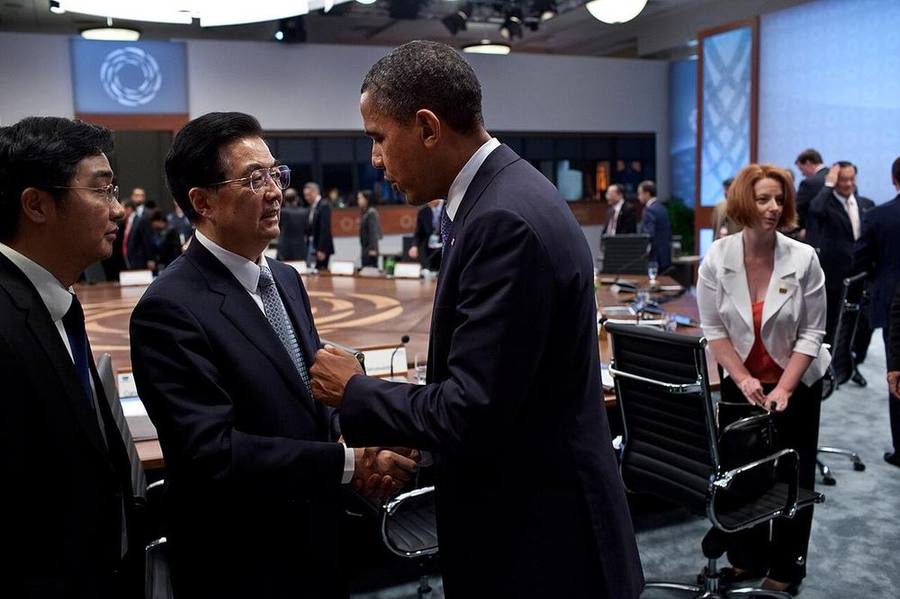
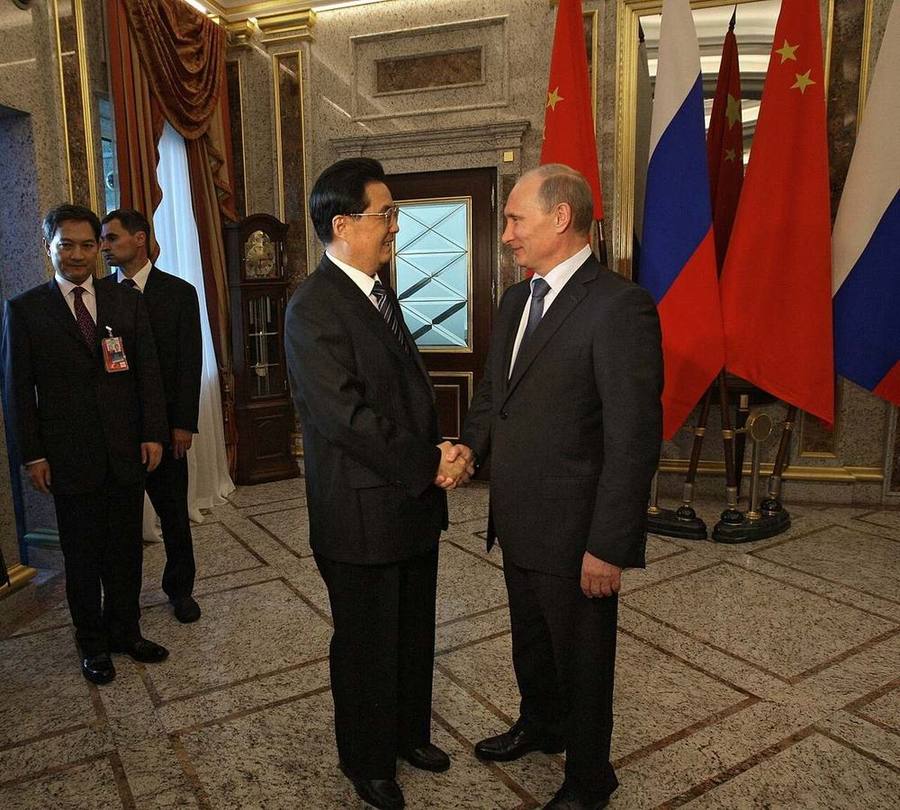
Hu Jintao, born in December 1942 and listed in his official CV as a native of Jixi, Anhui, graduated from the river-hub power-station programme of Tsinghua University's Department of Water Conservancy Engineering, joined the Party in April 1964 and began work in July 1965. (Sources 1, 2) His career follows the official CV throughout: from 1968 to 1982 he worked in the Gansu hydropower system and the Gansu provincial committee of the Communist Youth League; in 1982 he entered the League's central leadership and from 1984 to 1985 was its First Secretary; from 1985 to 1988 he was Party secretary of Guizhou; from 1988 to 1992, Party secretary of Tibet; in 1992 he entered the Politburo Standing Committee; from 1998 to 2003 he was vice president of China; from 2002 to 2012, general secretary of the Party; from 2003 to 2013, president of China; and from 2004 to 2012 (Party) and 2005 to 2013 (state) he chaired the Central Military Commission. After the 2012–2013 handover he appeared in public extremely rarely, and the authorities have never issued any account of his health.
The most internationally noticed moment of his retirement came on 22 October 2022: at the closing session of the 20th Party Congress, the 79-year-old Hu, seated on the rostrum, was escorted from his seat by staff, in full view of foreign journalists present; before leaving he spoke briefly with Xi Jinping and patted Li Keqiang on the shoulder. (Source 37) Xinhua explained that evening, in an English-language tweet, that Hu had insisted on attending while recuperating, had felt unwell during the session, had been accompanied to a room beside the hall to rest, and was feeling better; mainland Chinese media carried no Chinese-language report at all, and Weibo promptly blocked discussion of "Hu Jintao" and "Hu Haifeng". Overseas commentary divided between a sudden-health-event reading and a political-arrangement reading, with writers at The Economist and the New York Times leaning toward the health explanation, but the truth cannot be verified — this piece records the event and the official explanation, and adopts neither side's inference about motive. No A-grade report of any subsequent solo public activity by Hu Jintao has been found.
Liu Yongqing, born on 3 October 1940, entered Tsinghua's Department of Water Conservancy in 1959 and was Hu Jintao's classmate — the classmate point is supported by an article on Tsinghua University's official website (Source 4); the further details of her career, in the hydropower system and Gansu and later as a deputy general manager of China Youth Travel Service and a deputy director of Beijing's urban planning commission, appear only in Wikipedia compilations, grade B, and are not expanded here. The couple married in February 1970 and had one son and one daughter (compiled account, grade B). The birth order is fixed here, once and for all: Hu Haifeng was born in November 1972, checkable against his published official CV (Source 5); Reuters reported that Hu Haiqing was 33 when she married in 2003, which puts her birth around 1970 (Source 15). Together the two anchors point to Hu Haiqing as the elder and Hu Haifeng as the younger — elder sister and younger brother; the Liu Yongqing entry's record of a daughter born in May 1970 and a son in November 1972 is consistent with both anchors. The two contrary versions — the Chinese Wikipedia Hu Haifeng entry calling him "Hu Haiqing's elder brother", and a 2013 World Journal readers' site article giving "son born 1970, daughter born 1972" — conflict with the anchors and are not adopted; they are registered here. Throughout this piece the two are written simply as "son Hu Haifeng" and "daughter Hu Haiqing", with "elder sister and younger brother (by the birth-year anchors)" noted where the order matters.
II. Hu Haifeng (1): Education and the Nuctech Years
Hu Haifeng, the son, was born in November 1972. His education follows the official CV: a postgraduate degree; an undergraduate degree from Beijing Jiaotong University (formerly Northern Jiaotong University); an EMBA master's from Tsinghua University; he joined the Party in May 1995 and began work in May 1998. (Sources 5, 7) An inflated claim that conflicts with this must be excluded: the Chinese "Tongfang NucTech" entry credits him with "four postgraduate degrees from Tsinghua's departments of engineering physics, law, economics and management, and public policy" — no A- or B-grade source supports it, it directly contradicts the official single "EMBA master's" line, and it is not adopted (see Section XI). A 2013 article in the Journal of Contemporary China says he took a master's in engineering physics in the mid-1990s and then joined Nuctech as an assistant to the general manager; that conflicts with the official "began work in 1998", and although the journal's standing is high, this factual point is downgraded. (Source 34) A Global Taiwan Institute article of 2019 and older Chinese pieces say he worked for COFCO after university; the official CV does not record that period and begins in 1998, so it is registered as unverified. (Source 31)
Tongfang NucTech Technology Co., Ltd. was founded in 1997 by a team of Tsinghua University professors and makes security-inspection scanning equipment — and this point is nailed down first: Hu Haifeng was an employee who joined it, not its founder; the circulating claim that "Hu Haifeng founded Nuctech" is wrong (for the correction, see Section XI; Source 22). The sources on his role at the company broadly converge on the years (in charge until 2008) while the job titles are a muddle of translations, and this piece sets them side by side without merging them: the Chinese official-media CV gives "senior engineer of Tsinghua Holdings Co., Ltd.; president of Tongfang NucTech Technology Co., Ltd.", with no years (Source 5); the Chinese Wikipedia CV gives that he joined in 1998 and later became general manager, with no first-hand source — and general manager and president are not the same office in Chinese corporate governance; Agence France-Presse reported on 21 July 2009 that Hu Haifeng "was the president of Nuctech until last year" (i.e. until 2008), after which he was promoted to Party secretary of Tsinghua Holdings (Source 9); the New York Times reported the same day, "Until last year, Mr. Hu was president of Nuctech" (Source 10); the English Wikipedia Nuctech entry gives his tenure as "from 2003 until 2008" and calls the post chairman — the only source found in this check that gives a 2003 start year, a lone attestation, and the start year is therefore not written down as settled; and the current English Wikipedia Hu Haifeng entry calls him "CEO of Nuctech" in its lead and chairman in its body, three renderings inside one entry. The steadiest formulation this piece adopts is: Hu Haifeng joined Tongfang NucTech in 1998, later headed it (the official-media CV says "president"), and left around 2008; the precise start year of his time in charge, and the original Chinese title, cannot be settled from published material.
On market position during his tenure there is only one set of relayed figures: the Wall Street Journal reported in December 2009, as relayed by academic writing and compilations, that under his leadership Nuctech achieved a near-monopoly of China's airport security equipment, winning contracts in 2006 for liquid-detection equipment at 147 airports nationwide, with a domestic market share of about 90 per cent — the 90 per cent figure is a relayed one, grade B. (Sources 34, 35) The New York Times' 2012 princelings investigation gave Hu Haifeng exactly one sentence: "President Hu Jintao's son, Hu Haifeng, once managed a state-controlled firm that held a monopoly on security scanners used in China's airports, shipping ports and subway stations." No wealth figure. (Source 13) And the wealth line stops there: there is no authoritative disclosure of any figure for Hu Haifeng's personal assets, and no published disclosure of any personal shareholding by him during his Nuctech or Tsinghua Holdings years; his "business line" is this one spell as an executive inside the state system, after which he moved to a research institute and then local office — a trajectory of "state-enterprise executive to official", with no published record of any company of his own or any offshore holding.
III. Hu Haifeng (2): Tsinghua Holdings and the Official Career — Jiaxing, Lishui, the Ministry of Civil Affairs
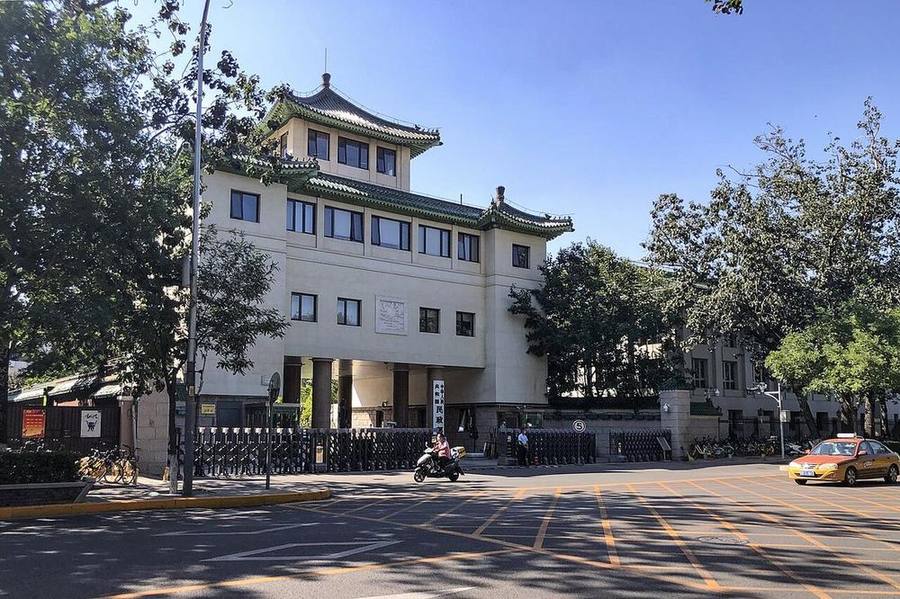
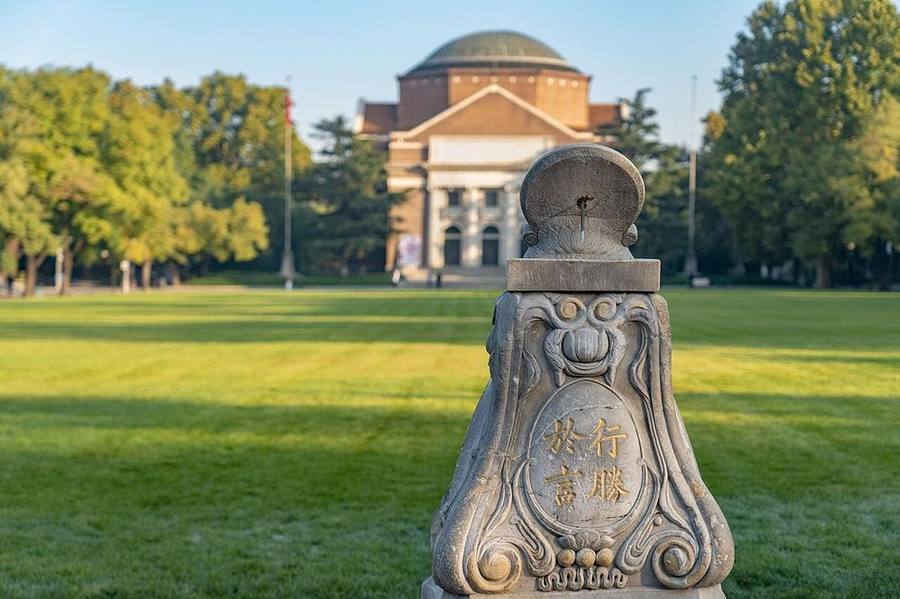
The Tsinghua Holdings Party secretaryship is attested by multiple sources and is treated as established: AFP (2009), the New York Times (2009), the Financial Times' "China's Power Families" (10 July 2012: "In 2008 he became Communist party secretary of Tsinghua Holdings, which controls Nuctech and 20 other companies") and older Chinese official-media CVs all record the post; most sources give 2008, one compilation gives 2009 — 2008 is the better-supported year and the disagreement is registered. (Sources 9, 10, 14) The Financial Times also cited informed sources saying that by 2012 he no longer held a Tsinghua Holdings post, which fits his 2010 move to Zhejiang.
The official career is registered stage by stage, official CVs first: in April 2010 he became Party secretary of the Yangtze Delta Research Institute of Tsinghua University in Zhejiang (some CVs give dean and Party secretary together); in May 2013 he went to Jiaxing on secondment as a deputy secretary of the Jiaxing municipal Party committee (Red Star News uses the word "secondment" expressly; the appointment later became substantive); in March 2014 he concurrently became secretary of Jiaxing's political and legal affairs commission and president of its Party school; in January 2016 he became a vice mayor of Jiaxing, in March acting mayor and then mayor, and in April 2017 he was re-elected mayor; on 2 July 2018 he became Party secretary of Lishui — preceded by a pre-appointment public notice from the Zhejiang provincial organisation department on 25 June 2018, and some secondary compilations misdate his arrival to June, so 2 July governs — at that point the youngest prefectural Party secretary in Zhejiang; and on 16 January 2024 the State Council appointed him vice minister of civil affairs (released by the Ministry of Human Resources and Social Security; Reuters reported it the same day), a promotion to vice-ministerial rank, making him the ministry's youngest vice minister at the time. (Sources 5, 6, 7, 8) One popular error is registered and excluded here: a long article gives him as "deputy Party secretary and mayor of Lishui in April 2017, Party secretary of Lishui in July 2018" — factually wrong; Hu Haifeng was never mayor of Lishui, and April 2017 was when he was re-elected mayor of Jiaxing; the article cross-wires his Jiaxing and Lishui records and must not be used. (Source 33)
One verifiable footnote from the Lishui years looks minor and is in fact the key anchor for checking the rumoured "Hu family and Lijiang" story: in Lishui, Hu Haifeng promoted eco-tourism branding ("Lishui Shanju", "Lishui Shanjing" and similar marks, as carried in Lishui official releases). The city he governed is Lishui in Zhejiang, not Lijiang in Yunnan; misremembering "the tourism city Hu Haifeng governed" as Lijiang is the only confusion path the existing evidence supports (see Section XI; Source 32).
IV. The Nuctech Controversies (1): The Namibia Case — the Contract Overlaps the Tail of His Tenure; He Was Only a Proposed Witness
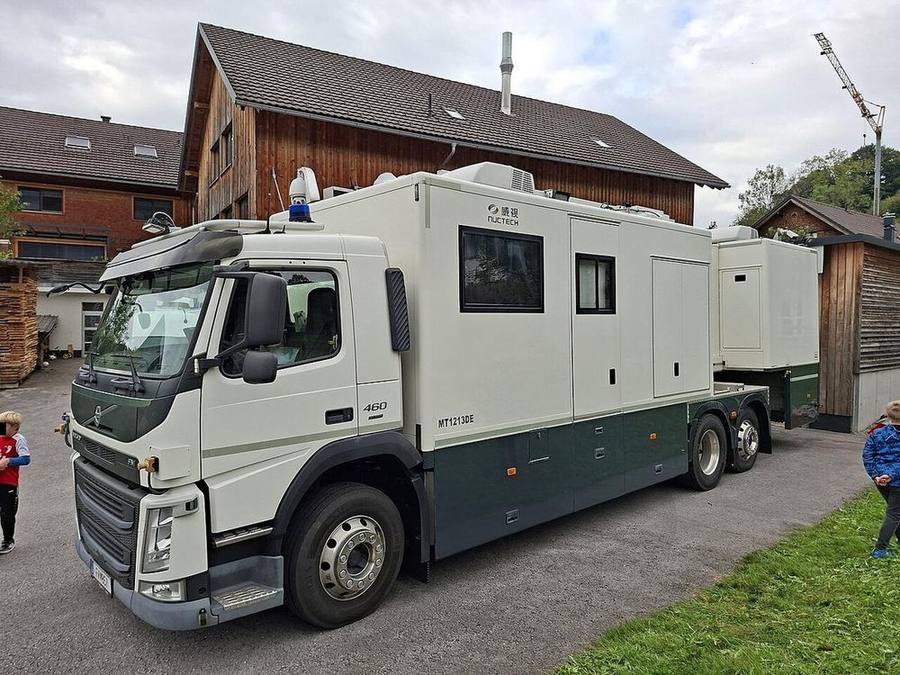
The timeline, laid out stage by stage. In May 2008 the Namibian government bought Nuctech customs scanning equipment with a Chinese concessional loan, in a contract worth US$55.3 million (AFP, 21 July 2009; the New York Times, 21 July 2009); one source gives US$69 million, which conflicts with both the agency and the newspaper figures and is registered as a disagreement, not adopted. (Sources 9, 10) Namibia's Anti-Corruption Commission (ACC) established that a US$12.8 million advance payment for 13 scanners had been transferred to a Namibian company, Teko Trading (co-owned by two Namibian defendants), and prosecutors alleged that three people had conspired to secure the contract through kickbacks. The three arrested and charged on 21 July 2009 were Nuctech's Africa representative Yang Fan, former Public Service Commission member Teckla Lameck, and her business partner Jerobeam "Kongo" Mokaxwa, on charges including fraud, corruption and bribery; Namibia's defence force commander Martin Shalli was also suspended by the president, accused of receiving Nuctech money (at allegation level). (Sources 9, 11)
Hu Haifeng's own position is the key boundary of this case, and it is held word for word: the New York Times stated expressly, "There is no public evidence that President Hu's son, Hu Haifeng, or other high officials of the company, knew of the Namibian dealings"; Namibia's prosecutor general travelled to Beijing to ask that Hu Haifeng be questioned in the capacity of a witness, not a suspect; and the ACC's director likewise called him "not a suspect at this stage". (Source 10) The outcome: in September 2019 the three defendants were acquitted by the Windhoek High Court — the defence's challenges to the admissibility of most of the evidence the ACC had gathered succeeded, and the prosecution's evidence was insufficient (the judgment text itself was not retrieved, grade B). (Source 12) The overlap finding: the contract's signing (May 2008) falls inside the tail of Hu Haifeng's Nuctech tenure; by the arrests and charges (July 2009) he had already moved to Tsinghua Holdings. The conclusion is: the contract period overlaps in part; he himself was never listed as a defendant or a suspect in any retrieved charging document — only as a proposed witness. This site will never write this up as "Hu Haifeng implicated in the Namibia bribery case".
V. The Nuctech Controversies (2): The EU Anti-Dumping Case — the Firmest Temporal Overlap, and the Regulation Names No Individual
The affirmative case: Smiths Detection Group lodged its complaint on 2 February 2009; the dumping and injury investigation period ran from 1 July 2007 to 31 December 2008; the Commission first imposed provisional duties under Regulation No 1242/2009 (December 2009; the provisional rate of 36.6 per cent appears only as relayed in a competitor's submission, grade B); and the Council then imposed a five-year definitive anti-dumping duty under Implementing Regulation No 510/2010 (14 June 2010) on certain cargo-scanning systems originating in China, the sole cooperating Chinese exporting producer being Nuctech. (Source 25) The outcome: nobody applied for an expiry review, the measures lapsed in June 2015, and Nuctech subsequently moved production to a plant near Warsaw in Poland (compiled account, grade B). The percentage table of the definitive rates could not be fully extracted from the Official Journal PDF for this check, so it is entered in the gaps list and no specific rate figure is quoted.
The reverse case is often conflated with the affirmative one and must be written separately: on Nuctech's application, China's Ministry of Commerce imposed anti-dumping duties on X-ray security-inspection equipment from the EU on 23 January 2011 (33.5 per cent on Smiths products, 71.8 per cent on other EU sources); the EU took the case to the WTO (DS425), and the panel ruled on 26 February 2013 that China had breached the Anti-Dumping Agreement in several respects. (Source 26) The overlap finding: the investigation period (July 2007 to December 2008) covers the last year and a half of Hu Haifeng's Nuctech tenure and the beginning of his move to Tsinghua Holdings — the firmest temporal overlap of any of the controversies; but the EU regulation is addressed to the company throughout and does not name Hu Haifeng personally.
VI. The Nuctech Controversies (3): The US Entity List, the Canadian Supply Arrangement and the Lithuanian Block — No Overlap, No Individual Named
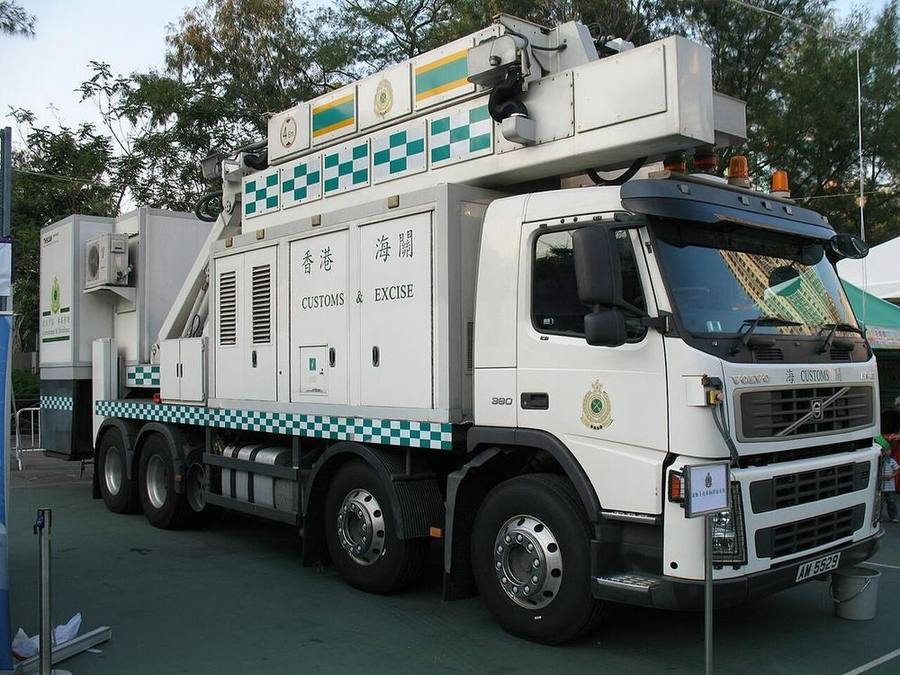
The US Entity List (2020): effective 18 December 2020 (published in the Federal Register on 22 December), the Bureau of Industry and Security added 77 entities to the Entity List, among them the named entity "Tongfang NucTech Technology Ltd.", on the ground that its "lower performing equipment" undermined US efforts against the illicit trafficking of nuclear and radioactive materials — a non-proliferation rationale, not a bribery or data-theft rationale. (Sources 19, 20) A collateral fact: the US Transportation Security Administration had already barred Nuctech equipment from US airports in 2014, on the basis of an unpublished classified assessment (grade B). (Source 27)
The Canadian supply-arrangement review (2020): Public Services and Procurement Canada (PSPC), acting for Global Affairs Canada (GAC), issued a national master supply arrangement under which Nuctech won C$6.8 million to supply X-ray machines and security gates to non-operational areas of missions abroad; the tender was issued in December 2019, closed in April 2020 and was awarded in July 2020. The official question-period notes state expressly that the original technical authority had raised no security requirements, that GAC afterwards commissioned an external security review from Deloitte, that the Calgary firm K'(Prime) complained to the Canadian International Trade Tribunal (reported in September 2020), and that on 18 November 2020 the House of Commons government operations committee opened hearings at which GAC officials said the arrangement would not be used — in practice, it was abandoned. (Source 21) One misattribution is registered here: English Wikipedia describes the contract the foreign minister was to review as one of the "Canada Border Services Agency (CBSA)" — that does not match the official record; the procuring parties in this case were GAC and PSPC, not the CBSA, and the error must not be carried forward.
The Lithuanian airport-equipment block (2021): Nuctech's Dutch subsidiary had won a tender, not yet signed, to supply baggage scanners to Vilnius, Kaunas and Palanga airports; a parliamentary national-security screening panel found at the end of January 2021 that the deal was not in the national-security interest; and on 17 February 2021 the Lithuanian government formally blocked it, on the ground that the equipment could collect data on travellers and baggage which, under China's 2017 National Intelligence Law, could be requisitioned by intelligence organs; Nuctech responded that the equipment was made in Poland. (Sources 23, 24) An important qualification: on 12 August 2021 the same screening committee approved Nuctech X-ray equipment for customs use on the Belarus border (compiled account relaying Lithuanian media, grade B) — what was blocked was the airport contract, not sales across the country, and this must not be written up as "Lithuania banned Nuctech outright". (Source 35) The three measures share three features: when they happened, Hu Haifeng had been out of Nuctech for more than a decade (he was then Party secretary of Lishui); every document is addressed to the company; and not one of them names Hu Haifeng.
VII. Hu Haiqing: A Single 2003 Wedding Report, and Daniel Mao
Hu Haiqing, the daughter (the elder sister, by the birth-year anchors), is where the material is thinnest — and everything that can be stated as fact is set out first, in full: she graduated from Tsinghua University (Reuters, 2003; Financial Times, 2012 — two sources agree); and she went to study in the United States in the 1990s (Reuters, 2003). (Sources 15, 14) One further detail — that she lived and studied in the US for about eight years, used an alias, and was refused a green card — comes from relay sites of an old Wall Street Journal report which itself conceded it had "never been confirmed"; it is not adopted as fact, only registered as an existing claim. For the twenty-odd years beyond that, she is almost entirely absent from A- and B-grade sources, and that shape of the record has to be stated before anything else in this section.
The strongest source for the marriage line is Reuters' report of 5 November 2003 (Juliana Liu, from Beijing): Hu Jintao's daughter Hu Haiqing had married former Sina chief executive Daniel Mao (Mao Daolin) in September 2003, the sources being friends ("friends said"); the report also gave Hu Haiqing's age as 33 and Mao's as 40, and put Mao's Sina shares at about US$67 million in market value with options of about US$92 million. (Source 15) The evidentiary character of this must be stated plainly: a wire report is an A-grade vehicle, but its content here is friends' relayed account; Chinese official media carried nothing, and there has never been any official confirmation, so this piece can write only that "Reuters reported in 2003, on friends' accounts, that the two married". The Financial Times corroborated in 2012 that "Hu Haiqing … is married to Stanford-educated Daniel Mao, the former chief executive of Nasdaq-listed Sina.com", and estimated Mao's wealth at US$35–60 million. (Source 14) Note the bases: the FT figure is a net-worth estimate, the Reuters figures are shareholdings plus options on paper; they are different measures and cannot be substituted for each other.
Mao Daolin's posts are anchored in SEC filings (grade A): Sina's Form 10-K/A of 30 April 2003 was still signed with "Daniel Mao, Chief Executive Officer and Director" (aged 39); and on 12 May 2003 the company announced that he had stepped down as CEO, to be succeeded by president Wang Yan, while remaining a director. (Sources 16, 17) A disagreement is registered: Reuters said Mao "left the company entirely in September", which can be reconciled with the May announcement as "stepped down as CEO in May, left the company around September" — but this piece sets the two side by side rather than merging them; the claim that Mao was forced out against his will appears only in Chinese gossip writing and is excluded. The 2007 US Shanghai consulate cable (07SHANGHAI622) records a contact, Mr Luo, saying that Hu Haiqing had married Mao Daolin, that the Hu couple disapproved of the marriage and were still more displeased by the wedding's high-profile publicity, and that Mao had been "dismissed" from Sina and was unemployed. (Source 18) The cable as a document is an A-grade archive, but its content is one contact's relayed account, downgraded to B/C when cited as fact. The same cable contains a one-line judgement on the family as a whole — "In contrast, Hu's family is relatively clean" — which is one of the real sources of the circulating "the Hu family is relatively low-key / clean" line; it is likewise a single contact's remark, not the conclusion of any investigation (see Section XI). The wedding details are also disputed: Chinese Wikipedia says the wedding was held "in Hawaii in March 2003", World Journal-system articles say the two "married secretly in Hawaii in September 2003"; Reuters mentioned only a September marriage and no place — "Hawaii" and "March" have no A- or B-grade source and are not adopted.
VIII. Hu Haiqing's Missing Employment Record, the Claim About Hu Haifeng's Wife, and the Blank Third Generation
Hu Haiqing's own employment line — the conclusion first: no verifiable record has been found. A 2011 World Journal-system article says she graduated in 1993 from Tsinghua's thermal-engineering air-conditioning programme, then worked at Tsinghua Tongfang, studied briefly in Belgium, worked for two foreign companies, and took an MBA from the China Europe International Business School (CEIBS); the English Wikipedia Tsinghua Tongfang entry's "former employees" list and a CEIBS alumni list also carry her name — but none of this has a footnote or a first-hand source, and the items circulate citations with the Chinese gossip writing. The current Chinese Wikipedia version additionally calls her "secretary-general of the expert committee of the international division of Shanghai Soong Ching Ling School", which appears only in the contaminated Wikipedia version, with zero second sources: excluded, pending evidence. The conclusion stands: apart from "Tsinghua graduate, studied in the US in the 1990s", no specific post or degree of Hu Haiqing's has any verifiable record behind it.
The claim about Hu Haifeng's wife must be handled with the same care. Chinese- and English-language material from around 2013 consistently names his wife as Wang Jun, his classmate at Northern Jiaotong University; an English Wikipedia snapshot of December 2023 gives the Hu children's spouses as "Julia Wong and Daniel Mao" — Julia Wong is suspected to be Wang Jun's English name (Wong being the Cantonese romanisation of Wang), but that correspondence has no independent confirmation and is registered as pending. The part of Wang Jun that can be independently verified is grade A: the faculty page of Tsinghua University's School of Economics and Management lists Wang Jun as an associate professor in its finance department, with a bachelor's in computing from Beijing Jiaotong University (1991–1995), a master's in economics from Peking University (1995–1998) and a doctorate in economics from Tsinghua (2002–2008), researching insurance economics, risk management and corporate finance. (Source 28) The boundary must be stated: that page proves Wang Jun the person and her academic CV; it does not prove the marriage itself. A 2009 Hong Kong media item that called her an assistant dean of the School and named her as Hu Haifeng's wife survives only in blog relays, grade C. This piece therefore writes the marriage as "multiple reports from around 2013 name Hu Haifeng's wife as Wang Jun, an associate professor at Tsinghua's School of Economics and Management and his university classmate; no official source confirms it", writes Wang Jun's academic CV from Tsinghua's official site, and does not conflate the two. Claims that Mao Daolin later held posts at Chengwei Capital and similar firms after Sina were not verified item by item against regulatory filings in this check and are not expanded; the current Wikipedia version's description of him as "adviser to Chengwei Capital and former chairman of Sina" conflicts with the SEC filings' CEO/director titles, comes from a high-contamination version, and is not adopted.
The third generation is written as the blank it is: across repeated searches, the names, number, schooling and assets of Hu Haifeng's children and of Hu Haiqing's children are, in A- and B-grade sources, entirely blank. The only two "records" both come from the high-contamination zone: the English Wikipedia Daniel Mao entry's infobox lists a daughter "Amelia" (no body text, no independent source); and the "Frances Yung entry" claims two daughters with Hu Haifeng (adjudged a tampering chain in Section XI). Both are excluded without exception. This piece's conclusion: there is no verifiable public record of the Hu family's third generation, and nothing is guessed.
IX. The Family's Outer Ring: The Financial Times' Generalisation and the Cousin Named by the ICIJ, Hu Yishi
The family's outer ring is not wholly unrecorded, but everything in it stops at specific levels — one generalisation, one specific name. The Financial Times' 2012 mapping said Hu Jintao "has multiple cousins in business, in steel, property and tourism", without naming any person, place or company — that is the generalisation level, and outer-ring records must never be moved onto the children in the writing. (Source 14) The specific item comes from the ICIJ: its January 2014 "China Leaks" reporting named, in its original text, among the relatives of top leaders: Deng Jiagui, brother-in-law of Xi Jinping; Wen Yunsong, son of Wen Jiabao, and his son-in-law Liu Chunhang; Li Xiaolin, daughter of Li Peng; Wu Jianchang, son-in-law of Deng Xiaoping; Fu Liang, son of Peng Zhen; and Hu Yishi, a cousin of Hu Jintao. (Source 36)
The boundary must be written clearly: the person named is Hu Jintao's cousin, not one of his children — neither Hu Haifeng nor Hu Haiqing appears in the ICIJ's 2014 naming. The ICIJ stated itself that offshore companies are lawful in themselves and that the files show almost nothing about what the companies were used for after incorporation; this piece therefore records only that "cousin Hu Yishi appears in the list of relatives mentioned in the ICIJ's reporting", and draws no inference about sums or purposes. No major-paper reporting expanding on Hu Yishi's own posts or business was found in this check; the material stops there. Set against the family of the premier of the same era, the difference of level is visible: in the same ICIJ 2014 list, the Wen family members named are at the children-and-son-in-law level (Wen Yunsong and Liu Chunhang), while the Hu family member named stops at the cousin level — the two families' full records can be compared in this site's Wen Jiabao family piece. The generalisation and the specific name together make up the complete picture of a family whose "children have no record, and the outer ring has a shadow"; the children's absence of record must not be inflated into a claim that the whole family has no offshore connection of any kind, and the cousin's record must not be written up as the children's.
X. Testing the Characterisation: No A-Grade Wealth or Judicial Record for the Children; the Outer Ring Stops at a Cousin
Now add up the whole record and audit it. "A son's full official record": Hu Haifeng's official CV runs from beginning work in 1998, the Nuctech presidency and the Tsinghua Holdings Party secretaryship, through mayor of Jiaxing and Party secretary of Lishui, to vice minister of civil affairs on 16 January 2024 — every stage checkable against an official-media CV or a ministry release, not one stage resting on rumour. "A daughter's single wedding report": Hu Haiqing's checkable material is a Tsinghua degree, study in the United States in the 1990s, a 2003 Reuters wedding report sourced to friends, and her husband Mao Daolin's CEO tenure pinned down in SEC filings — and for the twenty-odd years after 2003 her own posts, residence and children are entirely blank in A- and B-grade sources. "The Nuctech controversies stop at company level": all four have been adjudicated one by one — in the Namibia case the contract period overlaps the tail of his tenure, he was only a proposed witness, and the three defendants were acquitted in 2019; in the EU anti-dumping case the investigation period overlaps most firmly, and the regulation is addressed only to the company; and the 2020–2021 US, Canadian and Lithuanian measures do not overlap his tenure at all, and not one document names him personally. No court judgment, charging document or regulatory filing found names Hu Haifeng himself as involved in any case — that is the hardest boundary in this whole piece.
The single contact's remark in the 2007 consulate cable, that "Hu's family is relatively clean", circulates precisely because attackable published material really is scarce — but it is a relayed remark in a diplomatic cable, not any institution's investigative conclusion, and this piece registers its provenance without promoting it into a characterisation. The line must not be crossed in the opposite direction either: the children's lack of an A-grade record does not mean the wider family has no connections at all — cousin Hu Yishi's appearance in the ICIJ's 2014 list belongs to the factual layer, and the Financial Times' generalisation about cousins in business belongs to the reporting layer, and both are left, faithfully, at the outer-ring level. One concluding sentence: in the public archive, the Hu Jintao family takes the shape of a first generation that reached the summit of power, a second generation in which one son completed an insider official career and one daughter withdrew from the public record, and a set of company controversies whose timelines partly intersect with a tenure timeline while legal responsibility never landed on any individual's name. The overlapping parts are all here; the non-overlapping parts are all here too; and what cannot be found, this piece leaves blank rather than filling with rumour.
XI. Debunking and Exclusions: Nine C-Grade Claims Taken Apart
The nine items below were each checked in this review and adjudged unfounded or supported by no reliable source; they are registered together as objects of correction, and none of them is used in the factual layer of the text.
- The "eldest son Hu Haifeng" claim: it conflicts with the birth-year anchors — Hu Haifeng was born in November 1972 (official CV), and Hu Haiqing was 33 at her 2003 wedding report (Reuters), which points to elder sister and younger brother; versions calling Hu Haifeng the "elder brother", or giving "son born 1970, daughter born 1972", are not adopted. (Sources 5, 15)
- The "four postgraduate degrees" claim: that Hu Haifeng took four postgraduate degrees from four Tsinghua schools has no A- or B-grade support and directly contradicts the official single line of a Tsinghua EMBA master's; excluded.
- The "Hu Haifeng founded Nuctech" claim: it comes from a 2020 submission to a Canadian House of Commons committee by Astrophysics Inc., a bidding competitor ("Nuctech was founded by Hu Haifeng") — an interested party, grade C; the public record is that Nuctech was founded in 1997 by a Tsinghua professors' team and that Hu Haifeng joined only in 1998. (Source 22)
- The "Frances Yung (Rong Liefang) spouse" tampering chain: the English Wikipedia Hu Haifeng entry as retrieved in 2025–2026 had its spouse field changed to "Frances Yung (div.)", with body text claiming he was married from 2002 to 2013 to Frances Yung, daughter of Jung Chih-chien, footnoted to Reuters' 16 January 2024 vice-minister promotion report — on checking, no mirror or summary of that Reuters report contains any spouse content at all; the Chinese Wikipedia spouse field was changed in step, and the Liu Yongqing entry acquired lines such as "gave birth to a daughter with girlfriend Kong Ling in 1995" and "an extramarital affair in 2015". Beyond the Wikipedia chain there is zero independent support; the item is adjudged a suspected Wikipedia vandalism / tampering chain and must never be used. The only pointer for Hu Haifeng's spouse in A- and B-grade material remains the Wang Jun account — and the marriage itself has no A-grade source. (Sources 8, 35)
- The Hu Haiqing "Hawaii wedding" claim: Chinese Wikipedia gives "a wedding in Hawaii in March 2003", World Journal-system articles give "married secretly in Hawaii in September 2003"; Reuters mentioned only a September marriage and no place; neither "Hawaii" nor "March" has an A- or B-grade source; excluded. (Source 15)
- The third-generation "Amelia" claim: the English Wikipedia Daniel Mao entry's infobox lists a daughter "Amelia", with no body text and no independent source; the "Frances Yung entry" additionally claims two daughters with Hu Haifeng and a daughter's debut at a London ball — part of the same tampering chain. There is no verifiable record of the third generation; both claims are excluded without exception. (Source 35)
- The "Bloomberg called the Hu family low-key" claim: a misattribution. Bloomberg's "Heirs of Mao's Comrades Rise as New Capitalist Nobility" (26 December 2012) tracked 103 descendants and spouses of the Eight Elders; Hu Jintao was not one of the Eight Elders, and neither the feature's text, nor its interactive mapping, nor the South China Morning Post's next-day summary contains any individual entry for Hu Haifeng or Hu Haiqing, any Hu family wealth figure, or any "relatively low-key" judgement about this family. The real sources of that kind of judgement are the single contact's relayed remark in the 2007 consulate cable and the Financial Times' 2012 mapping. Bloomberg's other 2012 set piece, the 29 June report on the Xi Jinping family's assets, has nothing to do with the Hu family and must not be cross-cited. (Sources 29, 30, 18, 14)
- The "Hu family and Lijiang" claim: nothing to be found. Repeated searches in Chinese and English — "Hu Haifeng Lijiang", "Hu Jintao family Lijiang old town", "Hu Jintao family Lijiang tourism property" and similar combinations — found not one item, not even at self-media level, directly linking this family to Lijiang's old town, tourism or property in Yunnan; not even a fully formed rumour text was retrieved. The confusion mechanism is documented: a Sina Finance article of December 2020 states expressly that "many people, on arriving in Lishui, unconsciously misspeak it as 'Lijiang'", and notes the difference in pronunciation (Lijiang lì, Lishui lí); the city Hu Haifeng governed from 2018 to 2024 was precisely Lishui in Zhejiang, and in office he promoted eco-tourism branding — so misremembering "the tourism city Hu Haifeng governed" as Lijiang is the only explanation path the existing evidence supports. This is an analytical judgement, not a factual record. Another possible seed is the Financial Times' 2012 statement that Hu Jintao's cousins were involved in tourism (no place named, children not involved); if a circulating "the Hu family does tourism" line derives from that and was then pinned onto Lijiang, that is a second-order misattribution. (Sources 32, 14)
- A class of CV and institutional misattributions: a US China News long article cross-wires the Jiaxing and Lishui records and invents a spell as "mayor of Lishui" (Source 33); English Wikipedia misdescribes the Canadian review's object as a Canada Border Services Agency contract, against the GAC/PSPC official record (Source 21); and writing Lithuania 2021 up as a "total ban on Nuctech" conflicts with the same committee's approval, in August of that year, of Nuctech equipment for customs use on the Belarus border (Source 35). All three are misattributions and are excluded one by one.
Source List
- Gov.cn, Hu Jintao's official CV (consulted 2026). https://www.gov.cn — Official CV (grade A).
- Xinhua, Hu Jintao's English-language CV, carried by CCTV, 2008-03-16. http://www.cctv.cn/english/special/2008sessions/20080316/100619.shtml — Official news agency (grade A).
- People's Daily Online, Hu Jintao profile page (consulted 2026). http://english.peopledaily.com.cn/data/people/hujintao.shtml — Official media (grade A).
- Tsinghua University official website, article on Liu Yongqing and Hu Jintao as classmates in Tsinghua's Department of Water Conservancy (consulted 2026). https://www.tsinghua.edu.cn/info/2030/78863.htm — Official institutional page (grade A).
- Beijing Youth Daily / Sina News, Hu Haifeng's appointment as vice minister of civil affairs and official CV (born November 1972, Beijing Jiaotong undergraduate degree, Tsinghua EMBA), 2024-01-16. https://news.sina.cn/2024-01-16/detail-inacteax6850896.d.html?vt=4 — Official-media CV as carried (grade A).
- Sina News, Hu Haifeng's career timeline (Jiaxing / Lishui / Ministry of Civil Affairs), 2024-01-16. https://news.sina.cn/gn/2024-01-16/detail-inactkkz4191897.d.html?vt=4 — Official-media-system reporting (grade B).
- Red Star News / Chengdu Economic Daily, Hu Haifeng's CV and the Jiaxing secondment report (with official CV), January 2024. https://static.cdsb.com/micropub/Articles/202401/63294ae98dd8fa262058dcb6e552095b.html — Reliable reporting (grade B).
- Reuters, Hu Haifeng becomes a vice minister, 2024-01-16 (full text as mirrored; checked — it contains no spouse content, the basis for the Section XI tampering-chain finding). https://froggyweb.com/2024/01/16/former-chinese-presidents-son-becomes-a-vice-minister/ — Wire service (grade A).
- Agence France-Presse, the Namibia graft case and Hu Haifeng's Nuctech tenure ("president until last year"), 2009-07-21 (as carried by SpaceWar). http://spacewar.com/firm-tied-to-china-president-in-namibia-graft-case-999/ — Wire service (grade A).
- The New York Times (Michael Wines), the Namibia case and the "no public evidence" formulation, 2009-07-21 (as forwarded in the China Digital Times mail archive). https://www.mail-archive.com/gfw-blog@googlegroups.com/msg03281.html — Major newspaper (grade A).
- The Namibian, arrests and the facts of the Namibia case, July 2009 (as carried by The Zimbabwean). https://www.thezimbabwean.co/2009/07/namibia-two-held-over-suspected-multi-million-dollar-scam/ — National newspaper (grade B).
- The Namibian, the 2019 acquittal of the three Teko defendants, September 2019 (as carried by Africa Press). https://www.africa-press.net/namibia/?p=7695 — National newspaper (grade B; judgment text not seen).
- The New York Times, princelings investigation (the one-sentence Hu Haifeng version), 2012-05-17 (as carried in a third-party PDF). http://michaelharrison.org.uk/wp-content/uploads/2023/03/Princelings-gain-riches.pdf — Major-paper investigation (grade A).
- Financial Times, China's Power Families (Hu Haifeng at Tsinghua Holdings; Hu Haiqing and Daniel Mao and the wealth estimate; the cousins-in-business generalisation), 2012-07-10 (archived PDF). http://www.declarepeace.org.uk/captain/murder_inc/books/China%e2%80%99s%20Power%20Families%20-%20FT.com.pdf — Major-paper investigation (grade A).
- Reuters (Juliana Liu), report of Hu Haiqing's marriage to Daniel Mao, 2003-11-05 (as archived on a forum; content sourced to friends). https://www.siliconinvestor.com/readmsgs.aspx?subjectid=37210&msgnum=40963&batchsize=10&batchtype=Next — Wire service (A-grade vehicle, relayed content).
- US Securities and Exchange Commission, Sina Form 10-K/A (signed by Daniel Mao as CEO), 2003-04-30. https://www.sec.gov/Archives/edgar/data/1094005/000089161803004197/f92204prpre14a.htm — Regulatory filing (grade A).
- internetnews, Daniel Mao steps down as Sina CEO, 2003-05-12. https://www.internetnews.com/it-management/surging-sina-faces-management-shakeup/ — Trade media (grade B).
- WikiLeaks, US Consulate Shanghai cable 07SHANGHAI622 (the Hu Haiqing marriage and the "relatively clean" remark), 2007. https://wikileaks.org/plusd/cables/07SHANGHAI622_a.html — Archival document (A-grade vehicle, single-contact relayed content).
- Covington & Burling, memorandum on the Commerce Department's December 2020 Entity List additions (the stated ground for listing Tongfang NucTech Technology Ltd.), 2020-12-21. https://www.cov.com/-/media/files/corporate/publications/2020/12/commerce-department-adds-77-companies-and-individuals-to-the-entity-list-many-in-china-and-issues-huawei-faqs.pdf — Law-firm memorandum citing the Federal Register (grade A).
- Mayer Brown, analysis of the December 2020 Entity List, December 2020. https://www.mayerbrown.com/en/pdf/insights/publications/2020/12/us-imposes-technology-transfer-and-export-restrictions-on-dozens-of-chinese-companies-including-top-chipmaker-and-drone-manufacturer — Law-firm analysis (grade B).
- Government of Canada open question-period notes, the PSPC/GAC Nuctech supply arrangement and the Deloitte review (official record), 2020. https://search.open.canada.ca/qpnotes/record/pwgsc-tpsgc,PSPC-2020-QP-00038 — Official record (grade A).
- Astrophysics Inc., submission to the House of Commons Standing Committee on Government Operations and Estimates (the "founded by Hu Haifeng" claim; used here only as an object of correction), 2020. https://www.ourcommons.ca/Content/Committee/432/OGGO/Brief/BR11203071/br-external/Astrophysics-e.pdf — Interested-party submission (grade C; correction object only).
- Reuters, Lithuania blocks Chinese scanning equipment on national-security grounds, 2021-02-17 (as carried by DevDiscourse). https://www.devdiscourse.com/article/law-order/1453112-lithuania-blocks-chinese-scanning-equipment-on-national-security-grounds — Wire service (grade A).
- Bloomberg Law, Lithuania bans Chinese airport scanners over security concerns, 2021-02-17. https://news.bloomberglaw.com/privacy-and-data-security/lithuania-bans-chinese-airport-scanners-over-security-concerns — Major media (grade A).
- Official Journal of the European Union L150, Council Implementing Regulation (EU) No 510/2010 (definitive anti-dumping duty on cargo-scanning systems from China), 2010-06-16. https://urlausnir.is/skrar/Stj%c3%b3rnart%c3%ad%c3%b0indi%20ESB/2010/Stj%c3%b3rnart%c3%ad%c3%b0indi_ESB_2010_L150_EN.pdf — Official Journal text (grade A; rate table not fully extracted).
- Commentary on the WTO DS425 panel report (China — Definitive Anti-Dumping Duties on X-Ray Security Inspection Equipment from the European Union), 2013. https://philippelaw.eu/nl/the-world-trade-organisation-panel-report-on-china-definitive-anti-dumping-duties-on-x-ray-security-inspection-equipment-from-the-european-union/ — Specialist commentary (grade B).
- ASPI The Strategist, whether Australia should buy border-security technology from China's Nuctech (including the background of the 2014 US TSA bar), consulted 2026. https://www.aspistrategist.org.au/should-australia-be-buying-border-security-technology-from-chinas-nuctech/ — Think-tank analysis (grade B).
- Tsinghua University School of Economics and Management official website, Wang Jun's faculty page (academic CV), consulted 2026. https://www.sem.tsinghua.edu.cn/info/1207/32140.htm — Official institutional page (grade A; proves her person and CV only).
- Bloomberg News, Heirs of Mao's Comrades Rise as New Capitalist Nobility (tracking 103 descendants of the Eight Elders; methodology note), 2012-12-26 (cached interactive page). https://megalodon.jp/ref/2012-1228-0101-49/go.bloomberg.com/multimedia/mapping-chinas-red-nobility/ — Major-paper investigation (grade A).
- South China Morning Post (Cary Huang), summary of Bloomberg's Eight Elders investigation, 2012-12-28 (as preserved on a blog). https://guanyu9.blogspot.com/2012/12/expose-reveals-ascent-to-riches-by.html — Major-paper summary (grade B).
- Global Taiwan Institute, the claim about Hu Haifeng's early COFCO period, February 2019. https://globaltaiwan.org/2019/02/fortnightly-review-v4-i4/ — Think-tank article (grade B/C; registered in the text as unverified).
- Sina Finance, report on the Lishui/Lijiang confusion, 2020-12-09. https://finance.sina.cn/2020-12-09/detail-iiznctke5532111.d.html — Official-media-system reporting (grade B).
- US China News, long article on Hu Haifeng (the cross-wired Lishui CV; used here only as an error specimen and object of correction), 2024-06-07. http://www.uschinews.com/static/content/JDHT/DLSL/2024-06-07/1248794939317321728.html — Error specimen (correction object only).
- Wing-Chung Ho, The New 'Comprador Class', Journal of Contemporary China 22:83, 2013 (the claim about Hu Haifeng's master's, downgraded in this piece; the relayed Nuctech market-share figures). https://www.researchgate.net/publication/262965548_The_New_'Comprador_Class'_the_re-emergence_of_bureaucratic_capitalists_in_post-Deng_China — Academic research (grade B).
- Wikipedia lead pages (used only to cross-check leads and to record the tampering scene, never as a sole source): the Chinese and English entries for Hu Jintao, Liu Yongqing, Hu Haifeng, Hu Haiqing (also written Hu Haiqing with a variant character), Mao Daolin, Tongfang Nuctech, Nuctech Company and Frances Yung, consulted November 2026. Example entry point: https://zh.wikipedia.org/zh-hk/%E8%83%A1%E6%B5%B7%E5%B3%B0 — Lead compilation (not separately graded).
- ICIJ, Leaked Records Reveal Offshore Holdings of China's Elite (the named relatives include Hu Jintao's cousin Hu Yishi), 2014-01-21. https://www.icij.org/inside-icij/2014/01/chinas-elite-linked-secret-offshore-entities/ — ICIJ leak reporting (grade A).
- Associated Press / Reuters, Hu Jintao escorted out of the 20th Party Congress closing session and Xinhua's "not feeling well" explanation, 2022-10-22 (as carried by news9). https://www.news9.com/story/635461c8092d1a7b331979c6/exchinese-president-unexpectedly-led-out-of-communist-party-congress — Wire services (grade A).
Material Gaps (stated faithfully)
- Everything about Hu Haiqing after 2003: no public record of any post, residence or children after the wedding report; her alleged posts at Tsinghua Tongfang and her CEIBS degree rest only on circular citation, and no verifiable record was found.
- Every detail of the third generation: the names, number, schooling and assets of Hu Haifeng's children and of Hu Haiqing's children are entirely blank in A- and B-grade sources.
- Hu Haifeng's personal assets and shareholdings: no authoritative disclosure of any asset figure; published material records his posts during the Nuctech / Tsinghua Holdings years but shows no shareholding disclosure of any kind.
- First-hand archives for the Nuctech tenure: no Tongfang shareholding-company annual report or business-registration archive corroborates the start year of his time in charge ("2003" rests on a lone English Wikipedia attestation); the original Chinese title, "president" versus "general manager", stands in two versions and cannot be settled.
- The EU definitive anti-dumping rates: the specific percentages in Regulation No 510/2010 were not fully extracted from the Official Journal PDF, and this piece quotes no specific rate.
- The Namibia judgment text: the 2019 acquittal is known only from the national newspaper as relayed; the Windhoek High Court judgment itself was not retrieved.
- The current state of the Mao Daolin–Hu Haiqing marriage: the current English Wikipedia Daniel Mao entry dates the relationship "until October 2024", footnoted to page 108 of a 2025 Cambridge University Press volume; the book itself was not obtained for this check, so whether this records an end of the marriage or an editorial misreading cannot be judged — registered as pending.
- Hu Haifeng's marriage itself: the Wang Jun account appears in multiple reports from around 2013 with no official confirmation; Wang Jun's academic CV is verifiable (Tsinghua's official site), but the marriage itself has no A-grade source.
- Detail on the family's outer ring: the Financial Times' 2012 statement that Hu Jintao's cousins were in steel, property and tourism is a generalisation only, with no names or companies; and no major-paper reporting expanding on cousin Hu Yishi's own posts or business was found.
- Liu Yongqing's biographical detail: apart from the Tsinghua-classmate point, which Tsinghua's official site supports, the rest rests only on Wikipedia compilations, with no official CV text.
Contact: endccpworld@proton.me