
Pan Yue (1960– )
Pan Yue, born in Nanjing in April 1960 into a military family, enlisted at sixteen, and after demobilisation started as a data officer at Economic Daily and a reporter at China Environment News, serving successively as head of Fangshan District's foreign liaison office, deputy editor-in-chief of China Youth Daily and director of the China Youth Research Centre; in 1994, aged 34, he became deputy director of the State Administration of State-Owned Assets, then deputy director of the State Bureau of Quality and Technical Supervision in 1998 and of the State Council's Economic Restructuring Office in 2000, taking a history doctorate at Central China Normal University in 2002 with a dissertation titled 'Research on the History and Actual Situation of Migrant Settlement and Reclamation in China's Western Regions.' Thirteen environmental years followed, from March 2003 to 2016: first-ranked deputy director of SEPA and then vice minister of environmental protection, he launched a first 'EIA storm' in 2005 that halted 30 non-compliant projects, pushed Green GDP accounting and the public hearing on the Old Summer Palace lake-membrane project, was listed by the New Statesman and received the 2010 Ramon Magsaysay Award, answering to the nickname 'Hurricane Pan'; he added the ministry Party group's deputy secretaryship in 2015, moved in March 2016 to the Central Institute of Socialism as Party secretary and first vice president (full ministerial rank), lecturing there on the 'great unity' and ethnic fusion, and in October 2020 became a deputy head of the United Front Work Department and director of the Overseas Chinese Affairs Office. This page logs his responsibility on the NEAC tenure: Party secretary of the commission on 18 June 2022 and director by NPC Standing Committee appointment on 24 June 2022 (Presidential Order No. 118), succeeding Chen Xiaojiang as the second consecutive Han director, and a full member of the 20th Central Committee from October 2022. The ledger is kept in four tiers. Institutionally, the NEAC-compiled textbook An Introduction to the Community of the Chinese Nation was reported published by Xinhua on 29 February 2024 (16 chapters, over 400,000 characters), which the Jamestown Foundation states was edited under his direction and rolled out as a university textbook; at the national NEAC directors' conference on 15 January 2025 he deployed the forging doctrine as the main line, to be embedded in every aspect of reform and development in ethnic regions, and his signed articles put the blanket promotion of the national common language and of state-compiled textbooks on the implementation list (classroom delivery belongs to the education ministry and localities, and is cut away here). Personally, in his Kashgar forum keynote of 12 June 2024 he declared Xinjiang's culture diverse but above all one, united by Chinese culture, and called for Xinjiang to be studied from the history of the Chinese national community. At coordination level, the Sinicization of religion is executed by the National Religious Affairs Administration (directors Cui Maohu and Chen Ruifeng); Pan is entered only for his UFWD unified-leadership position and for his writings — his 2001 essay on the Marxist view of religion and his 2021 Nishan Forum declaration that the Sinicization of Islam was 'accomplished centuries ago.' Two items are registered as unverified: the reported 2020 institute lecture formula shifting ethnic preferences to regional ones and ethnic status to citizen status rests on Sing Tao Daily's reporting chain alone, and the claim that his dissertation proposed mass settler migration rests on a single 2026 Uyghur Rights Monitor reading, the dissertation's full text not having been obtained — neither is used in the main text. On 26 August 2025 he was added to the CPPCC National Committee as a vice chair of its Culture, History and Study Committee, and on 12 September 2025, aged 65, he stepped down as NEAC director in favour of Chen Ruifeng — an age rotation. Sanctions: none found on US, EU, UK or Canadian lists, and no CCDI investigation or discipline is on record. The draft Law on Promoting Ethnic Unity and Progress was submitted on 8 September 2025 and passed on 12 March 2026, effective 1 July 2026 — six months after he left office; this page records only the tenure-foundations connection and does not enter the passage as his personal act.
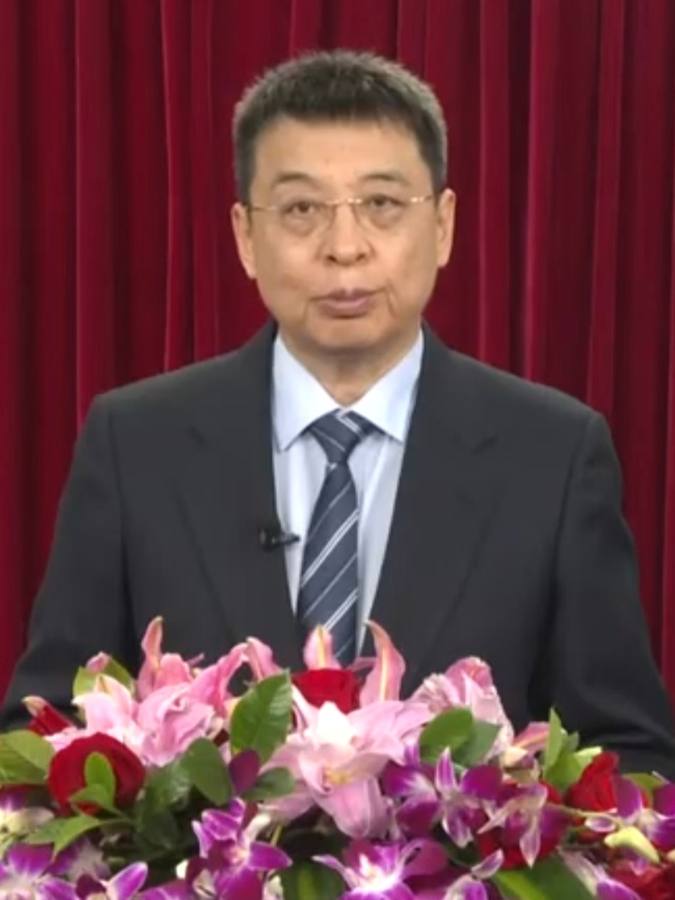
1. From Railway Corps Soldier to Reporter: A Nanjing Childhood and Twenty Years of Job-Hopping (1960–1994)
Pan Yue was born in Nanjing in April 1960. On the family material cited by the Chinese and English Wikipedias, his father Pan Tian was a Railway Corps veteran who rose to deputy chief of staff and chief engineer of the Railway Corps command, and his mother Zhou Lan was a PLA military doctor — a classic military household. This page registers that background for one purpose only: it explains why a sixteen-year-old put on a uniform. It explains none of his later policy choices, and this site does not use a man's parentage to grade his policies.
In December 1976, aged sixteen, Pan enlisted, serving in the PLA's 38th Group Army and the Railway Corps' 13th Division until 1982. Demobilised, he was assigned as a data officer to Economic Daily and then worked as a reporter at China Environment News — the word "environment" enters his record first in a journalist's byline. From 1986 the postings came thick and fast: deputy director of the research office of the State Air Traffic Control Bureau and secretary of its Youth League committee; head of the foreign liaison office of Beijing's Fangshan District Party committee and deputy director of the district's foreign trade and economic committee; back to journalism in late 1988 as deputy editor-in-chief of China Technical Supervision News; in late 1989 deputy editor-in-chief of China Youth Daily; and in February 1993 director of the China Youth Research Centre under the Communist Youth League Central Committee. The official curriculum vitae carried on the environment ministry's website lists each of these posts, and the dates cross-check against Wikipedia.
In May 1994, aged 34, Pan became deputy director of the State Administration of State-Owned Assets — vice-ministerial rank at an age when most officials are still running county bureaus. He went on to serve as deputy director of the State Bureau of Quality and Technical Supervision (1998) and deputy director of the State Council's Economic Restructuring Office (January 2000). At the restructuring office he studied in service at Central China Normal University from September 1999 and took his doctorate in history in June 2002, under Zhang Kaiyuan and Ma Min, with a dissertation titled "Research on the History and Actual Situation of Migrant Settlement and Reclamation in China's Western Regions." Hold that title in mind. Twenty years later, when Pan took over the ethnic affairs commission, it was this dissertation — written at 42, about Han settlement of the west — that investigators of his thinking reached for first. The dissertation's existence, title, year and supervisors are verifiable in the Wanfang Data catalogue and the Chinese Wikipedia; its specific arguments are treated in Section 12 as a single-source reading, marked unverified, and are not used as settled fact anywhere in the main text.
2. How This Page Attributes Responsibility: Four Tiers
The easiest way to write Pan Yue wrong is to pin the six words "ethnic assimilation policy" on him whole. He did not invent the policy. "Forging a strong sense of community for the Chinese nation" was raised by Xi Jinping in his report to the 19th Party Congress, written into the Party constitution in 2017, and fixed as the main line of ethnic work by the Central Ethnic Work Conference of 2021 — all before Pan took the commission. The institutional map must also be stated first: since the 2018 reforms the NEAC has sat under the unified leadership of the United Front Work Department, and the National Religious Affairs Administration sits under the same department — but the commission and the administration are two separate bureaucracies with two separate staffs, and the religious administration's directors during Pan's tenure were Cui Maohu and then Chen Ruifeng. Classroom teaching and textbook delivery belong to the Ministry of Education and local governments; security and law enforcement belong to the public security and state security systems. This page therefore keeps four tiers.
Tier one, the personal tier: his signed articles, full-text speeches, writings and Party lectures that can be checked in print — the 2001 essay "The Marxist View of Religion Must Advance with the Times," the keynote at the seventh Nishan Forum on World Civilizations on 27 September 2021, the Kashgar forum keynote of 12 June 2024, his signed articles as NEAC director, and his address to the national NEAC directors' conference in January 2025. Tier two, the institutional-tenure tier: what the NEAC compiled, issued and promoted on his watch — the textbook An Introduction to the Community of the Chinese Nation, the commission system's forging-consciousness publicity, research apparatus and course arrangements in its own minzu universities — entered on the commission's ledger, inside his tenure. Tier three, the coordination tier: matters on which he, as a UFWD deputy head, held a unified-leadership position while other agencies drafted and executed — the Sinicization of religion (the religious administration) and the landing of the national common language in schools (the education ministry and local education systems). This page states his coordinating position and his public pronouncements and never writes them as his direct orders. Tier four, other agencies and regions: Xinjiang's camp and security system, the executions of the Tibet and Inner Mongolia regional governments, police and judicial actions — no line of command runs from Pan Yue to any of them, and this page sets them alongside as context only. Kept apart, the tiers make the ledger more damning, not less: what is his is the share that turned an assimilationist line into a textbook, into an assessment yardstick for a whole bureaucracy, and into a story he personally told the world.
3. An Intellectual Pre-History: The Soviet Collapse, From Revolutionary Party to Ruling Party, and the View of Religion (1989–2003)
To understand Pan's later ethnic outlook, start with the three texts that made his name. The first came after 1989: according to retrospectives in Ta Kung Pao and Sing Tao Daily, around the Soviet collapse he led the drafting of "Realistic Responses and Strategic Options for China after the Soviet Upheaval," arguing that the Party must complete the transition from a revolutionary party to a party in power and warning against ethnic separatism — the habit of tying the ethnic question to the survival of the regime was formed here. The second was his 2001 internal report, written at the Economic Restructuring Office, on the same transition from revolutionary to ruling party; it went straight to the top leadership as a decision reference, earned him a reputation as the Party's would-be political reformer, and was widely reported as the background to his transfer out of the restructuring office to the environmental administration — a causal link this page records as media narrative, not as established fact. The third text, also of 2001, was the essay "The Marxist View of Religion Must Advance with the Times," published in Huaxia Shibao and other papers: it proposed replacing Lenin's "opium" formula with Marx and Engels' reflection theory, argued that religion could no longer be viewed through atheism alone, and held, in substance, that however strong a foreign religion might be, once it entered China it would merge with greater Chinese culture. The scientist and critic Fang Zhouzi attacked the essay at the time.
Put together, the three texts are one consistent Pan Yue: regime stability above all, traditional culture as a resource of legitimacy, and religion and ethnicity alike to be gathered into a single "greater China" narrative frame. When, at the Central Institute of Socialism years later, he renamed the "Five Hu disorders" of early medieval history the "Five Hu entering China" and prefaced a volume called China: The Five Hu Enter China and Europe's Barbarian Invasions — retelling the northern peoples' conquest of the Central Plains as a glorious story of ethnic fusion — that was not a new vocabulary learned in old age. It was the same thought, expressed for thirty years. This section is placed before the environmental years on purpose, because the order matters: his ethnic outlook predates his ethnic-affairs tenure by two decades. He was not sent to execute a policy he did not understand. He was one of the earliest advocates of the discourse he later administered — and that is documented in his own articles.
4. Thirteen Environmental Years: The "EIA Storms," Green GDP and an International Name (2003–2016)
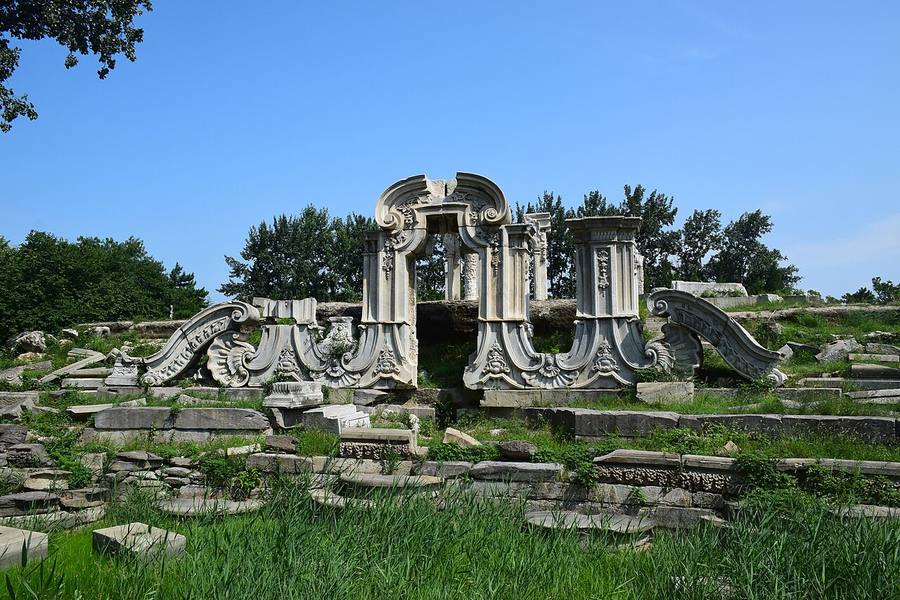
In March 2003 Pan became deputy director of the State Environmental Protection Administration, a member of its Party group and its spokesman — and its first-ranked deputy director. He stayed thirteen years. It was the peak of his public reputation, and this page writes it in full because the contrast it sets up is the heart of the file. At SEPA, and after 2008 at the Ministry of Environmental Protection, he made his name with "environmental impact assessment storms": in January 2005 the first storm halted 30 large projects that had failed to conduct proper EIAs, across power and other industries, with investment running into the tens of billions (China News Service retrospectives credit his storms with halting projects worth on the order of a hundred billion yuan). In the 2005 affair of the impermeable membrane laid under a lake at the Old Summer Palace, he pushed the project into a public hearing — an event widely reported as a landmark of public participation in Chinese environmental governance. With the National Bureau of Statistics he launched "Green GDP" accounting, deducting pollution losses from the growth figures: piloted in ten provinces and cities in 2004, it produced a first accounting report in 2006 and then stalled under local resistance, with research restarted by the environmental authorities only in 2015. His own numbers did the rounds: China's energy consumption per unit of GDP, he told interviewers, was seven times Japan's and nearly six times America's, and pollution losses ran at 8 to 15 percent of GDP.
The international honours followed. Britain's New Statesman listed him among its 2007 "Person of the Year" names (reporting varies between "named" and "nominated"; this page uses the cautious form). In 2010 he received the Philippines' Ramon Magsaysay Award, whose citation praised "his bold pursuit of a national environmental program, insisting on state and private accountability, encouraging state-citizen dialogue, and raising the environment as an issue of urgent national concern" — he did not travel to Manila to collect it, because China–Philippines relations were strained by that year's Manila hostage crisis. The environmental press gave him a nickname: "Hurricane Pan." In August 2015 he took the environment ministry Party group's deputy secretaryship, vacant for eight years, becoming the ministry's number two.
This page does not write those years to gild him. It writes them to put the contrast on the record. The same man, in the environmental chair, made "public participation," "information disclosure" and "let the citizens speak" his trademarks, and argued in print that environmental protection could not be done by SEPA alone but required the whole of society. In the ethnic-affairs chair, what he promoted was a single narrative imposed from above without negotiation — one textbook, one view of history, one language — and the people governed by it got no hearing to attend. The contrast needs no embroidery from this site; the public record of both periods, set side by side, reads itself. One cut must also be made: in the environmental years he made enemies of power companies and local governments, and the era's enforcement had its own thunder-without-rain limits — those accounts belong to environmental history, not to this file's responsibility line. This page cites the environmental record to prove one thing: Pan Yue knew exactly what openness and participation were worth. His choice not to use those values in ethnic work therefore cannot be excused as ignorance. It can only be recorded as a choice.
5. Six Years at the Central Institute of Socialism: From Green Star to Lecturer on the "Great Unity" (2016–2022)
In March 2016 Pan left the environmental system after thirteen years to become Party secretary and first vice president of the Central Institute of Socialism, expressly at full ministerial rank. The institute trains non-Party personages for the united front system, and many observers at the time read the move as a sidelining of the green star. In retrospect it was the springboard to the NEAC: at the institute he turned his narrative of Chinese civilisation into curricula and book series — steering the compilation of outline histories of the Chinese national community, arguing that Chinese civilisation had contributed a distinctive idea of the "great unity" (dayitong), marked by inclusiveness and restraint, and personally delivering Party lectures on forging the sense of community for the Chinese nation.
One lecture, in 2020, is a key single-source entry in this file. According to Sing Tao Daily's account of 22 June 2022 ("China Watch: Pan Yue's View of Ethnic Fusion"), Pan argued in that lecture that regional ethnic autonomy must be perfected by gradually shifting ethnic preferential policies into regional preferential policies and ethnic-status policies into citizen-status policies — converting benefits aimed at particular minorities into benefits for all citizens of a region — and by promptly revising laws and regulations that hinder ethnic mingling. If accurate, the implication is heavy: it proposes stripping the institutional entitlements attached to ethnic status itself, demoting "ethnicity" from a political-legal category to a cultural one — the same intellectual line as Ma Rong's "depoliticisation" of ethnicity and the "second-generation ethnic policy" proposed by Hu Angang and Hu Lianhe in 2011, which called for diluting ethnic consciousness. But the evidence grade must be printed with the claim: the account rests, so far, on Sing Tao's reporting chain alone (relayed by the Chinese Wikipedia); no text of the lecture and no second independent verbatim corroboration has been found. It is registered as sourced but unverified, and no conclusion in this file rests on it alone. Whether it matches the direction of his later tenure is something readers can judge against the documented record of Sections 7 and 8.
In October 2020 he moved up again: deputy head of the Central United Front Work Department and director of the State Council's Overseas Chinese Affairs Office, succeeding Xu Yousheng (Xinhua published the appointment and his curriculum vitae on 5 November 2020). He had been elected an alternate member of the 19th Central Committee in October 2017. In July 2021 he gave up the institute's first vice presidency. From the institute to the united front department, his remit moved step by step from "lecturing on Chinese civilisation" to "running overseas Chinese work and preparing for ethnic work": the Overseas Chinese office handles united-front work among the diaspora, and a UFWD deputy headship placed him inside the circle of unified leadership over ethnic and religious affairs. On 27 September 2021, speaking as UFWD deputy head and Overseas Chinese director, he delivered the keynote "Spreading Chinese Civilisation, Promoting Mutual Learning between China and the West" at the seventh Nishan Forum on World Civilizations. In it he said that throughout history, however diverse China's religions, they had always coexisted through mutual learning, because the pluralistic unity was held together not by race, blood or religion but by identification with Chinese culture — and he declared that "the Sinicization of Islam was accomplished centuries ago in Nanjing and Yanzhou in Shandong." The full text was carried by China News Service; it is tier-one personal speech. Note the logic: in Pan's mouth the Sinicization of religion is not a programme to be advanced but a fact history "completed" centuries ago, and today's governance merely makes reality obey the narrative. In 2022 he carried that argument, unchanged, into ethnic work.
6. June 2022: Taking Over the NEAC — the Second Han Director
On 18 June 2022 Caixin reported that Pan Yue had succeeded Chen Xiaojiang as Party secretary of the National Ethnic Affairs Commission; on 24 June the Standing Committee of the 13th National People's Congress appointed him director of the commission, with Xi Jinping signing Presidential Order No. 118. The same day he handed the Overseas Chinese Affairs Office to Chen Xu and kept the UFWD deputy headship. The weight of the directorship needs its history: from 1954 to 2020 the chair was long held by minority cadres — Hui, Uyghur, Korean and Mongol directors in succession, a symbol of the regime's nominal respect for "regional ethnic autonomy." Chen Xiaojiang, appointed in December 2020, was the first Han director since 1954; Pan Yue was the second. Foreign Policy's China Brief wrote in February 2023 that Pan's appointment signalled that the Xi administration's hard turn toward assimilationism would continue and perhaps intensify — an outside judgement, attributed here as such; the appointment itself, its sequence and the directors' ethnicity are facts of the personnel record.
That July, Xi Jinping travelled to Xinjiang, and China Brief's account lists Pan among the handful of senior officials who accompanied him. In October he rose from alternate to full member of the Central Committee at the 20th Party Congress. One widespread misreading of his appointment needs correcting: Pan did not invent the assimilationist turn. The forging formula, the main line set by the Central Ethnic Work Conference, and the 2019 central opinion on ethnic unity and progress creation work all predate him; so do the Inner Mongolia textbook protests of 2020 and Xinjiang's camp system. The patent is not his. But "executor" washes nothing away either: the centre chose, to run its ethnic commission, a man who had written ethnic-fusion theory for twenty years and publicly advocated dismantling ethnic preferences — that choice was itself a policy signal. And in three years in the chair he turned the discourse into a university textbook, into the assessment main line of a whole bureaucracy, and stood up in Kashgar to proclaim it to the world in person. That share is his. The next three sections document it item by item.
7. Main Line One: Forging the Consciousness — Into a Textbook and an Assessment System (2022–2025)
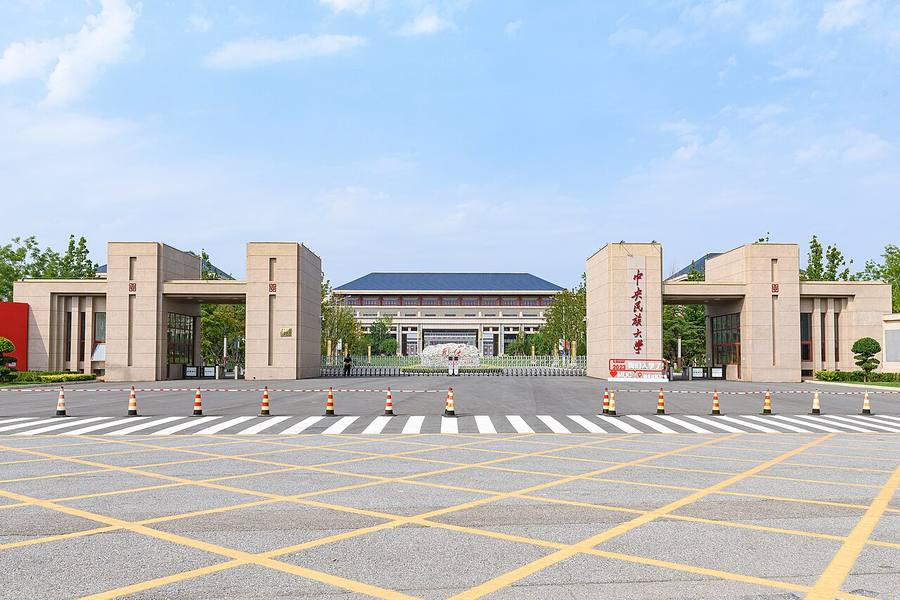
The most concrete and checkable achievement of Pan's tenure is a textbook. On 29 February 2024 Xinhua reported the publication of An Introduction to the Community of the Chinese Nation, compiled by the National Ethnic Affairs Commission and issued jointly by the Higher Education Press and the Ethnic Publishing House: 16 chapters, more than 400,000 characters, officially described as a landmark outcome in building the historical-source, discourse and theory systems of the Chinese national community. A Jamestown Foundation analysis of 2024 went further: the textbook, it reported, was edited under the direction of Pan Yue; runs to 377 pages built around 13 lectures on Chinese history, with framing chapters setting out the policy meaning of the forging doctrine; criticises past preferential policies for minorities; and was being rolled out as a university textbook. The two counts sit side by side — 16 chapters officially, 13 lectures plus framing in Jamestown's count — most plausibly a difference of chapter-counting convention; this page registers both and forces no reconciliation. On editorship the grades must be printed: the official release says only "compiled by the NEAC," so "edited under Pan's direction" is Jamestown's analytical attribution — the institutional entry stands, the personal-direction claim is sourced and awaits an officially signed edition for corroboration.
Beyond the book stood the publicity and assessment machinery of his tenure. On 15 January 2025 the national conference of NEAC directors met in Beijing, with Pan attending and speaking as UFWD deputy head, NEAC director and Party secretary (China News Service, 16 January 2025). The meeting instructed the whole NEAC system to hold fast to the main line of forging the sense of community for the Chinese nation; to build a systematic research structure and mechanism for it; to form, at speed, China's own independent source, discourse and theory systems for the Chinese national community; to perfect the publicity and education mechanism for the doctrine; to establish and highlight the Chinese cultural symbols and the image of the Chinese nation shared by all ethnic groups; and to embed the forging orientation "prominently into the whole process and every aspect of reform and development in ethnic regions." That communiqué is a specimen of a tier-two record: not one sentence of it is an order signed by Pan personally, but the man in the chair deploying this main line to the ethnic-affairs bureaucracy of the whole country was Pan Yue. On 27 September 2024 Xi Jinping's speech to the National Ethnic Unity and Progress Commendation Conference had further fixed the forging doctrine as the general requirement of ethnic work in the new era — a central-level act of tone-setting, entered here neither as Pan's credit nor as his offence. His place in the chain was the link that translated the general requirement into the commission system's annual tasks, textbooks and research topics. Academic criticism is likewise registered with its source: Jamestown and the Made in China Journal's 2024 special issue both read the Introduction as a marker of the turn from "communist multiculturalism" toward Han-centred nationalism — scholarly characterisations, cited as commentary, not adopted as fact.
8. Main Line Two: The National Common Language and the Unified Textbooks
Language is where the forging doctrine lands on every child. In his signed articles as NEAC director, carried by the commission system, Pan set the implementation list out concretely: comprehensively roll out the use of state-compiled textbooks; use a common language to bring hearts together; comprehensively promote and popularise the national common spoken and written language. This page splits the entry in two. The first half is his: as NEAC director and UFWD deputy head he publicly fixed the promotion of the national common language as settled ethnic-work policy and deployed it repeatedly in the commission system's meetings and articles — tier-one and tier-two record. The second half is not his: the unified textbooks for Chinese language, history and ideology-politics have been rolled out by the Ministry of Education since 2017; the switching of classroom language in ethnic regions is executed by the education ministry and autonomous-region governments; and Inner Mongolia's 2020 "bilingual education" adjustment, which set off mass protests, happened two years before he took office. To log every classroom lesson under his name would fail on both dates and chain of command, and this page expressly declines to do so.
Put the halves together and his role is that of the tone-setter, not the executor. The NEAC does not run primary and secondary classrooms; but when its director writes "a common language" into the main-line discourse of ethnic work, he supplies the ethnic-policy legitimation for the education system's roll-out. The draft Law on Promoting Ethnic Unity and Progress, submitted to the NPC Standing Committee in September 2025, wrote that orientation into statutory text — foregrounding the dominant position of the national common language — and Human Rights Watch criticised it for eroding the right of minorities to "use and develop their own languages" guaranteed by the 1984 Law on Regional Ethnic Autonomy. The law's timeline brushes against his handover by four days, a delicate point handled separately in Section 11. As for the ground-level fact — that in the schools of Xinjiang, Tibet and Inner Mongolia the space for Uyghur-, Tibetan- and Mongolian-medium teaching kept shrinking during his tenure — that was the product of several systems pulling together; this page records the general background and his tone-setting responsibility, and fabricates no document in which he ordered any particular school to do anything.
9. Main Line Three: His Coordinating Place in the Sinicization of Religion — and a Cut Away from the Religious Administration
Religion is the ledger most easily miskept, so the organigram comes first. The systematic advancement of the Sinicization of religion is executed by the National Religious Affairs Administration, which sits under the United Front Work Department; during Pan's tenure its directors were Cui Maohu (investigated and removed in March 2023) and Chen Ruifeng. Pan Yue never directed the religious administration, and no public record shows its routine documents passing his desk for signature. If this page charged any specific incident of mosque remodelling, cross removal or Tibetan Buddhist control to Pan personally, it would be writing without evidence; the cut is made here, in advance.
His real points of contact with religious work are two, and both are documented. The first is at UFWD level: he was a deputy head of the department, the NEAC and the religious administration sit under the same unified leadership, and in Xinjiang and Tibet affairs ethnicity and religion are knotted together — the Uyghurs' Islam and the Tibetans' Buddhism are simultaneously "ethnic" questions and "religious" ones, and the NEAC director cannot stand outside the coordination settings for Xinjiang and Tibet. But "coordination" proves a position, not a specific instruction, and this page writes no further than the position. The second contact is his own writing: from the 2001 essay arguing that religion must merge with greater Chinese culture, to the 2021 Nishan declaration that the Sinicization of Islam had been "accomplished centuries ago," to his tenure's repeated pairing of "adhering to the direction of the Sinicization of religion in China" with the forging main line — his contribution sits at the level of discourse and theory: narrating the Sinicization of religion as a historical fait accompli and a necessary link in ethnic fusion. That is the responsibility of a supplier of ideas. It is not light, and it must not be inflated into an executor's responsibility. This page's conclusion: the execution ledger of religious Sinicization belongs to the religious administration and to local united-front and ethnic-religious systems; Pan Yue is entered for a coordinating position and for his writings — two entries, each with its tier marked.
10. The Kashgar Speech: Selling the Xinjiang Narrative to the World (12 June 2024)
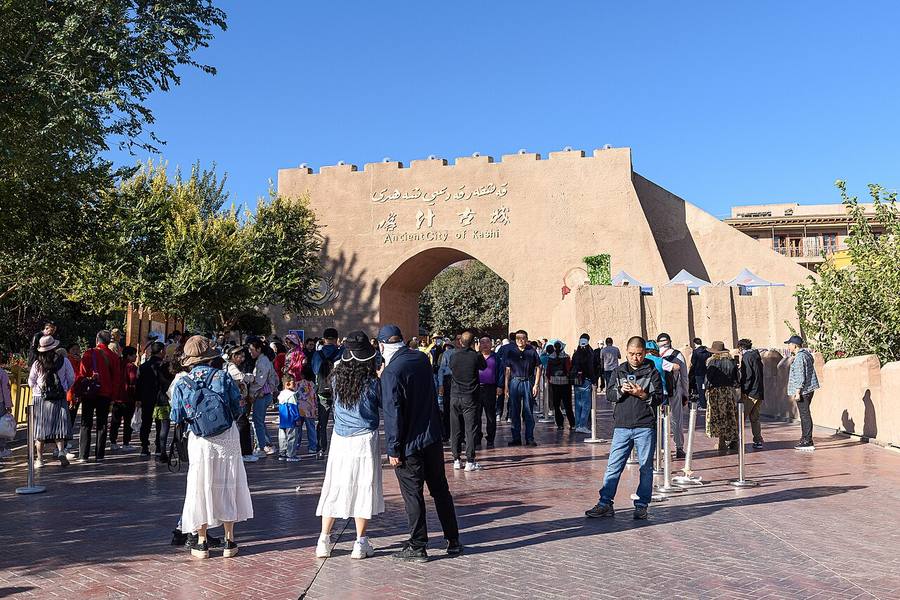
On 12 June 2024 the International Forum on the History and Future of Xinjiang, China convened in Kashgar, and Pan Yue, as NEAC director, delivered the keynote — the highest-level and most fully recorded act of external advocacy of his tenure. Xinhua issued a report and China Daily carried the speech in full, and it deserves to be logged sentence by sentence. He said that Xinjiang has always been a place where diverse cultures meet and many religions coexist; that Xinjiang's culture is diverse but, more than that, one — and that the element uniting it is Chinese culture; that a wealth of archaeological evidence shows Xinjiang has always been an important part of the Chinese cultural sphere; and that Xinjiang must be studied and understood from the standpoint of the history of the community of the Chinese nation and of the pluralistic-yet-integrated pattern of the Chinese nation. The trick of the speech is its structure: diversity is conceded first, then gathered up by "unity," and Chinese culture is installed as the sole uniting element — Uyghur culture, Turkic-language culture and Islamic culture all appear in his telling as "constituent parts" of Chinese culture, and no culture is allowed to stand outside Chinese culture and face it as an equal. The venue was part of the message: a forum in Kashgar, before foreign scholars and media, was external propaganda in itself — and the Minzu University of China, subordinate to his commission, was excavating the Mo'er Temple site in the Kashgar region, work he pointedly mentioned in the speech. Scholarship, archaeology and narrative production were running on the same stage.
Criticism and the counter-cut both belong on the record. The Uyghur Rights Monitor's long 2026 analysis quotes the Kashgar speech as a representative text of Pan's assimilation agenda and criticises its "Chinese cultural sphere" formula for erasing the independence of Uyghur culture; that is an advocacy organisation's characterisation, attributed here. The cut that must accompany it is this: Xinjiang's camps, prisons and security system do not answer to the NEAC, and Pan Yue bears no chain-of-command responsibility for the internment camp system — this page never enters the camps on his ledger. His place in Xinjiang affairs is at the narrative and legitimation end: while the security system "manages the people," the ethnic commission explains to audiences at home and abroad why this land has belonged to the Chinese cultural community since ancient times. The explainer is not the executioner. But when a persecution requires a historical narrative to present to the world, the man who writes the narrative has his own page in the archive. That is the whole of this page's characterisation of his Xinjiang responsibility — no more, and no less.
11. Handover and the Legislative Timeline: Out in September 2025, Law Passed in 2026
Pan's exit was clean and without suspense. In August 2025 Chen Ruifeng took over as NEAC Party secretary; on 26 August Pan was added as a member of the 14th CPPCC National Committee and made a vice chair of its Culture, History and Study Committee; and on 12 September 2025 the 17th session of the Standing Committee of the 14th National People's Congress appointed Chen Ruifeng NEAC director, formally ending Pan's tenure (Presidential Order No. 57). Born in April 1960, he was 65 — the standard age line for full-ministerial cadres. There is no CCDI investigation notice and no discipline record, and he moved straight into a CPPCC post: this page characterises the move as age rotation, not a fall. He remains a member of the 20th Central Committee, and the CPPCC vice chairmanship is his current post (status verified against the public record available at the time of writing — the CPPCC Standing Committee communiqué of 26 August 2025 and the NPC appointment list of 12 September 2025; no public report of any further change in his posts during 2026 was found, a negative search result registered in Section 12).
One event four days from his handover must be handled separately, so the ledger is not miskept. On 8 September 2025 the draft Law on Promoting Ethnic Unity and Progress was submitted to the NPC Standing Committee — a 62-article draft (as cited by Human Rights Watch) writing the forging of the Chinese national community consciousness into education, religion, history, culture, media and the internet, foregrounding the dominant position of the national common language, and providing (in its Article 61, as cited by Human Rights Watch) for legal accountability of organisations and individuals outside China who "undermine ethnic unity." Human Rights Watch criticised the draft as a legal framework for justifying repression and accelerating assimilation. When the draft was submitted, Pan was still nominally NEAC director (he left on 12 September), but the commission's Party secretaryship had already passed to Chen Ruifeng, and legislative drafting is a years-long process whose lead agencies and Legislative Affairs Commission procedures no single director commands. This page therefore records exactly two points. First, a substantial part of the law's intellectual and discursive foundations — the forging main line, the textbook, the history-narrative engineering — was poured during his tenure: a tenure connection. Second, neither the submission nor the passage of the law was his personal act: when the National People's Congress passed the law on 12 March 2026, to take effect on 1 July 2026, he had been out of office for half a year, and the passage is entered on the institution's ledger, not on his. Separating the foundation from the building is how this page treats the timeline.
12. Disputes, Unverified Items, and Sources
Unresolved and disputed items, registered one by one. One, the dissertation controversy: a long analysis published by the Uyghur Rights Monitor on 27 March 2026 states that Pan's 2002 dissertation, "Research on the History and Actual Situation of Migrant Settlement and Reclamation in China's Western Regions," advocated moving Han settlers into Xinjiang and Tibet on the model of "migrant settlement and reclamation," and quotes it as proposing the relocation, over roughly two decades, of settlers in the tens of millions (the article gives a figure on the order of fifty million), with Uyghur-majority southern Xinjiang as the priority, and as drawing lessons from American westward expansion, Russian colonisation of Siberia and Israeli settlement infrastructure. At present that reading rests on a single advocacy organisation's interpretation of the dissertation text; this page has not obtained the full dissertation and has found no second independent source confirming those quotations word for word, so the whole item is registered as unverified (single-source), and neither its figures nor its quotations are used in the main text or the cards. What is verifiable is only the dissertation's title, the degree year and the supervisors (the Wanfang Data catalogue, cross-checked against the Chinese Wikipedia). Two, the 2020 Central Institute of Socialism lecture's reported formula — ethnic preferences into regional preferences, ethnic status into citizen status — rests on Sing Tao Daily's reporting chain of 22 June 2022 alone, with no original text obtained; it is filed as pending corroboration (see Section 5). Three, the Introduction textbook's "edited under Pan's direction" and "compulsory" characterisations come from the Jamestown Foundation's analysis (whose sourcing includes South China Morning Post reporting); the official release credits only "compiled by the NEAC," and the personal-direction claim is registered as an analytical attribution. Four, the New Statesman "Person of the Year" item: reports differ between "named" and "nominated/listed"; this page uses the listing form. Five, family background (father Pan Tian, mother Zhou Lan; a former marriage to Liu Chaoying, daughter of Admiral Liu Huaqing, ending in divorce) appears in material cited by Wikipedia; this page records the parents in the birth field only, does not expand on the marriage, which has no bearing on public responsibility, and draws no inference from it. Six, sanctions searches: this page checked the US Treasury's OFAC lists and State Department public sanctions releases, the EU consolidated financial sanctions list, the UK Sanctions List and Canada's consolidated autonomous sanctions list, and cross-searched "Pan Yue / 潘岳" in the OpenSanctions consolidated database — no listing appears anywhere; the conclusion is "no public sanctions record," as of this page's verification date. Seven, changes to his CPPCC post during 2026: no public report was found — a negative result; the status conclusion rests on the September 2025 appointment records. Principal sources: the official curriculum vitae of Pan Yue carried on the Ministry of Environmental Protection website; Xinhua's report of 5 November 2020 on his UFWD deputy headship and Overseas Chinese directorship, with CV; Caixin's report of 18 June 2022 on the NEAC Party secretary appointment; the NPC website's appointment list of 24 June 2022 and Presidential Order No. 118; Xinhua's report of 29 February 2024 on the publication of An Introduction to the Community of the Chinese Nation; China News Service's report of 16 January 2025 on the national NEAC directors' conference; Xinhua's report of 13 June 2024 on the Kashgar forum and the full text of Pan's keynote as carried by China Daily; China News Service's full text of his Nishan Forum keynote of 27 September 2021; the NPC website's appointment list of 12 September 2025 and Presidential Order No. 57; and the CPPCC Standing Committee communiqué of 26 August 2025. Secondary and analytical sources: Foreign Policy's China Brief feature of February 2023 on Pan and ethnic fusion; the Jamestown Foundation's 2024 analysis of the Introduction textbook; Human Rights Watch's 2025 assessment of the draft Law on Promoting Ethnic Unity and Progress; International IDEA's September 2025 China tracker (recording the law's passage on 12 March 2026 and its 1 July 2026 entry into force); Dialogue Earth's 2015–2016 retrospectives on Pan's environmental tenure; the Ramon Magsaysay Award Foundation's citation; and the Chinese and English Wikipedia articles on Pan Yue, cross-checked against each other and used only for career and family background. The Uyghur Rights Monitor's 2026 long-form analysis was used only to register the unverified reading in this section and as the source of criticism of the Kashgar speech, and not as a factual source for the main text. This page will be revised as new records become public.
13. Our Take
Pan Yue is the hardest man in this site's people files to judge in one sentence. The first half of his life is about as close as the CCP officialdom comes to a reformer: he halted projects worth a hundred billion yuan, dragged pollution data into the sunlight, won a Magsaysay Award and answered to "Hurricane Pan." The second half made him the man who tells fifty-six ethnic groups as one story, who gives way to one language for a hundred tongues, and who lectures the world that religion in China was "Sinicized long ago," as a fact history has already settled. The lazy readings — that he was a hypocrite all along, or a good man deformed by the system — are both refused here. The record says something plainer and harder: the environmental Pan proved that he understood the worth of openness, participation and accountability, and that he had the nerve to push those values against pressure. The ethnic-affairs Pan therefore cannot plead that he knew no other way. He promoted a narrative that brooks no argument in full knowledge of what the alternative looked like — and that is recorded as a choice. The ledger this page assigns him has been kept in tiers: not the camps' account, not the lesson-by-lesson account of the classrooms, not the document-by-document account of the religious administration. His is the account of discourse and institutional foundations — taking "ethnic fusion" from an academic controversy and making it a state-compiled textbook; writing one people's conformity to another as the official definition of a "sense of community"; and standing on a stage in Kashgar to announce to the world that this land's culture has belonged to the one whole since ancient times. Persecution needs a blade, and it also needs a narrative; the blade has its owner, and the narrative has its author. Pan Yue left office respectably in September 2025 for a CPPCC seat, unsanctioned and undisciplined — but the Law on Promoting Ethnic Unity and Progress that took effect in 2026 stands on foundations poured during his tenure. That is what an archive is for: when the statute no longer carries a signature, to write down who poured the foundation.
视频证据Video Evidence
以下为与本页人物直接相关的机构新闻影像与档案影像。Institutional news and archival footage directly related to this page's subject.
《中国「民族团结」法:压制异议的新工具?》(DW News)|2026|原声:英语报道;该片报道的《民族团结进步促进法》系潘岳民委任内奠定理论与话语地基的立法,2026年通过、7月1日施行China's 'ethnic unity' law — a new tool to silence dissent? (DW News) | 2026 | Audio: English report; the Ethnic Unity and Progress Promotion Law it covers rests on doctrinal groundwork laid during Pan Yue's tenure at the National Ethnic Affairs Commission and took effect on 1 July 2026
Contact: endccpworld@proton.me