
Hu Heping (1962– )
Hu Heping, born in October 1962 and listed in official biographies as a native of Linyi, Shandong, is a hydraulics scholar — Tsinghua University and a University of Tokyo doctorate in river and basin environments — who rose at Tsinghua from lecturer to Party secretary of the university (2008–2013, vice-ministerial rank), became Zhejiang's organisation department chief in November 2013, moved to Shaanxi in April 2015, and served as governor (elected 27 April 2016) before succeeding Lou Qinjian as provincial Party secretary on 29 October 2017. This file first corrects a widely repeated dating error: he did not become the Propaganda Department's executive deputy head in 2020 — on 31 July 2020 he arrived in Beijing as a deputy head of the department and Party secretary of the Ministry of Culture and Tourism, becoming minister on 11 August 2020; only on 6 March 2023 did Caixin report the division-of-labour adjustment that made him the deputy in charge of daily work (full ministerial rank), and on 29 December 2023 he handed the culture ministry to Sun Yeli. His responsibility core is therefore logged in two periods on the true timeline: from 2020 to 2023, as a propaganda deputy who also ran culture and tourism, he sat at the junction of the propaganda machine and the culture market while the CAC launched its Qinglang fandom campaign on 15 June 2021, the NPPA issued its minors' gaming limits on 30 August 2021, and on 2 September 2021 the Propaganda Department issued its entertainment-sector governance notice the same day the NRTA ordered an end to 'effeminate' aesthetics — each document under its own issuing agency, entered on his institutional-tenure ledger and never written as his personal order; after March 2023, as executive deputy head, the NPPA's 22 December 2023 draft gaming rules wiped roughly US$80 billion from Tencent and NetEase in a day before vanishing from the regulator's website in January 2024, an institutional entry of his executive tenure. The earlier Shaanxi page is the Qinling villas case: he was provincial secretary when the central team entered in July 2018 and 1,194 illegal villas were counted, 1,185 demolished and 9 confiscated, while a CCTV documentary disclosed that as governor in late 2016 he had come upon the Cuihuashan violation on an unannounced visit and not dug deeper; Zhao Zhengyong and others were punished, and no public record shows discipline against Hu himself. Sanctions: none found — his name appears on no US, EU, UK or Canadian public sanctions list. The reported 2025 'move to the CPPCC' does not hold: on 30 October 2026 he still appeared as the Propaganda Department's executive deputy head at the Fifth Plenum press conference, and he remains in post.
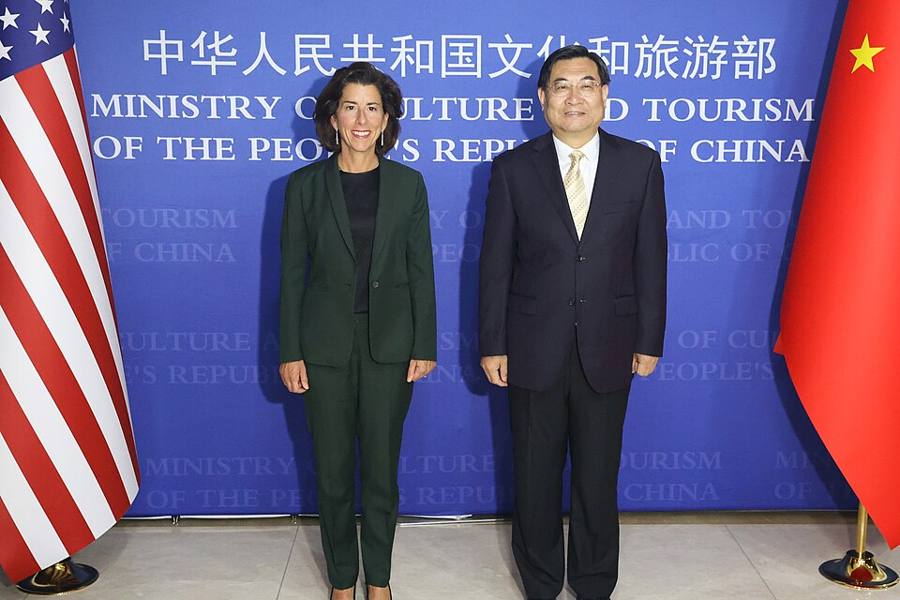
1. A Tsinghua Hydraulics Man: From the Lectern to Party Secretary of the University (1962–2013)
The first half of Hu Heping's career is a standard story of a water-engineering scholar turned university administrator. Born in October 1962 — official biographies give Linyi, Shandong as his native place — he entered Tsinghua University's Department of Hydraulic Engineering in September 1980 and joined the Communist Party in June 1982 while still an undergraduate. After graduating in 1986 he was admitted without examination to a master's programme in hydraulics and river dynamics, took his engineering master's in 1990, and stayed on to teach: assistant, lecturer, deputy secretary of the department's Youth League committee, head of its student-work group, deputy Party secretary of the department — teaching, student work and Party work in one apprenticeship, the foundation of an administrative career.
In October 1992 he went to the University of Tokyo's civil-engineering department to study river and basin environments, received his doctorate in September 1995, and spent about a year at the Japanese firm INA. He returned in December 1996 as deputy chair of Tsinghua's hydraulics department and director of its water-resources institute. From there the administrative ladder took over from scholarship: Party secretary of the School of Civil Engineering in January 2000, head of the university Party committee's organisation department in November 2002, director of academic affairs in September 2003, director of personnel in August 2004, vice president in February 2006, executive deputy Party secretary in December 2007, and in December 2008 Party secretary of Tsinghua University at vice-ministerial rank, working alongside presidents Gu Binglin and then Chen Jining. He formally took up the post in January 2009 and held it for nearly five years, was elected an alternate member of the 18th Central Committee in November 2012, and handed over to Chen Xu in November 2013.
Few public episodes mark those five years: Tsinghua's centenary fell in 2011, and in May of that year a teaching building's naming after an apparel brand set off a public controversy to which the university replied that the naming had followed its existing procedures — a campus-governance dispute with no public record of personal wrongdoing by Hu, registered here for its date and nothing more. His real weight from the Tsinghua years lies in the personnel network: his predecessor as Party secretary, Chen Xi, later ran the Central Organisation Department, and outside commentators accordingly count Hu among a so-called "Tsinghua clique." That is a label from commentary, not a documented fact of office; Section 12 files it as such and the main text draws no conclusion from it.
2. How This Page Attributes Responsibility: Three Tiers, and One Chronology Correction
First, a widely repeated dating error has to be corrected — the assignment brief for this very page initially contained it. Hu Heping did not become the Propaganda Department's executive deputy head in 2020. The public personnel record is clear: when he arrived in Beijing in July 2020 his post was deputy head of the department (concurrently MCT Party secretary and minister), one member of its leadership team. Only in March 2023 did Caixin report, under the headline "Division of labour adjusted: Propaganda Department deputy head Hu Heping takes charge of daily work," that he had become the deputy in charge of daily work — the first deputy under the minister, at full ministerial rank. To log every propaganda-system action of 2020–2023 under an "executive deputy" tenure would misdate the ledger by three years. This page keeps the true timeline: from 2020 to March 2023 he was a deputy head who also ran the culture-and-tourism system; from March 2023 onward he is the propaganda system's day-to-day chief.
Attribution then runs in three tiers. Tier one, the personal tier: signed articles, speeches and public acts documented in texts or official readouts — his loyalty article in the Party journal Dangjian in 2017, his signed People's Daily article of 28 December 2022, the US Department of Commerce readout of his 29 August 2023 meeting with Secretary Gina Raimondo, his remarks at the 30 October 2026 press conference. Tier two, the institutional-tenure tier: documents and enforcement issued by bodies he served, during his service — MCT industry rules under his ministership, the Propaganda Department's September 2021 entertainment-governance notice while he sat on its leadership, and, after March 2023, major actions of the department's nameplate agencies during his executive-deputy tenure. An institutional entry is not a personal order, and this page names the issuing agency every time. Tier three, other agencies: actions in the same period by the CAC, the NRTA, the tax authorities, police and courts are set alongside for context and expressly cut away from his name — never transferred onto his ledger.
3. Seventeen Months in Zhejiang: Organisation Department Chief (2013–2015)
In November 2013 Hu left Tsinghua to become a standing-committee member of the Zhejiang provincial Party committee and head of its organisation department, succeeding Cai Qi, who had moved to the same post in Beijing. It was his first posting outside the university, and it was the cadres portfolio: personnel vetting, appointment recommendations and leadership-team composition all pass through that office. He stayed only seventeen months, moving to Shaanxi in April 2015. For this period this page finds no signature event tied to him personally: no major document under his name, and no public reporting that pins a particular Zhejiang personnel upheaval, or the promotion of any particular later-fallen official, on him individually. "He ran Zhejiang's organisation department" is a fact of record; any responsibility narrative beyond it has no public record, and this page does not write one. The nature of organisation work means most of its traces are never published — "not found" does not mean those seventeen months were unimportant, only that this page can honestly write no further.
4. Five Years in Shaanxi: Governor, Then Party Secretary (2015–2020)
In April 2015 Hu became deputy Party secretary of Shaanxi and president of the provincial Party school. He took over the provincial government party group in March 2016, became acting governor on 1 April and was elected governor on 27 April, succeeding Lou Qinjian, who had risen to provincial Party secretary. On 29 October 2017 he succeeded Lou again as Party secretary of Shaanxi; he resigned the governorship on 4 January 2018 (Liu Guozhong succeeded him) and was elected chairman of the provincial people's congress standing committee on 30 January 2018. He had entered the 19th Central Committee as a full member that October. As the new provincial secretary he wrote an article for Dangjian, the Propaganda Department's Party-building journal, titled "Resolutely Uphold General Secretary Xi Jinping's Core Status," praising Xi in terms that included the line about a "great man shouldering a flourishing age." The text is public; it belongs to tier one, and this page records it without embellishment.
The largest matter of his Shaanxi five years was not economic. It was the Qinling mountains, treated separately below. The time coordinates belong here: the illegal villas at the northern foot of the Qinling range proliferated from the 2000s, across the tenures of his predecessors Zhao Zhengyong and Lou Qinjian; from 2014 Xi Jinping issued a series of instructions demanding rectification, and successive provincial campaigns were judged by the centre to have "rectified without curing, feigned compliance while defying in secret, and banned without ending." Hu arrived in Shaanxi in 2015, became governor in 2016 and secretary in 2017 — covering exactly the years of drift before the reckoning and the explosion of 2018 itself. He was not the originator of the villas, and the public record does not support charging their construction to him; but when the central team entered the province in July 2018 and began counting villas one by one, the man sitting in the provincial Party secretary's chair, answerable for the province's execution and for the numbers it had reported, was Hu Heping.
5. The Qinling Villas Case: His Link in the Chain (2016–2020)
The figures first: the rectification that began on 31 July 2018 in the Xi'an section of the northern Qinling foothills counted 1,194 illegally built villas, of which 1,185 were demolished and 9 confiscated, with 4,557 mu of state land recovered and 3,257 mu of collective land returned. Against that stood the province's earlier reported numbers — a 2014 sweep had claimed just 202 illegal structures in Xi'an. Xi's sixth instruction, in July 2018, ordered investigators to "start from political discipline"; Xu Lingyi, a deputy secretary of the Central Commission for Discipline Inspection, led a central rectification team into Shaanxi, working with provincial, municipal and district governments. On 9 January 2019 CCTV broadcast the documentary "Grasping Through to the End, Rectifying Work Style — the Full Story of the Qinling Illegal-Construction Rectification," publicly naming the Shaanxi provincial Party committee and government for repeated ineffective campaigns.
Hu's personal record in this chain has two entries, each with its source level marked. First: according to the CCTV documentary's account, relayed by the Chinese Wikipedia's article on the case, Governor Hu, on an unannounced inspection in late 2016, discovered that the Cuihuashan lake-view hotel in the Qinling foothills had been built far beyond its approved scale — "but he did not dig deeper." That is a single-source chain from one documentary; this page has not found a second independent source confirming it word for word, and registers it as sourced but pending corroboration, not as a settled verdict. Second: his public statements once the rectification was under way are on the record of the provincial press — on 6 September 2018 he convened a promotion meeting in Chang'an District, the worst-hit district, and said the meeting was being held in the "hardest-hit area" precisely so the whole province would feel the provincial committee's determination. That is a tier-one statement — made after the central team had already arrived.
The case's punishments must also be kept straight. Those investigated and punished were former provincial secretary Zhao Zhengyong (investigated in January 2019; sentenced on 31 July 2020 to death with a two-year reprieve), former provincial standing-committee member and secretary-general Qian Yinan, former Xi'an Party secretary Wei Minzhou (life imprisonment), and former Xi'an mayor Shangguan Jiqing (resigned and disciplined), among others. No public record shows Hu Heping himself receiving Party or state discipline over Qinling; on 31 July 2020 — the same day Zhao was sentenced — Hu left the Shaanxi secretaryship and moved up to Beijing as MCT Party secretary and Propaganda Department deputy head, both at full ministerial rank. This page's conclusion stops exactly there: in the Qinling case his documented position is "in office through the years of drift, secretary when the reckoning came, the rectification completed on his watch, and no discipline of record against him" — four statements, each sourced. Anything further, whether blaming him for abetting the villas or crediting him with their demolition, runs past the public record.
6. To Beijing in 2020: Culture Minister and Propaganda Deputy, and the 2021 Entertainment Crackdown (2020–2023)
On 31 July 2020 Xinhua announced the Shaanxi leadership change — Liu Guozhong succeeded Hu as provincial secretary — and the same day the MCT website announced Hu as the ministry's Party secretary, concurrently a deputy head of the Central Propaganda Department. On 11 August the NPC Standing Committee appointed him Minister of Culture and Tourism under Presidential Order No. 54, succeeding Luo Shugang. The dual hat was no personal flourish: after the 2018 institutional reform the culture-and-tourism system works under dual Party-government leadership, and its Party secretary at each level routinely doubles as a deputy in the corresponding propaganda department, from Ürümqi down to the counties. From the summer of 2020, in other words, Hu had one foot in the government's culture-and-tourism market and one in the Party's propaganda leadership.
The loudest year of his culture tenure was 2021. The CAC moved first: on 15 June 2021 it announced a two-month nationwide "Qinglang" special campaign against fandom chaos, targeting five categories including inducing minors to fundraise for idols and organised fan wars; a CAC official later summarised that the 2021 Qinglang series had cleaned up more than twenty million items of illegal or harmful information over the year. Then the dominoes: in late July and August the entertainer Kris Wu was detained and arrested by police (a police and judicial matter); in mid-August the performer Zhang Zhehan was boycotted by an industry association and removed across platforms over old photographs at Japan's Yasukuni Shrine; in late August the actress Zhao Wei's works vanished from platforms and her fan community was shut, and to this day no public document names the issuing authority — this page registers that item as "the takedown happened; the ordering authority is not on public record." On 27 August the Shanghai tax bureau fined the actress Zheng Shuang 299 million yuan for tax evasion (a tax-authority matter). Not one of these four was a document of Hu Heping's or of the MCT, and this page cuts each of them away by name.
The documents that do carry the propaganda system's name are two, both reported on 2 September 2021. First, the Propaganda Department issued its Notice on Comprehensive Governance of the Entertainment Sector (Xinhua, 2 September): against traffic-above-all, fandom chaos and law-breaking or immoral performers, it demanded heavier punishment of disgraced artists and a ban on their re-emerging by switching platforms, strict control of variety shows, a prohibition on minors taking part in idol auditions, resistance to the "danmei" adaptation trend, and a dedicated eight-pronged campaign against fandom chaos covering fan communities, agencies and chart products. Second, the NRTA's general office issued its own notice the same day: broadcasters and online audiovisual platforms must not air idol-audition programmes, must resolutely boycott law-breaking and immoral personnel and reject traffic-above-all, must strictly control casting, performance style and costume and make-up so as to "resolutely end 'effeminate' and other deformed aesthetics," and must resolutely resist exorbitant pay. The NRTA has been led by the Propaganda Department since 2018, but the issuing agency of that notice is the NRTA, not Hu Heping. And on 30 August the NPPA had issued its notice further restricting minors' gaming — three one-hour windows a week; the NPPA is the Propaganda Department's external nameplate, so that document sits on the publishing administration's and the propaganda system's institutional ledger.
What verifiable personal trace did Hu leave in that year? Ministerial activity in his culture capacity: an inspection tour of cultural tourism in the Xinjiang Production and Construction Corps in May 2021 (as catalogued by the Uyghur Human Rights Project in 2023), and a 4 February 2021 meeting with Japan's new ambassador, Hideo Tarumi, on cultural and tourism exchanges — both covered by official readouts. Any signature of his on the September 2021 documents, or any meeting of his that ordered them, is not on public record. This page's characterisation of 2021 is therefore precise: a year of documents fell inside his tenure as a Propaganda Department deputy head and culture minister, and the institutional ledger stands; writing the "effeminate" ban or the fandom campaign as his personal orders does not. That distinction is exactly what the three tiers exist to block.
7. The COVID Years: Onto Which Page Does Information Control Belong? (2020–2022)
COVID-era information control is the section of this file most easily misattributed, so the power map comes first. From 2020 to October 2022 the Propaganda Department's head was Huang Kunming and the CAC's director was Zhuang Rongwen; the pandemic-era censorship machine — deleted posts, closed accounts, platforms summoned for talks — ran mainly through the cyberspace-administration system and the platforms under existing rules. During the November 2022 "white paper" protests, the scrubbing of images and terms was likewise executed by the CAC system and the platforms, not by the Ministry of Culture and Tourism. Hu only reached Beijing in mid-2020, and the department's day-to-day deputy at the time was someone else; to charge him personally with the pandemic information lockdown would match neither the dates nor the chain of command, and this page expressly declines to write it.
What does sit on his MCT tenure ledger is the other face of those years: the tourism industry's circuit breakers and shutdowns. In August 2021 the MCT tightened inter-provincial group tours, tying suspension to epidemic risk levels — provinces with medium- or high-risk areas saw travel agencies' and online platforms' inter-provincial group tours and "flight-plus-hotel" business suspended under a risk-linked circuit-breaker mechanism. Such documents are industry administration; their cost was an industry's three-year winter, and they belong in the institutional-tenure record — recorded here for their existence and timing, and not to be conflated with speech control. One comparison also belongs on the record: when travel-agency operations were first suspended at the outbreak in January 2020, the culture minister was still Luo Shugang. That page of the ledger predates Hu entirely.
8. March 2023: Executive Deputy Head — and Laying Down the Ministry the Same Year
On 6 March 2023 Caixin reported a division-of-labour adjustment in the Propaganda Department: Hu Heping would take charge of daily work. In the convention of central ministries, the "deputy in charge of daily work" is the executive deputy — the minister's effective chief deputy, at full ministerial rank. The previous holder of that link in the chain was Li Shulei, who served as executive deputy from April to October 2022 before rising on 26 October 2022 to head the department and enter the Politburo; the executive post then stood vacant for several months until Hu filled it in March 2023. From that moment, the propaganda system's daily operation — implementing the deployments of the national propaganda ministers' conference, the department's executive meetings, the supervision line on ideology-work responsibility — nominally passed across his desk. And it is only from this moment that this page's tenure attribution for propaganda-system institutional actions truly lands on his name.
Two further documented items belong to that year. On 29 August he met US Secretary of Commerce Gina Raimondo in his capacity as culture minister; the Commerce Department's readout records agreement to hold the 14th China–US Tourism Leadership Summit in China in the first half of 2024 — a tier-one official act. On 29 December 2023 the NPC Standing Committee removed him as Minister of Culture and Tourism, and Sun Yeli — simultaneously a Propaganda Department deputy head and director of the State Council Information Office — succeeded him. It is the only removal from a ministerial post in his record, and its nature must be written correctly: it came nine months after his promotion to executive deputy head, it shed a concurrent government portfolio, and his higher Party post was untouched. It was a rotation, not a fall. Some overseas commentary read the removal as a loss of favour; no public evidence supports that reading, and Section 12 files it as unsubstantiated. The Uyghur Human Rights Project has also catalogued at least three Xinjiang trips in his ministerial years — the May 2021 XPCC inspection, attendance at a song-and-dance production in August 2022, and an ethnic-dance-festival event in Ürümqi in July 2023 — and criticises the culture-and-tourism system for using tourism promotion to paper over the human-rights situation in Xinjiang. That characterisation is an advocacy organisation's; this page names its source, notes that the activities themselves are consistent with official reporting, and does not adopt the characterisation as its own factual conclusion.
9. The Executive-Deputy Tenure: The Gaming-Rules Storm and External Propaganda (2023–2026)
The first big storm of his executive-deputy tenure came from his own system's nameplate. On 22 December 2023 the NPPA published draft Online Game Administration Measures proposing to ban daily-login and first-purchase inducement rewards and to require spending caps in games; that day Tencent closed down more than 12 percent and NetEase nearly 25 percent in Hong Kong, the two together losing on the order of 500 billion Hong Kong dollars in value, with Reuters estimating the two giants' combined loss at roughly US$80 billion. The next day the NPPA said it would "earnestly study" all parties' views; after the consultation period closed, Reuters found on 23 January 2024 that the draft had disappeared from the NPPA website, and the shares rebounded. The NPPA is the Propaganda Department's external nameplate, and its leadership appointments and major rules run inside the propaganda system — so this item sits on the propaganda system's institutional ledger within his executive-deputy tenure. No public evidence shows that he drafted or instigated the rules himself, and this page does not take that step. In the same season, the National Conference on Propaganda, Ideology and Culture Work of 7–8 October 2023 formally unveiled "Xi Jinping Thought on Culture" — the system backdrop of his tenure's opening year; the conference itself is a central-level event and is recorded neither as his achievement nor as his offence.
His own public silhouette in the executive-deputy years shows mainly in two kinds of setting. The first is system meetings and deployments: the national propaganda ministers' conference each January and the annual arrangements of the propaganda-ideology-culture front, attended and transmitted in his executive-deputy capacity. The second is external-propaganda occasions: at the Global South Media and Think Tank Forum in Kunming in September 2025 he appeared as a Propaganda Department deputy head and told attendees that China's Global Governance Initiative provides "important guidance" for reforming global governance — recorded by Lingua Sinica, the China Media Project's monitoring publication, and filed here as tier-one public remarks. Set these appearances beside the CAC's unbroken run of Qinglang campaigns in the same years — the 2023 Spring Festival online-environment sweep, the 2024 campaigns on minors' online protection, the 2025 action against science-and-health rumours, all CAC documents — and the conclusion is the same old sentence: the machine turns, and each document bears its own agency's name. He is the official in charge of the propaganda system's daily operation, and institutional responsibility cannot be argued away; but writing every deletion and account closure as his signature is more than the public record can carry.
10. Sanctions and Accountability: None Found (as of November 2026)
The conclusion of this section goes first: none found. This page checked the US Treasury's OFAC lists and State Department public sanctions releases, the EU consolidated financial-sanctions list, the UK Sanctions List and Canada's consolidated autonomous sanctions list, and cross-searched his name (Hu Heping / 胡和平) in consolidated sanctions databases including OpenSanctions. No listing appears in any of them. He has drawn named criticism from an advocacy organisation for his Xinjiang tourism-promotion role (the Uyghur Human Rights Project's November 2023 essay), but criticism is not a sanction; the officials the United States sanctioned over Xinjiang in 2020 were a different set — Chen Quanguo and others — and his name is not among them. The accountability side is equally blank: the CCDI and National Supervisory Commission website carries no notice of an investigation of him, there is no public record of Party discipline against him, and the Qinling punishment lists do not contain his name. Given his positions — he has run the daily work of the ideology machine and lived through a provincial political storm of the Qinling scale — that blank is itself a piece of information: as of this page's verification date he remains a serving official in the leadership's trust, not a target of a purge.
11. Status Verification: The 2025 "Moved to the CPPCC" Story Does Not Hold (as of November 2026)
Before writing, this page was handed a lead to verify: that in 2025 he had been "removed or reassigned to a CPPCC post." Checked item by item, it does not hold. First, the only ministerial-level removal in his record is the culture-and-tourism ministership on 29 December 2023, whose nature Section 8 states: a concurrent government portfolio shed nine months after a promotion. Second, in all of 2025 no Xinhua personnel release, no CPPCC announcement and no mainstream report shows him moving to the CPPCC or leaving the Propaganda Department; on the contrary, in September 2025 he was still speaking publicly in Kunming as a deputy head of the department. Third — and hardest — on 30 October 2026 the CCP Central Committee held its press conference on the Fifth Plenary Session of the 20th Central Committee, and the Xinhua and China News Service releases list among the speakers "Hu Heping, deputy head of the Central Propaganda Department in charge of daily work," who presented the plenum Decision's sections on strengthening Party character and on democratic centralism and answered reporters' questions, matching Xinhua's same-day news flashes item for item. As of 30 October 2026, in other words, he is still in the executive deputy's chair. His age — he turned 64 in 2026 — guarantees that speculation about the 2027 Party congress reshuffle will continue, but speculation is not a record: no public record shows any change in his post, and this page's status conclusion is "incumbent executive deputy head of the Central Propaganda Department," verified against the official release of 30 October 2026.
12. Disputes, Unverified Items, and Sources
Unresolved and disputed items, registered one by one. One: birth details — the English Wikipedia gives 24 October 1962 and a birthplace in Urad Rear Banner, Inner Mongolia, while official Chinese biographies give only October 1962 with Linyi, Shandong as native place; the two versions coexist, no public primary document settles them, and the main text follows the official version. Two: the late-2016 Cuihuashan inspection episode rests on the CCTV documentary's narrative chain alone, relayed through the Qinling case article; no second independent source has been found confirming it word for word, so it is filed as pending corroboration and is not used as a standalone verdict. Three: the August 2021 removal of Zhao Wei's works is a fact, but the ordering authority and legal basis have never been made public; this page records the fact and attributes it to no one. Four: the "Tsinghua clique" membership claim is a factional label from overseas and Hong Kong–Taiwan media commentary, not an official characterisation; its existence is registered and nothing more. Five: the overseas "loss of favour" reading of his December 2023 departure from the MCT is contradicted by his retention of the higher Party post and his public duties through October 2026, and does not stand. Six: all speculation about his fate at the 2027 leadership transition has no public record behind it and is kept out of the main text. Principal sources for this page: Xinhua personnel releases (the 31 July 2020 Shaanxi change, the 11 August 2020 NPC appointment, the 29 December 2023 NPC removal, the 30 October 2026 Fifth Plenum press conference); the MCT website's 31 July 2020 Party-secretary announcement; Caixin's 6 March 2023 division-of-labour report; the Chinese and English Wikipedia articles on Hu Heping, cross-checked; his signed People's Daily article as carried by gov.cn on 28 December 2022; the US Department of Commerce readout of 29 August 2023; Xinhua's 2 September 2021 reports of the Propaganda Department's entertainment-governance notice and the NRTA notice; the CAC's 15 June 2021 Qinglang campaign notice and its later summaries; the NPPA's 30 August 2021 anti-addiction notice; Reuters' gaming-rules reporting of December 2023 to January 2024; the CCTV documentary "Grasping Through to the End" and the public Qinling case data; the Uyghur Human Rights Project essay of 22 November 2023; Lingua Sinica's record of the September 2025 forum; and name searches of the public US, EU, UK and Canadian sanctions lists and consolidated sanctions databases. This page will be revised as new records become public.
Contact: endccpworld@proton.me